



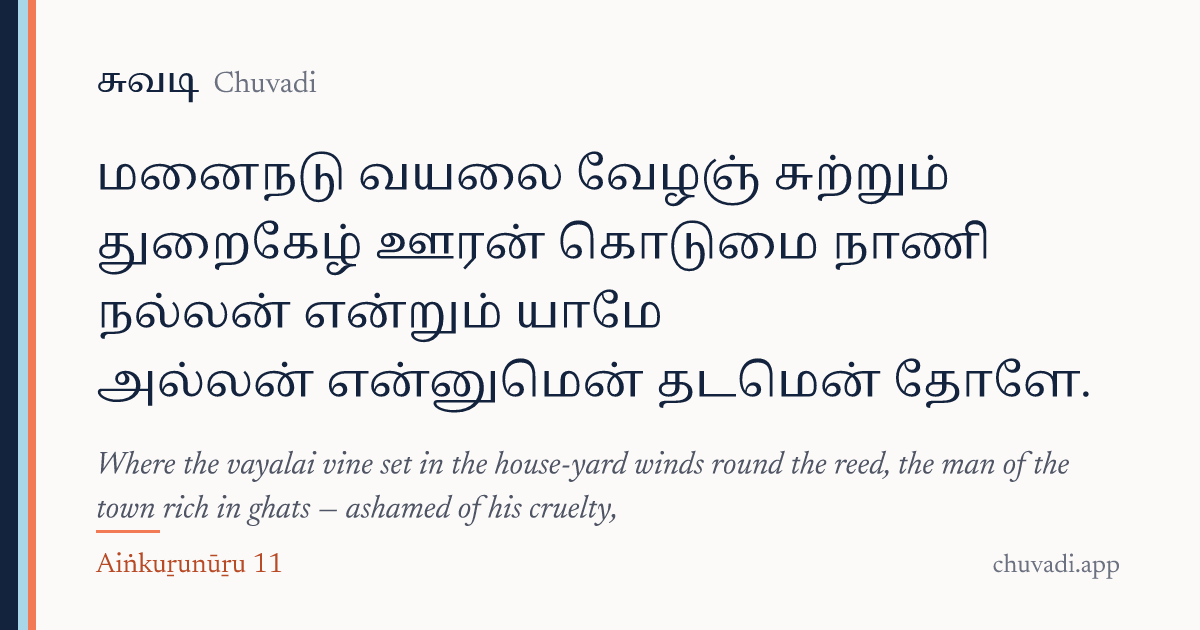

ஐங்குறுநூறு 11
பாடல் · The poem
Tap a word to see where else it occurs.
பொருள் · Meaning in TamilAI
வீட்டின் நடுவே வளர்ந்த வயலைக் கொடி வேழத்தைச் சுற்றிப் படரும், நீர்த்துறைகள் நிறைந்த ஊரைச் சேர்ந்தவனின் கொடுமையை நினைத்து வெட்கப்பட்டு, நான் அவனை "நல்லவன்" என்றே சொல்லிக்கொண்டிருக்கிறேன். ஆனால் என் அகன்ற மெல்லிய தோள்களோ "அவன் நல்லவன் அல்லன்" என்று சொல்கின்றன.
மருதத் திணை; தலைவன் பரத்தையிடம் சென்ற நிலையில் தலைவி தோழியிடம் கூறுவதாகக் கொள்ளலாம். வாயால் அவனைக் காத்துப் பேசினாலும், மெலிந்த தோள்கள் உண்மையைக் காட்டிவிடுகின்றன. வீட்டில் வளர்ந்த கொடி வெளியே வளரும் வேழத்தைப் பற்றிப் படர்வது, வேறு இடத்தில் வாழும் கணவனைப் பற்றி நிற்கும் மனைவியைக் குறிக்கலாம்.
ஆங்கிலம் · English translationAI
Translation
- Where the vayalai vine set in the house-yard winds round the reed,
- the man of the town rich in ghats — ashamed of his cruelty,
- I keep saying, 'he is good';
- 'he is not,' say my broad, soft shoulders.
What the poem says
The heroine speaks, probably to her friend. The hero has been unfaithful. Out of shame at what he has done, and perhaps out of pride, she defends him in words. Her body tells the truth: her shoulders have grown thin, the conventional sign of a woman wasting in grief, and so they 'say' he is not good.
The opening image sets a vine planted inside the house, the vayalai, against the reed (vēḻam) that grows wild by the water and climbs around it. One reading is that the woman of the house still clings to a man whose life is elsewhere. Reeds dominate the whole of this decade (11–20), which has no name in this edition.
'Ashamed of his cruelty' could also be taken as the hero's own shame, but the sense of the poem favours the heroine's shame at his behaviour.