




ஐங்குறுநூறு 110 · தாய்க்கு உரைத்த பத்து
பாடல் · The poem
Tap a word to see where else it occurs.
பொருள் · Meaning in TamilAI
அம்மா, நீ வாழ்க; கேள், அம்மா. புன்னை பொன்னிறமாக மலரும் பூக்கள் நிறைந்த துறையை உடைய தலைவனை நாங்கள் "என் கணவன்" என்றே எண்ணுகிறோம்; ஆனால் இவ்வூரோ அதை வேறு ஒன்றாகப் பேசுகிறது. ஊர் சொல்வது போலவே ஊழும் ஆக்கிவிடுமோ? ஊழே, நீ வாழ்க!
நெய்தல் திணை; தோழி தாயிடம் அறத்தொடு நிற்கும் பத்தின் இறுதிப் பாடல். ஊரார் அலர் பேசுவதை எதிர்த்து, இது ஊழால் அமைந்த உறவு என்று உணர்த்துகிறாள். ஊர் சொல்லும் "பிறிதொன்று" என்ன என்பது வெளிப்படையாகச் சொல்லப்படவில்லை. இறுதி அடியில் உள்ள "வழிய" என்பது "வாழிய" என்பதன் பிழை.
ஆங்கிலம் · English translationAI
Translation
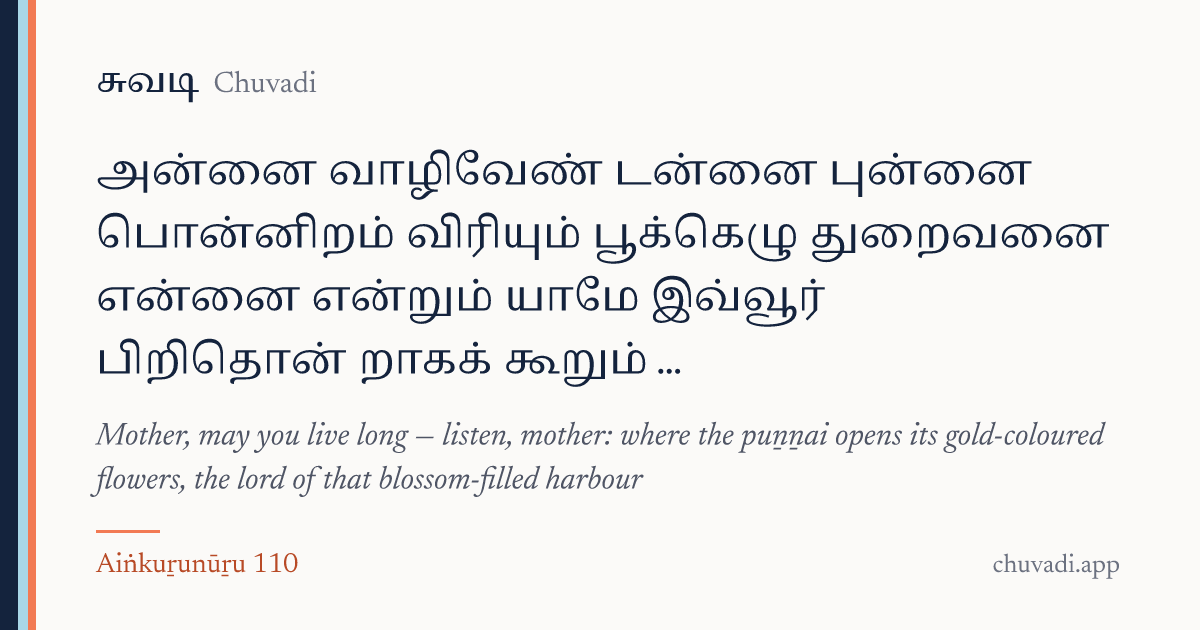
- Mother, may you live long — listen, mother: where the puṉṉai
- opens its gold-coloured flowers, the lord of that blossom-filled harbour
- we call 'my husband'; but this town
- speaks of it as something else —
- will fate make it turn out that way too? May fate be kind!
What the poem says
The closing poem of the decade. The friend tells the mother that the girl already thinks of the hero as her husband, while the town gossips about the affair in other terms, as something shameful. She asks whether destiny will side with the gossip or with the girl.
Pāl, 'fate' or 'the ordering of things', is often invoked in akam poems to say that a match was destined. The closing vāḻiya, 'may it live long', addressed to fate, is half a prayer and half a nervous plea. The golden puṉṉai blossom on his shore suggests that what the girl has is precious, whatever the town says. The phrase 'something else' is deliberately vague. The gossip may be calling it a passing affair, or linking him with another woman. The edition prints vaḻiya in the last line, an evident slip for vāḻiya.