



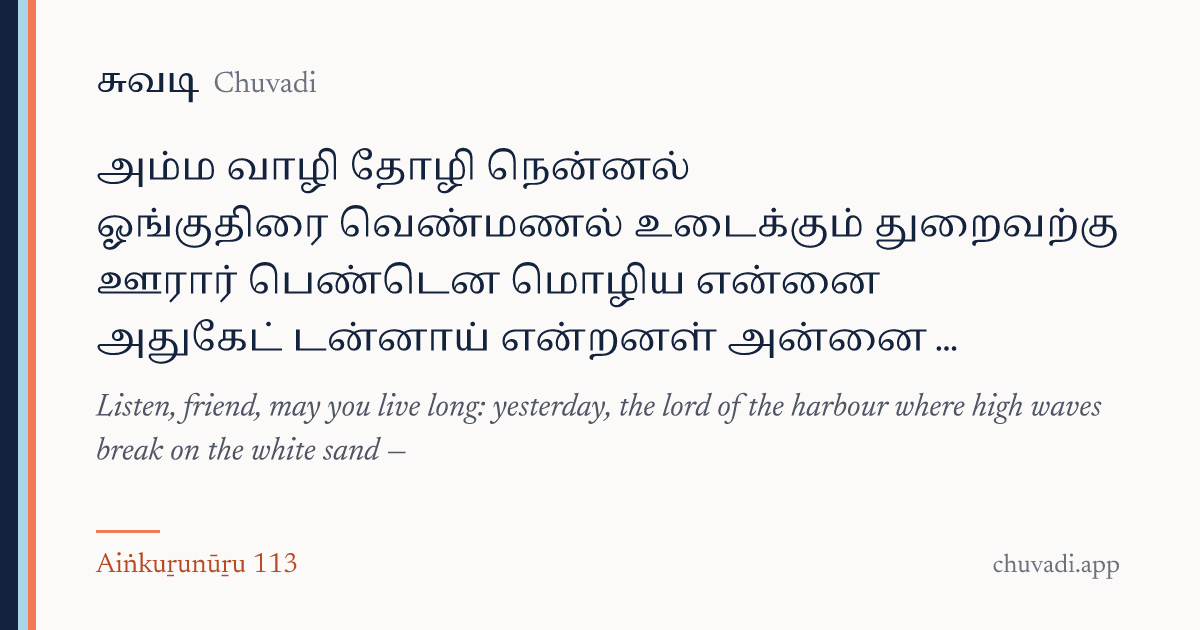

ஐங்குறுநூறு 113 · தோழிக்கு உரைத்த பத்து
பாடல் · The poem
Tap a word to see where else it occurs.
பொருள் · Meaning in TamilAI
தோழி, நீ வாழ்க; கேள். நேற்று, உயர்ந்த அலைகள் வெண்மணலை உடைக்கும் துறையை உடைய தலைவனுக்கு உரியவள் நான் என்று ஊரார் பேசினர். அதைக் கேட்ட அன்னை "மகளே!" என்று அழைத்தாள். நான் மெல்ல மெல்ல "என்னையா?" என்றேன்.
நெய்தல் திணை; தலைவி தோழியிடம் கூறுகிறாள். ஊரார் அலர் தாய்க்குத் தெரியவந்ததும், ஒன்றும் அறியாதவள் போலத் தலைவி பதில் சொன்னாள். இறுதிச் சொல் "வெம்மை" என்று அச்சிடப்பட்டுள்ளது; அதனை "பைபய எம்மை" என்று பிரித்துப் பொருள் கொள்ளப்பட்டது. அது "வெப்பம் (காய்ச்சல்)" என்றும் பொருள்படலாம்; உறுதியாகச் சொல்ல இயலாது.
ஆங்கிலம் · English translationAI
Translation
- Listen, friend, may you live long: yesterday,
- the lord of the harbour where high waves break on the white sand —
- when the townsfolk spoke of me as his woman,
- mother heard it and called out, 'My girl!'
- and I, very softly, answered, 'Me?'
What the poem says
A small domestic scene told by the heroine to her friend. The town's gossip has linked her name with the hero's, calling her 'his woman'. Her mother hears it and calls to her sharply. The girl answers in a tiny voice, as if she had no idea what anyone could mean.
The poem works through tone. The waves that break the white sand stand behind the gossip that has broken her secret. The last word is uncertain. The edition prints vemmai, which could mean 'heat' or 'fever', but the sandhi is better read as pai paya emmai, 'softly: me?', the girl's feigned innocence. I have taken it that way. If 'fever' is meant, she would be pretending the change in her is mere illness.