



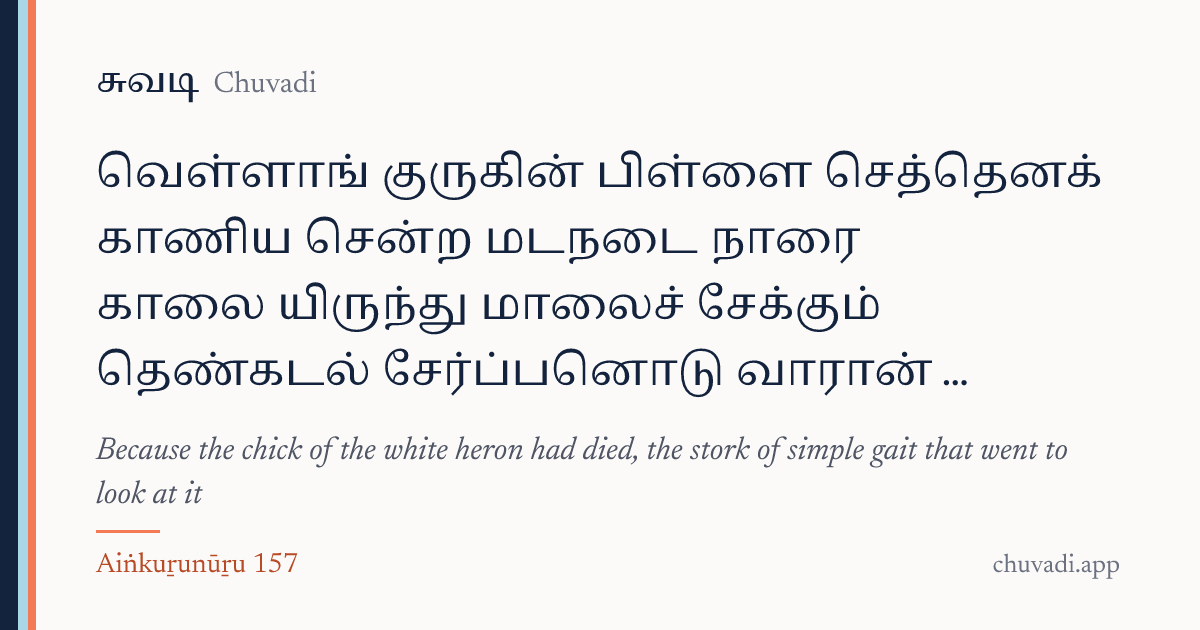

ஐங்குறுநூறு 157 · வெள்ளங் குருகுப் பத்து
பாடல் · The poem
Tap a word to see where else it occurs.
பொருள் · Meaning in TamilAI
வெள்ளாங்குருகின் குஞ்சு இறந்துவிட்டது என்று அதைப் பார்க்கச் சென்ற மென்னடை நாரை காலையிலிருந்து அங்கேயே இருந்து மாலையில் கூட்டுக்குச் செல்லும். தெளிந்த கடலின் கரைக்குரியவனோடு அவன் வரவில்லை; எம் காதலன் தானே தனியாக வந்தான்.
நெய்தல் திணை; கூற்று தெளிவாக இல்லை, தோழி கூற்றாக இருக்கலாம். நாள் முழுதும் காத்திருக்கும் நாரை தலைவியின் நீண்ட காத்திருப்பை நினைவூட்டுகிறது. இறுதி இரண்டு அடிகளின் பொருள் உறுதியாகத் தெரியவில்லை; 'எம் காதலோன்' என்பது யாரைக் குறிக்கிறது என்பதும் ஐயத்திற்குரியது.
ஆங்கிலம் · English translationAI
Translation
- Because the chick of the white heron had died,
- the stork of simple gait that went to look at it
- stays there from morning, and at evening goes to roost;
- with the lord of the clear sea's shore he did not come —
- he came by himself, our beloved.
What the poem says
The speaker is not clear; it may be the friend, speaking to the heroine or to the household. Someone she calls "our beloved" has come, and she stresses that he came on his own rather than in the company of the lord of the shore.
The stork of the refrain waits by the dead chick all day and only at evening goes to roost: a picture of patient, mournful waiting, which may echo the heroine's long days.
The last two lines are genuinely obscure. One possible sense is that the hero came in person, not merely as the lord of the coast with his retinue; another takes "our beloved" as a member of the heroine's own family. No reading is secure, and the translation keeps the words as they stand.