



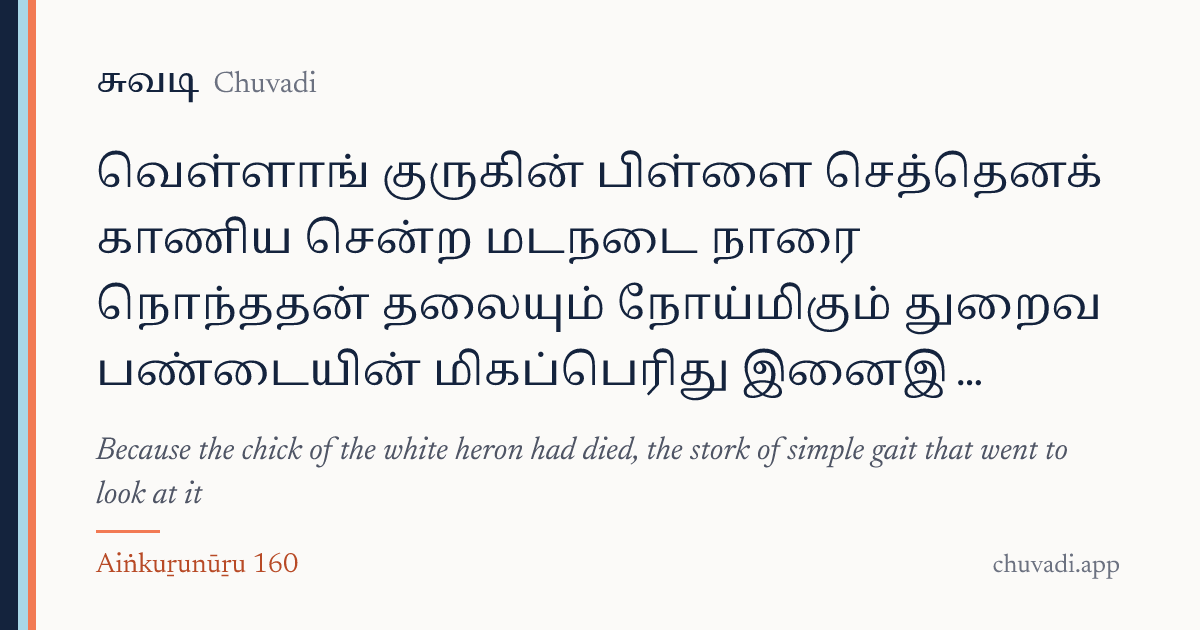

ஐங்குறுநூறு 160 · வெள்ளங் குருகுப் பத்து
பாடல் · The poem
Tap a word to see where else it occurs.
பொருள் · Meaning in TamilAI
வெள்ளாங்குருகின் குஞ்சு இறந்துவிட்டது என்று அதைப் பார்க்கச் சென்ற மென்னடை நாரை, முன்பே நொந்த துயரத்தின் மேல் மேலும் துன்பம் மிகும் துறையை உடையவனே! இவள் முன்னைவிட மிகப் பெரிதும் வருந்துகிறாள்; பெருமானே, இவளைத் தழுவிக்கொள்வாயாக; இவள் பெரிதும் மயங்கியிருக்கிறாள்.
நெய்தல் திணை; தோழி தலைவனிடம் வேண்டுகிறாள். துயரத்தின் மேல் துயரம் அடையும் நாரை, தலைவியின் பெருகும் வருத்தத்தைக் குறிக்கிறது. அவனுடைய அணைப்பே அவள் துயரைத் தீர்க்கும் என்பது கருத்து.
ஆங்கிலம் · English translationAI
Translation
- Because the chick of the white heron had died,
- the stork of simple gait that went to look at it
- finds pain mounting on what it has suffered — lord of the shore,
- she grieves far more than ever before;
- embrace her, great one — she is deeply bewildered.
What the poem says
The friend speaks to the hero once more, this time not with a rebuke but with an urgent plea. The heroine's suffering has grown beyond anything before; she is confused and lost, and only his embrace can help her.
The refrain's grieving stork now has sorrow heaped on sorrow. The phrase "pain mounting on what it has suffered" is attached to the shore in the syntax, but it clearly also describes the heroine.
The verb in the last line is misprinted in the edition (a stray y for mayaṅkiṉaḷ), but the sense, "she is bewildered", is not in doubt.