



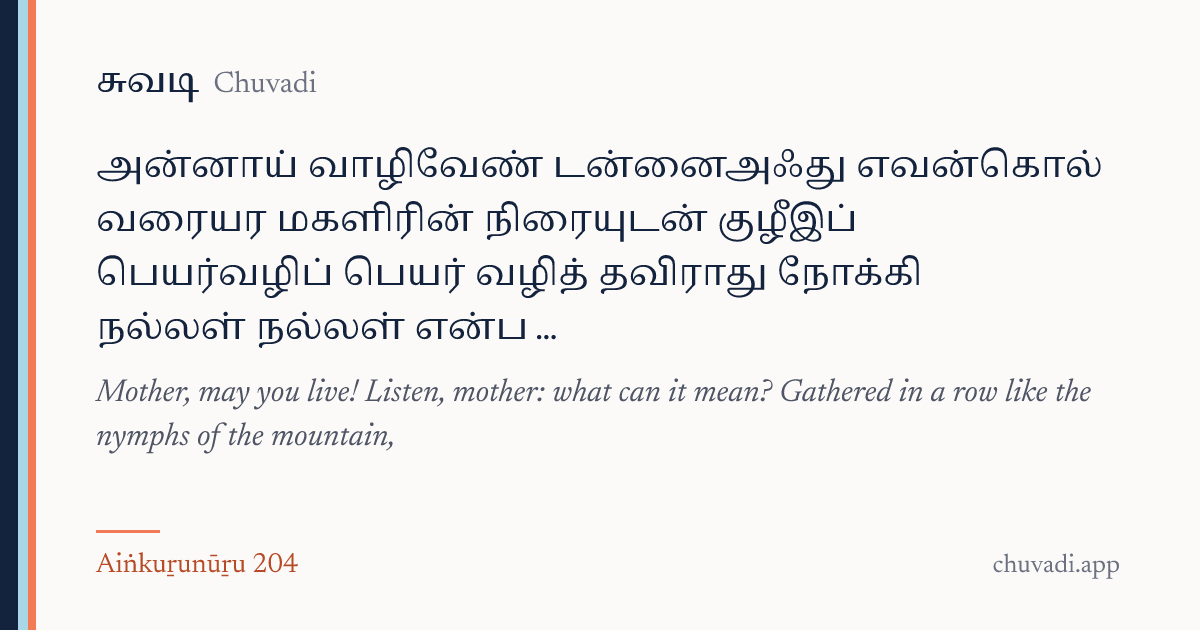

ஐங்குறுநூறு 204 · அன்னாய் வாழிப் பத்து
பாடல் · The poem
Tap a word to see where else it occurs.
பொருள் · Meaning in TamilAI
அன்னையே, நீ வாழ்க! நான் சொல்வதைக் கேள், அன்னையே! இது என்னவோ? மலைத் தெய்வ மகளிரைப் போல வரிசையாகக் கூடி நின்று, நான் போகும் இடமெல்லாம் இடைவிடாமல் என்னைப் பார்த்து, "இவள் நல்லவள், நல்லவள்" என்று சொல்கிறார்கள். ஆனால் மலைக்குரிய தலைவனுக்கோ நான் தீயவளாகவே இருக்கிறேன் போலும்!
இது குறிஞ்சித் திணை. தலைவி பேசுவதாகத் தோன்றுகிறது; அவள் அழைக்கும் அன்னை செவிலியா தோழியா என்பது உறுதியில்லை. ஊரார் புகழ்ந்தாலும் தலைவன் மணம் செய்ய வராதது பற்றிய வருத்தம் இதில் உள்ளது. அந்த மகளிர் யார் என்பது பாடலில் சொல்லப்படவில்லை.
ஆங்கிலம் · English translationAI
Translation
- Mother, may you live! Listen, mother: what can it mean?
- Gathered in a row like the nymphs of the mountain,
- wherever I go, wherever I go, they gaze without pause
- and say, "She is good, she is good" —
- yet I am wretched, it seems, to the lord of the mountain.
What the poem says
Here the speaker seems to be the heroine herself, speaking of "I". "Mother" (aṉṉāy) may be the foster-mother, or the friend, since the same word is used as a fond address to her. Women gather in a line, lovely as the goddesses of the hills, and follow her with their eyes wherever she goes, praising her. Yet the one man whose opinion matters treats her as if she were worthless.
The complaint is that he keeps up the secret affair but does not come to marry her. The irony lies between public praise and private neglect. Who the watching women are is not said. They may be village women or women of his own people.
The particle tilla in the last line adds a note of wish or wry certainty that English cannot carry exactly. The honorific plural "lords of the mountain" refers to the one hero.