




ஐங்குறுநூறு 212 · அன்னாய்ப் பத்து
பாடல் · The poem
Tap a word to see where else it occurs.
பொருள் · Meaning in TamilAI
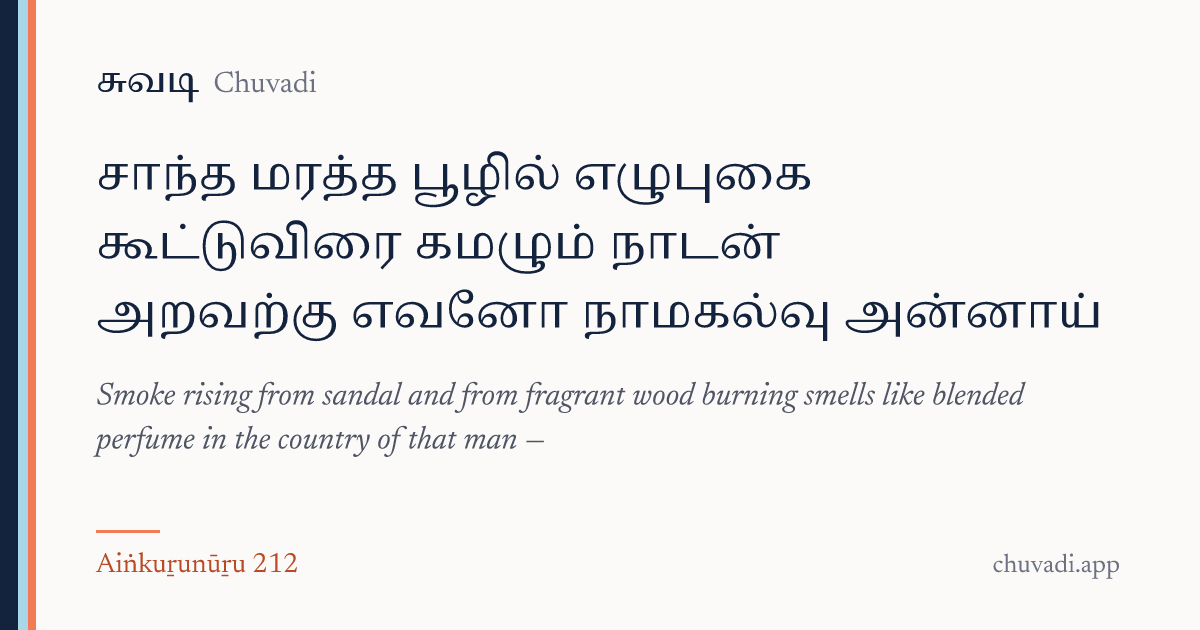
சந்தன மரமும் மணமுள்ள பூழில் மரமும் எரியும்போது எழும் புகை, கலந்த நறுமணப் பொருள்களைப் போல மணம் வீசும் நாட்டை உடையவன் அவன். அத்தகைய அறவோனுக்கு நம்மைவிட்டுப் பிரிவது ஏனோ, அன்னையே?
இது குறிஞ்சித் திணை. தலைவி தோழியிடம் பேசுவதாகக் கொள்ளலாம். இப்பாடலின் பாடம் அச்சுப்பிழைகளால் சிதைந்துள்ளது; "பூதிழ்" என்பது "பூழில்" என்றும், "நாமக்ல்வு" என்பது "நாம் அகல்வு" என்றும் கொள்ளப்பட்டது. இறுதி அடியின் பொருள் உறுதியாகத் தெரியவில்லை.
ஆங்கிலம் · English translationAI
Translation
- Smoke rising from sandal and from fragrant wood burning
- smells like blended perfume in the country of that man —
- why must we be parted from one so good, mother?
What the poem says
The hero's country is pictured through smell. The smoke of burning sandalwood and another aromatic wood drifts over his hills like a mixed perfume. The speaker, probably the heroine talking to her friend, asks why a man of such a gracious land, a man called "virtuous" (aṟavaṉ), should leave her.
The word aṟavaṉ, the righteous one, can be sincere or bitter. A man so just ought not to break faith, and that is how the line should probably be heard.
The edition's text of this poem is damaged by misprints. Pūtiḻ is most likely pūḻil, a fragrant wood burnt for incense. Nāmaklvu is read here as nām akalvu, "our being parted". Another reading, nām alarvu, "our being gossiped about", is possible, so the last line should be taken as an informed guess.