



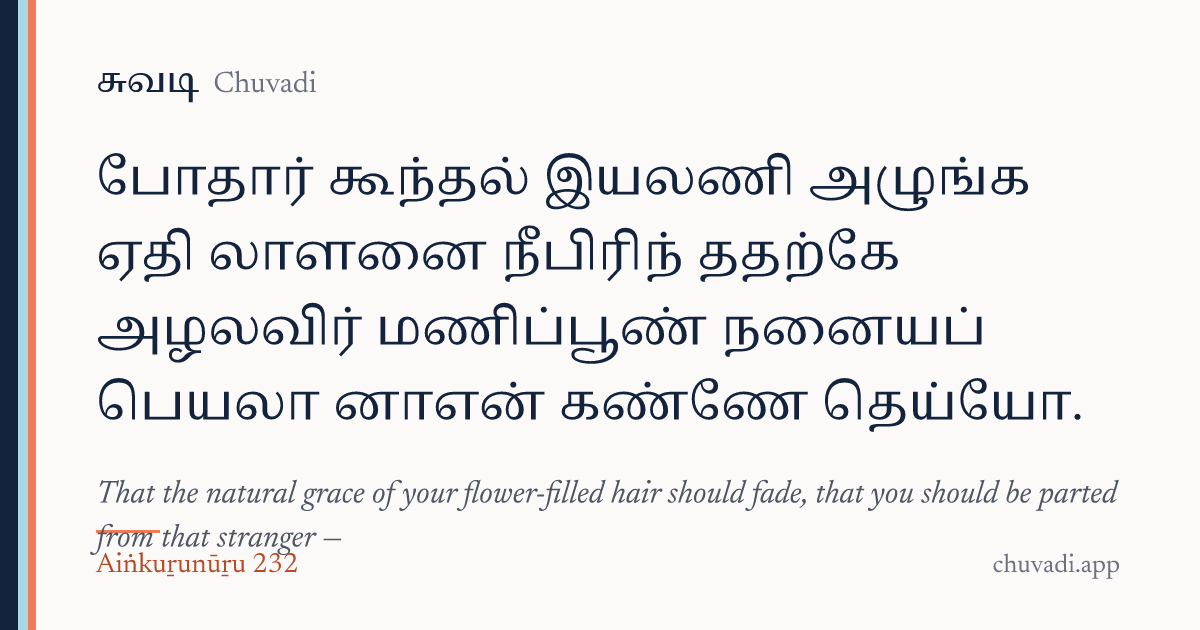

ஐங்குறுநூறு 232 · தெய்யோப் பத்து
பாடல் · The poem
Tap a word to see where else it occurs.
பொருள் · Meaning in TamilAI
மலர்கள் நிறைந்த உன் கூந்தலின் இயல்பான அழகு கெடும்படி, அந்த அயலானை நீ பிரிந்திருப்பதால், நெருப்பைப் போல ஒளிவீசும் என் மணி அணிகலன்கள் நனையும்படி என் கண்கள் மழையாகப் பொழிவதை நிறுத்தவில்லை.
இது குறிஞ்சித் திணை. தோழி தலைவியிடம் தன் வருத்தத்தைச் சொல்வதாகக் கொள்ளப்பட்டது. மூன்றாம் அடியின் பாடம் சிதைந்ததாகத் தோன்றுகிறது; "அழல் அவிர் மணிப்பூண் நனைய" என்று கொண்டு பொருள் சொல்லப்பட்டது. கூற்று பற்றியும் ஐயம் உண்டு.
ஆங்கிலம் · English translationAI
Translation
- That the natural grace of your flower-filled hair should fade,
- that you should be parted from that stranger —
- so that my flame-bright, jewelled ornaments are drenched,
- my eyes never stop their rain, teyyō.
What the poem says
This poem breaks the decade's pattern. The friend seems to be speaking to the heroine and describing her own grief. Because the girl is parted from her lover, and the beauty of her flower-decked hair is fading, the friend weeps until the jewels on her own breast are soaked.
The hero is called a "stranger" (ētilāḷaṉ), someone outside the family, not yet a kinsman by marriage. In this context the word is mildly bitter. The friend's sympathy is total, but she may also be speaking within the hero's hearing, so that he knows how much his absence costs.
The third line in the edition, aḻavir maṇippūṇ aṉaiya, is probably corrupt. It is read here as aḻal avir maṇippūṇ naṉaiya, "so that the fire-bright jewels are wet". If the speaker is the heroine instead, the "you" of the second line would have to be the hero, which fits the text less well.