




ஐங்குறுநூறு 236 · தெய்யோப் பத்து
பாடல் · The poem
Tap a word to see where else it occurs.
பொருள் · Meaning in TamilAI
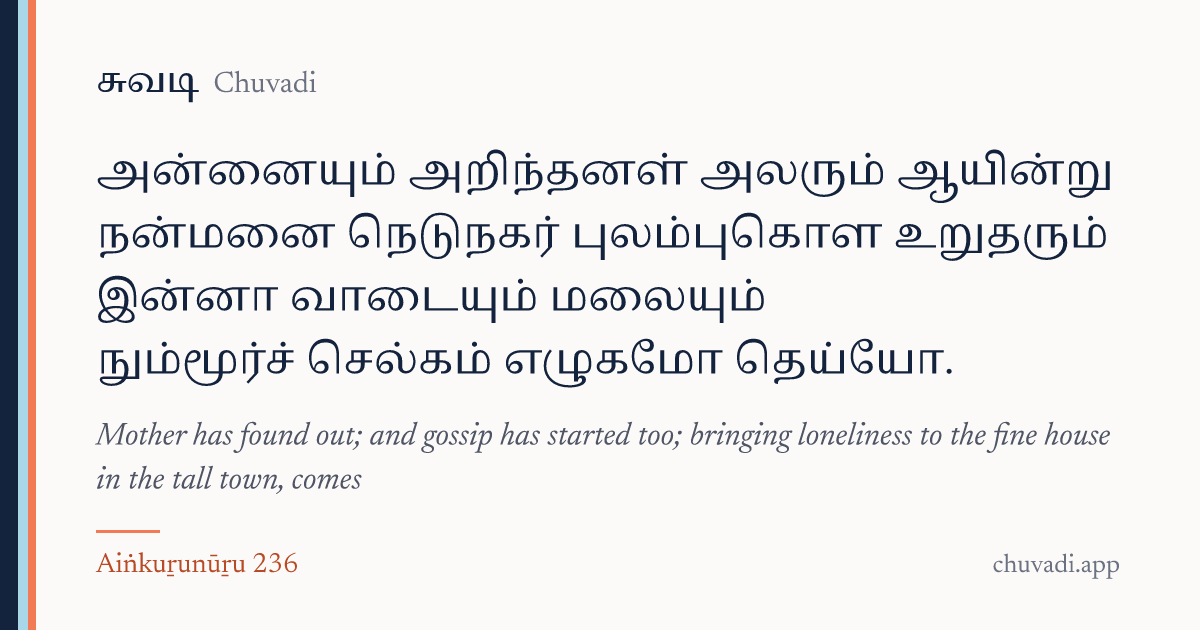
அன்னையும் அறிந்துவிட்டாள்; ஊரில் அலரும் எழுந்துவிட்டது. உயர்ந்த மாளிகைகள் உள்ள இந்த நல்ல வீடு தனிமைத் துயரால் வாடும்படி வரும் கொடிய வாடைக் காற்றும் நம்மைத் தாக்குகிறது. ஆகவே உங்கள் ஊருக்குச் செல்வோம்; எழுந்து புறப்படுவோமா?
இது குறிஞ்சித் திணை; தோழி தலைவனிடம் உடன்போக்கை வேண்டுகிறாள். களவு வெளிப்பட்டு அலர் எழுந்ததால் இனி இங்கே இருப்பது கடினம். "மலையும்" என்பதைத் "தாக்கும்" என்ற வினையாகக் கொள்ளப்பட்டது; "மலை" என்ற பெயராகவும் கொள்ளலாம்.
ஆங்கிலம் · English translationAI
Translation
- Mother has found out; and gossip has started too;
- bringing loneliness to the fine house in the tall town, comes
- the harsh north wind, and it assails us as well —
- let us go to your town; shall we rise and go, teyyō?
What the poem says
The friend puts the case for elopement plainly to the hero. The secret is out. The mother knows, and the village is talking (alar). Staying is now dangerous for the girl. The cruel north wind has also come, the season that makes the big family house feel desolate to a girl kept indoors and parted from her lover.
So she proposes that they leave for his town together. Elopement (uṭaṉpōkku) is the friend's last resort in kuṟiñci poems when the family will not agree or the affair has been discovered.
Malaiyum in the third line is taken as a verb, "fights, assails" (from malaital). It could also be the noun "mountain", giving "the north wind and the mountain", but that reading makes weaker sense.