



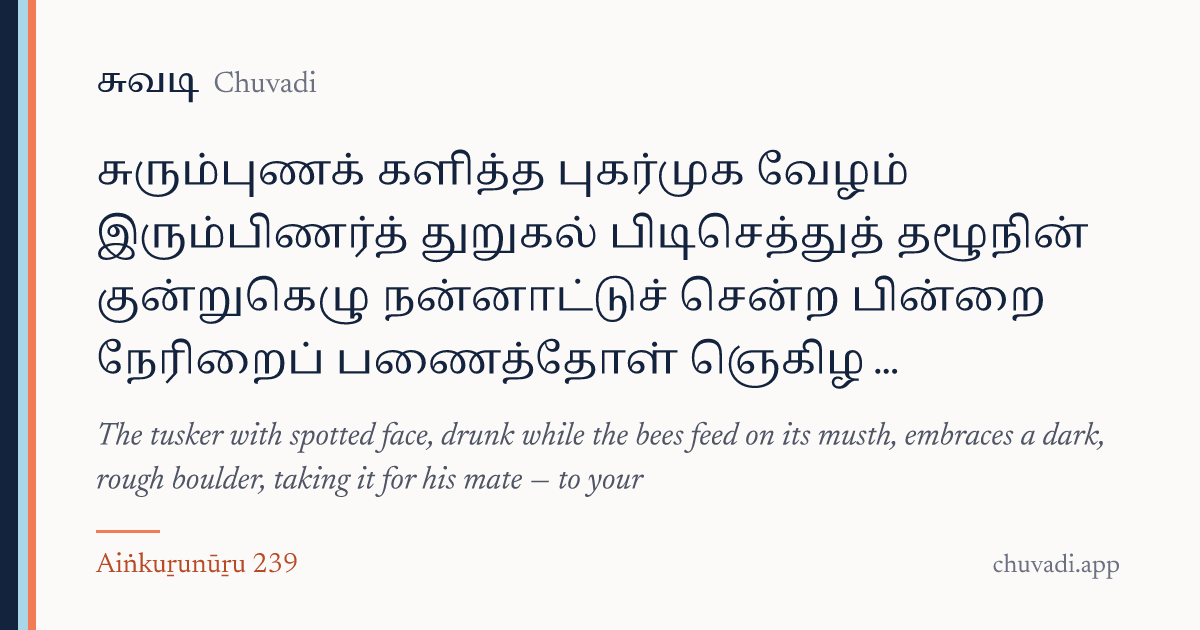

ஐங்குறுநூறு 239 · தெய்யோப் பத்து
பாடல் · The poem
Tap a word to see where else it occurs.
பொருள் · Meaning in TamilAI
வண்டுகள் மதநீரை உண்ணும்படி மதம் கொண்ட, புள்ளிகள் உள்ள முகத்தையுடைய யானை, கரிய சொரசொரப்பான பாறையைத் தன் பெண்யானை என்று எண்ணித் தழுவும் குன்றுகள் நிறைந்த உன் நல்ல நாட்டுக்கு நீ சென்ற பிறகு, இவளுடைய ஒழுங்கான கணுக்களையுடைய பருத்த தோள்கள் மெலியும்படி நீ திரும்பி வராவிட்டால், நாங்கள் உயிர் வாழ மாட்டோம்.
இது குறிஞ்சித் திணை; தோழி தலைவனிடம் கூறுகிறாள். பாறையைப் பிடியென்று தழுவும் யானை, காமத்தின் மயக்கத்தைக் காட்டுகிறது; இதன் உள்ளுறையை உறுதியாகக் கூற இயலாது.
ஆங்கிலம் · English translationAI
Translation
- The tusker with spotted face, drunk while the bees feed on its musth,
- embraces a dark, rough boulder, taking it for his mate — to your
- good country of hills, once you have gone away,
- while her broad shoulders, smooth in their joints, grow thin,
- if you do not come back, we shall not live, teyyō.
What the poem says
The friend warns the hero that if he goes back to his country and does not return while the girl wastes away, neither she nor her friend will survive. The "we" counts the friend's life in with the girl's, as these friends often do.
The image describes his country. A rutting elephant, its spotted face swarming with bees drawn to the musth, is so blind with desire that it hugs a rough black boulder, taking it for his cow-elephant. The picture can be read several ways. It may show how desire confuses, or how a lover who keeps away has only empty substitutes. It may simply be a strong scene of the hero's wild land. The poem does not settle it, and none of these readings should be pressed.
Nēr iṟai paṇaittōḷ means shoulders broad like bamboo and smoothly jointed, a standard praise.