



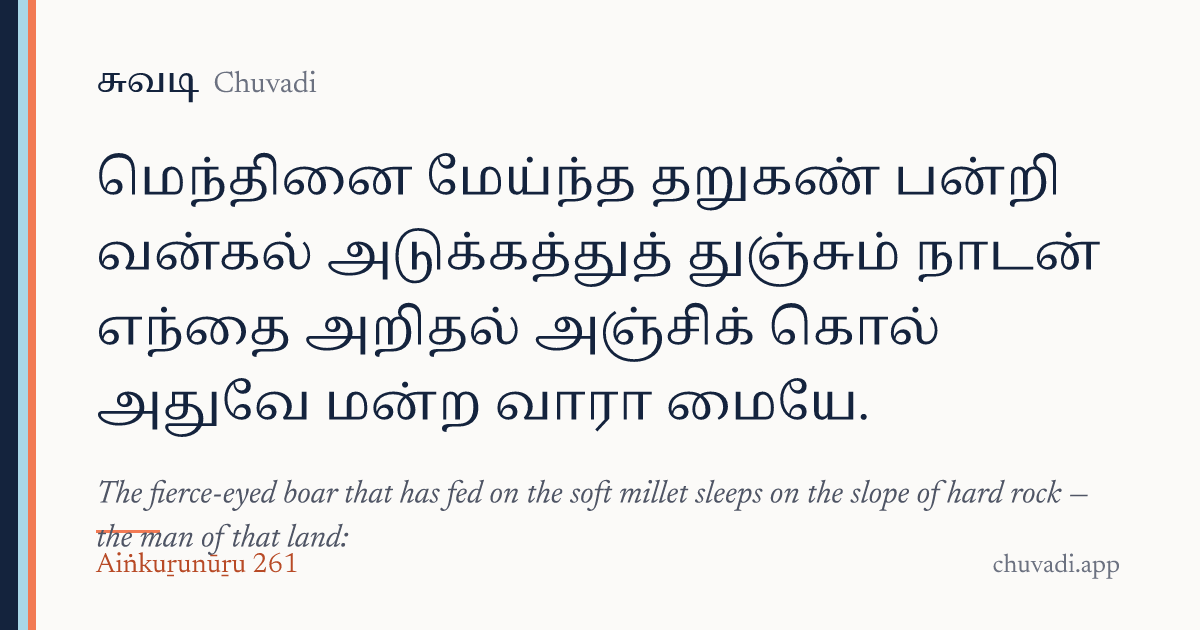

ஐங்குறுநூறு 261 · கேழற் பத்து
பாடல் · The poem
Tap a word to see where else it occurs.
பொருள் · Meaning in TamilAI
மென்மையான தினையை மேய்ந்த அஞ்சாத கண்களை உடைய பன்றி, வலிய பாறைகள் நிறைந்த மலைச்சரிவில் கவலையின்றி உறங்கும் நாட்டை உடையவன் அவன். நம் தந்தை அறிந்துவிடுவாரோ என்று அஞ்சித்தானோ? அதுவே உறுதியாக அவன் வாராமைக்குக் காரணம்.
குறிஞ்சித் திணை; தலைவியோ தோழியோ கூறுவதாகக் கொள்ளலாம். தினையைக் கவர்ந்தும் அஞ்சாமல் உறங்கும் பன்றியைப் போல அல்லாமல், தலைவன் தந்தைக்கு அஞ்சி வாராதிருக்கிறான் என்று மெல்லக் குறை கூறுவது உள்ளுறையாகத் தோன்றுகிறது.
ஆங்கிலம் · English translationAI
Translation
- The fierce-eyed boar that has fed on the soft millet
- sleeps on the slope of hard rock — the man of that land:
- is it for fear that our father would come to know?
- That, surely, is why he does not come.
What the poem says
This decade takes the wild boar (kēḻal) as its opening image. Here the heroine, or possibly the friend, wonders why the hero has stopped coming, and supposes that he is afraid her father will find out.
The image works by contrast. The boar raids the millet field and then sleeps without a care on the rocks, quite unafraid of the owners. The hero, who has likewise "raided" the household by his secret love, is less bold: he keeps away for fear of being caught. There is a touch of reproach in the comparison.
The tone of the last line, with its emphatic manṟa ("surely"), can be read as a sigh of resignation or as mild mockery of his caution; the poem allows both.