



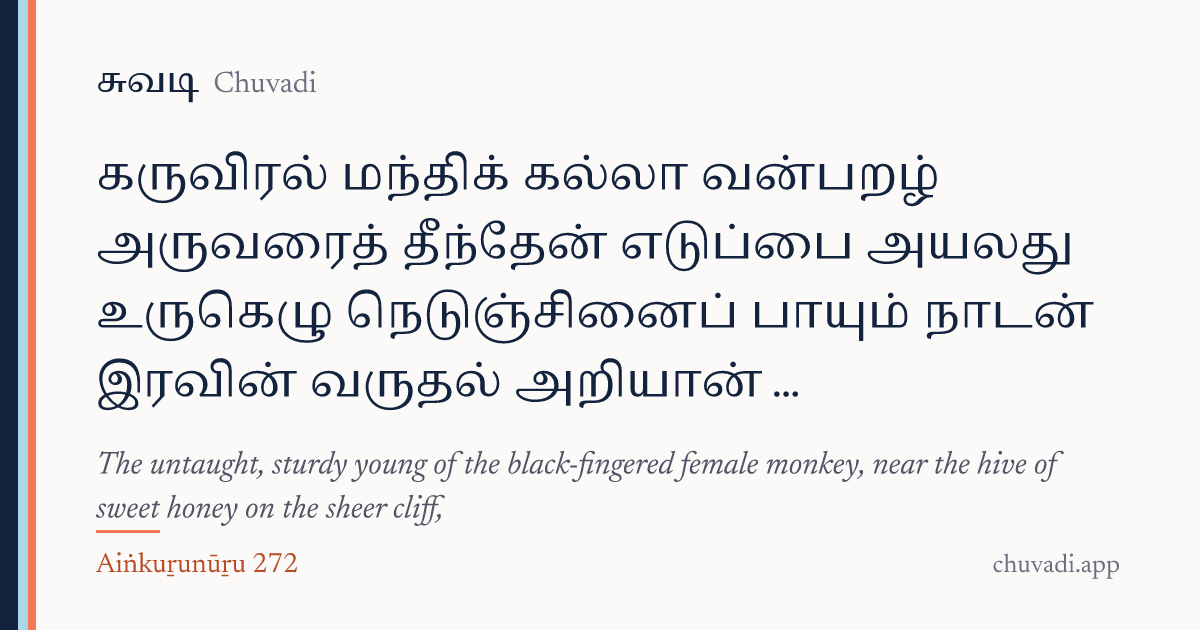

ஐங்குறுநூறு 272 · குரக்குப் பத்து
பாடல் · The poem
Tap a word to see where else it occurs.
பொருள் · Meaning in TamilAI
கரிய விரல்களை உடைய பெண்குரங்கின், எதையும் அறியாத வலிய குட்டி, ஏறுதற்கரிய மலைமேல் உள்ள இனிய தேனடைக்கு அருகில் உள்ள அச்சம் தரும் நீண்ட கிளையில் பாயும் நாட்டை உடையவன், இரவில் வருவதன் இடர்ப்பாட்டை அறியாமல் இருக்கிறான். தோழி, என் தாயோ 'அவன் வருகிறான், வருகிறான்' என்று சொல்லுகிறாள்.
குறிஞ்சித் திணை; தலைவி தோழியிடம் கூறுவது. இரவில் வருவதன் இடரும், தாய் ஐயுறத் தொடங்கியதும் அவளை அஞ்சச் செய்கின்றன. அஞ்சாமல் கிளையில் பாயும் குரங்குக்குட்டி, இரவில் வரும் தலைவனின் துணிவைக் குறிக்கிறது. இறுதி இரண்டு அடிகளின் பொருள் உறுதியாகத் தெரியவில்லை; வேறுவிதமாகவும் கொள்ள இடமுண்டு.
ஆங்கிலம் · English translationAI
Translation
- The untaught, sturdy young of the black-fingered female monkey,
- near the hive of sweet honey on the sheer cliff,
- leaps onto a long and fearsome branch — the man of that land
- does not know the peril of coming by night;
- and 'He comes, he comes,' my mother keeps saying, friend.
What the poem says
The heroine speaks to her friend, and two dangers press on her. Her lover comes by night without thinking of the risks on the mountain path; and her mother has begun to say "he comes, he comes", which suggests she suspects the night visits. The secret is close to being out.
The young monkey, "untaught" (kallā) and reckless, jumps onto a dangerous branch beside a cliff-side hive, a picture of daring without sense that fits the hero coming through the dark.
The last two lines can be read in other ways. Iraviṉ varutal aṟiyāṉ may mean "he does not understand (the harm of) coming at night", as I have it; and the mother's words could be a hope that he will come to ask for her. The edition gives no help, and I mark the reading as uncertain.