



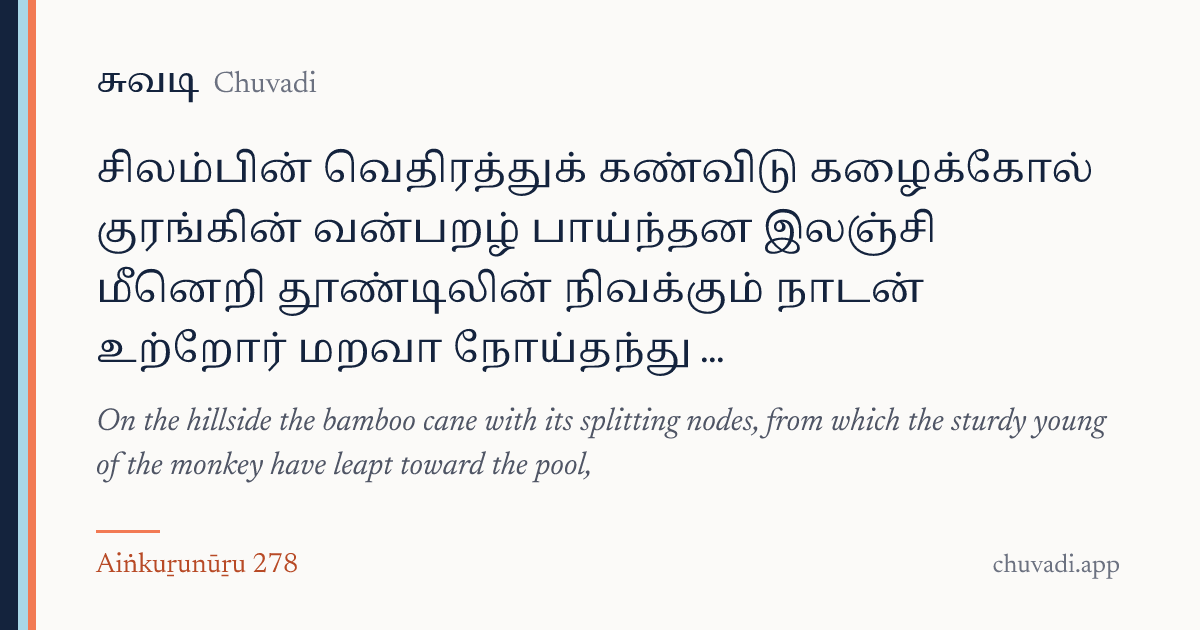

ஐங்குறுநூறு 278 · குரக்குப் பத்து
பாடல் · The poem
Tap a word to see where else it occurs.
பொருள் · Meaning in TamilAI
மலைச்சரிவில் கணுக்கள் விரிந்த மூங்கில் கழையிலிருந்து குரங்கின் வலிய குட்டிகள் குளத்தை நோக்கிப் பாய்ந்ததும், அக்கழை மீனை எறியும் தூண்டில்கோல் போல மேலே எழும் நாட்டை உடையவன், அடைந்தவர் என்றும் மறக்க முடியாத நோயைத் தந்து, கண்டவர் தெவிட்டாத என் அழகைக் கவர்ந்து சென்றுவிட்டான்.
குறிஞ்சித் திணை; தலைவியோ அவள் சார்பில் தோழியோ கூறுவது; கூற்று உறுதியாகத் தெரியவில்லை. குட்டிகள் பாய்ந்ததும் சட்டென எழும் மூங்கில், அவள் அழகு திடீரெனப் பறிக்கப்பட்டதையோ அவன் விட்டுச் சென்றதையோ குறிக்கலாம்.
ஆங்கிலம் · English translationAI
Translation
- On the hillside the bamboo cane with its splitting nodes,
- from which the sturdy young of the monkey have leapt toward the pool,
- springs up like a fishing rod that flings out fish — the man of that land,
- giving me a sickness that those it touches never forget,
- has taken away a beauty that those who saw it could never have enough of.
What the poem says
The heroine, or the friend speaking for her, complains that the hero has given her the sickness of love, which no one who has suffered it ever forgets, and in exchange taken her beauty, which was a delight to everyone who saw it.
The image is lively and precise. Young monkeys bend a bamboo cane by the pool and jump off it; released, the cane springs back up like a fishing rod jerking a fish out of the water. The sudden, violent recoil may suggest how quickly her beauty has been snatched away, or how the hero leaps off and leaves her.
Kaṇviṭu kaḻai is bamboo whose nodes (kaṇ) are opening or splitting. The text has paraḻ for paṟaḻ, "young". Who exactly speaks, heroine or friend, is not certain.