



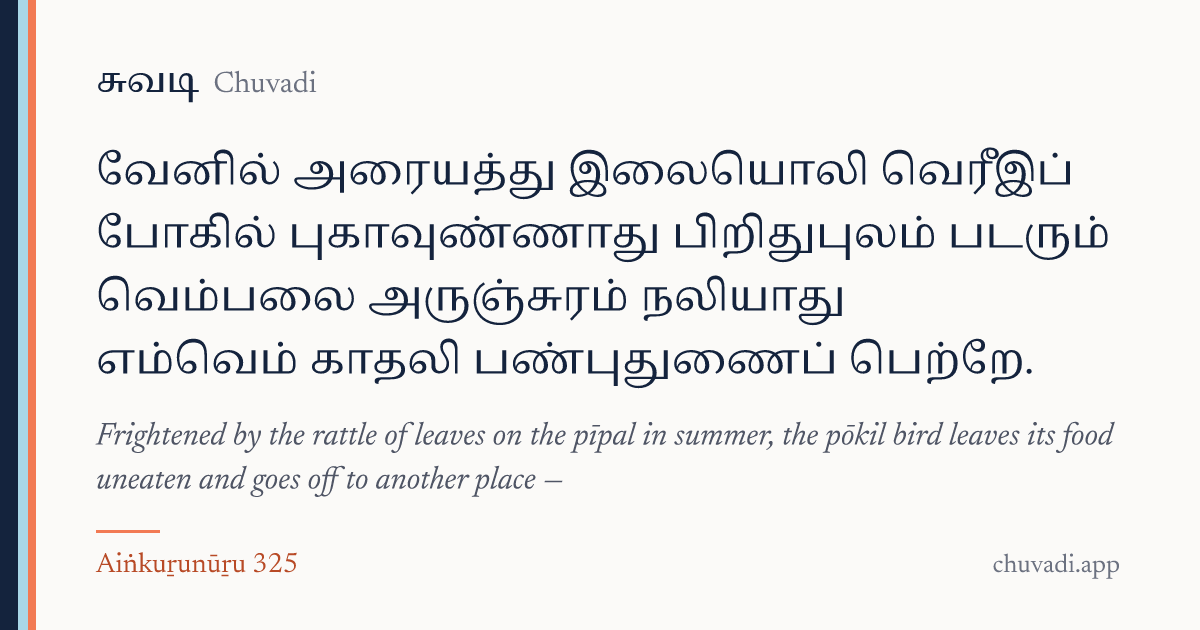

ஐங்குறுநூறு 325 · இடைச்சுரப் பத்து
பாடல் · The poem
Tap a word to see where else it occurs.
பொருள் · Meaning in TamilAI
வேனிற்காலத்தில் அரச மரத்தின் இலைகள் சலசலக்கும் ஒலியைக் கேட்டு அஞ்சி, போகில் பறவை தன் உணவை உண்ணாமலேயே வேறு இடத்திற்குப் பறந்து செல்லும். அத்தகைய வெப்பமான கொடிய பாலை வழி எம்மை வருத்துவதில்லை; ஏனெனில் என் அன்புக் காதலியின் நற்பண்பைத் துணையாகப் பெற்றிருக்கிறோம்.
பாலைத் திணை; தலைவன் கூற்று. பறவையும் தாங்க முடியாத வழியைக் கூட, காதலியின் நினைவு தாங்கக்கூடியதாக ஆக்குகிறது. ‘எம்வெம் காதலி’ என்ற பாடம் சிதைந்திருப்பதாகத் தோன்றுகிறது; ‘வெங்காதலி’ என்று கொண்டு பொருள் கூறப்பட்டுள்ளது.
ஆங்கிலம் · English translationAI
Translation
- Frightened by the rattle of leaves on the pīpal in summer,
- the pōkil bird leaves its food uneaten and goes off to another place —
- yet the hot, cruel wasteland does not trouble us,
- since we have for our companion the goodness of my ardent beloved.
What the poem says
The hero again claims that the heroine's goodness protects him on the road. The scene is small and exact: in the dry heat the leaves of the pīpal tree (araiyam) rattle so loudly that a pōkil bird takes fright and flies off without eating.
If even a bird cannot bear the place, the road is truly harsh. But the hero says it does not hurt him, because he carries with him, as a companion, the memory of her nature.
The last line as printed reads em-vem kātali, which seems garbled. It is taken as a form of vem-kātali, 'ardent' or 'dearly loved' beloved. The bird's sudden fear also suggests the general unease of the wasteland.