



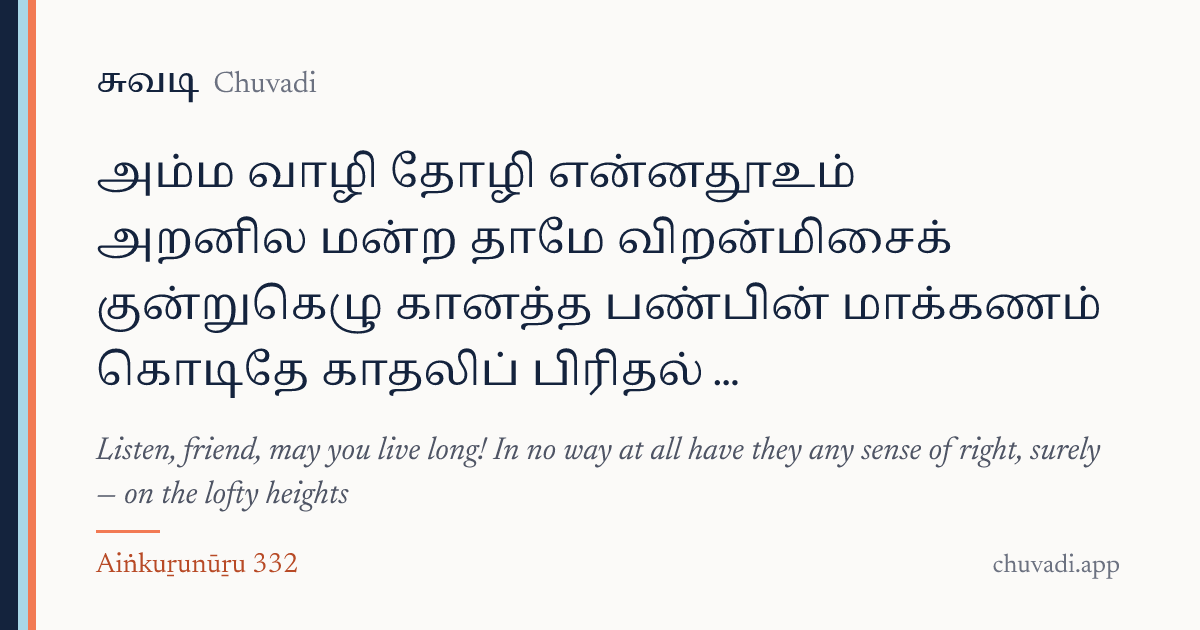

ஐங்குறுநூறு 332 · தலைவி இரங்கு பத்து
பாடல் · The poem
Tap a word to see where else it occurs.
பொருள் · Meaning in TamilAI
தோழி, கேள், நீ வாழ்வாயாக! வலிமை மிக்க உயரங்களில் குன்றுகள் நிறைந்த காட்டில் வாழும் பண்பில்லாத விலங்குக் கூட்டங்கள் சிறிதும் அறம் அற்றவை என்பது உறுதி. ‘காதலியைப் பிரிவது கொடியது; ஐயா, போகாதே’ என்று அவை அவரிடம் சொல்லவில்லையே!
பாலைத் திணை; தலைவி தோழியிடம் கூறுவது. விலங்குகள் பேசுவதில்லை என்றாலும், அவனைத் தடுக்காததற்காக அவற்றைக் குறை கூறுவது அவளுடைய ஆற்றாமையைக் காட்டுகிறது. துணையைப் பிரியாத விலங்குகளைக் கண்டாவது அவன் உணர்ந்திருக்க வேண்டும் என்பதும் குறிப்பாகப் புலப்படுகிறது.
ஆங்கிலம் · English translationAI
Translation
- Listen, friend, may you live long! In no way at all
- have they any sense of right, surely — on the lofty heights
- of that forest full of hills, the graceless herds of beasts;
- 'It is cruel to leave the one you love;
- do not go, sir' — that they never say.
What the poem says
The heroine finds fault with the animals of the hill forest. Not one of them, she complains, had the decency to tell her lover that it is cruel to leave a beloved and that he should not go. She calls them graceless (paṇpil) and without righteousness (aṟaṉ il).
The complaint is not meant literally. It shows how she looks for anyone to blame, and how she imagines that even beasts ought to know what he has failed to understand. In many pālai poems, animals are shown caring for their mates, so the heroine's reproach also hints that he should have learned from them.
The text has a few slips: kāṉatta is printed kāṉathta, and the final form eṉṉātavvē is a plural negative meaning 'they do not say'. The general sense is clear.