



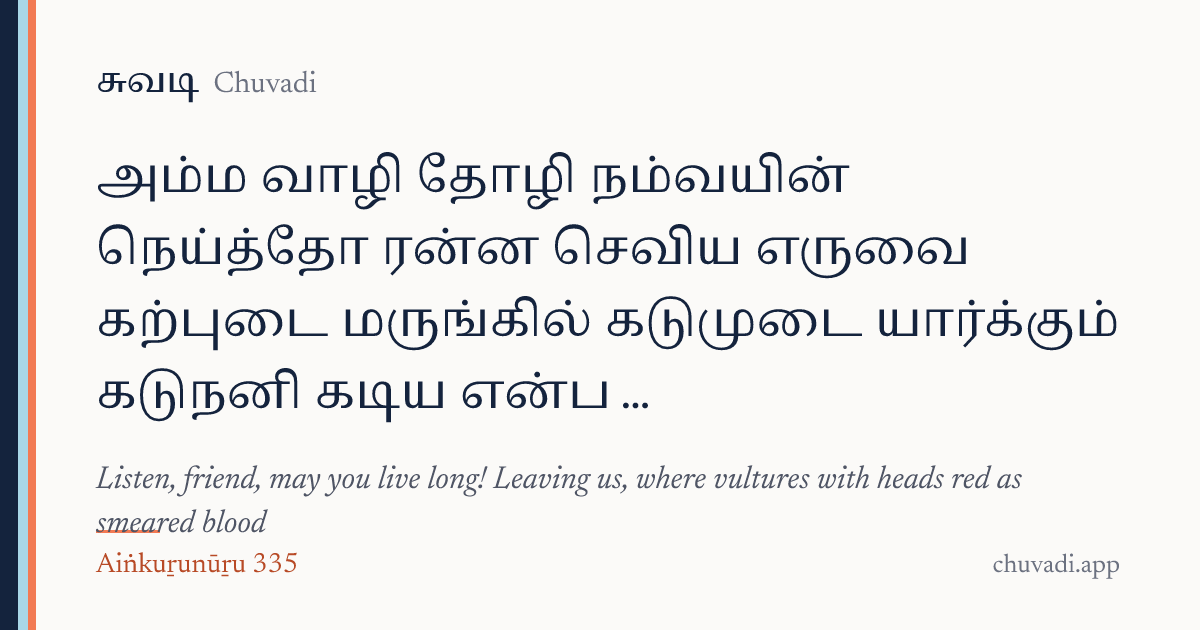

ஐங்குறுநூறு 335 · தலைவி இரங்கு பத்து
பாடல் · The poem
Tap a word to see where else it occurs.
பொருள் · Meaning in TamilAI
தோழி, கேள், நீ வாழ்வாயாக! நம்மைப் பிரிந்து அவர் சென்ற வழியில், பூசிய இரத்தம் போலச் சிவந்த தலையை உடைய கழுகுகள், பாறைகளின் அருகே கிடக்கும் கடுமையாக நாறும் ஊனைத் தின்னும். காலம் தாழ்த்தியே இங்கு வரப்போகிறவர் சென்ற அந்த வழி மிக மிகக் கொடியது என்று சொல்கிறார்கள்.
பாலைத் திணை; தலைவி தோழியிடம் கூறுவது. பிணம் தின்னும் கழுகுகள் வழியின் அச்சத்தைக் காட்டுகின்றன. ‘நெய்தோர்’, ‘வெவிய’, ‘கற்புடை’, ‘இவன்’ என்ற பாடங்கள் சிதைந்துள்ளன; முறையே ‘நெய்த்தோர்’, ‘செவிய’, ‘கல்புடை’, ‘இவண்’ என்று கொண்டு பொருள் கூறப்பட்டுள்ளது.
ஆங்கிலம் · English translationAI
Translation
- Listen, friend, may you live long! Leaving us,
- where vultures with heads red as smeared blood
- feast on rank, stinking flesh beside the rocks —
- very cruel indeed, they say,
- is the road taken by him who will be long in coming back here.
What the poem says
The heroine repeats what she has heard about his road: vultures (eruvai) with blood-red heads tear at foul carrion among the rocks. The image is of a place of death, perhaps where travellers have been killed by robbers.
The final line has a weary note. She calls him the one who 'will be long and then come here' (nīṭi ivaṇ varunar): she expects his return, but not soon.
Several words in the printed text are corrupt. Neytōr is read as neyttōr, 'blood'; veviya as ceviya, 'eared' or 'headed'; kaṟpuṭai as kalpuṭai, 'beside the rocks'; and ivaṉ as ivaṇ, 'here'. The red-headed vulture fits the description, but the exact bird cannot be fixed from the text.