



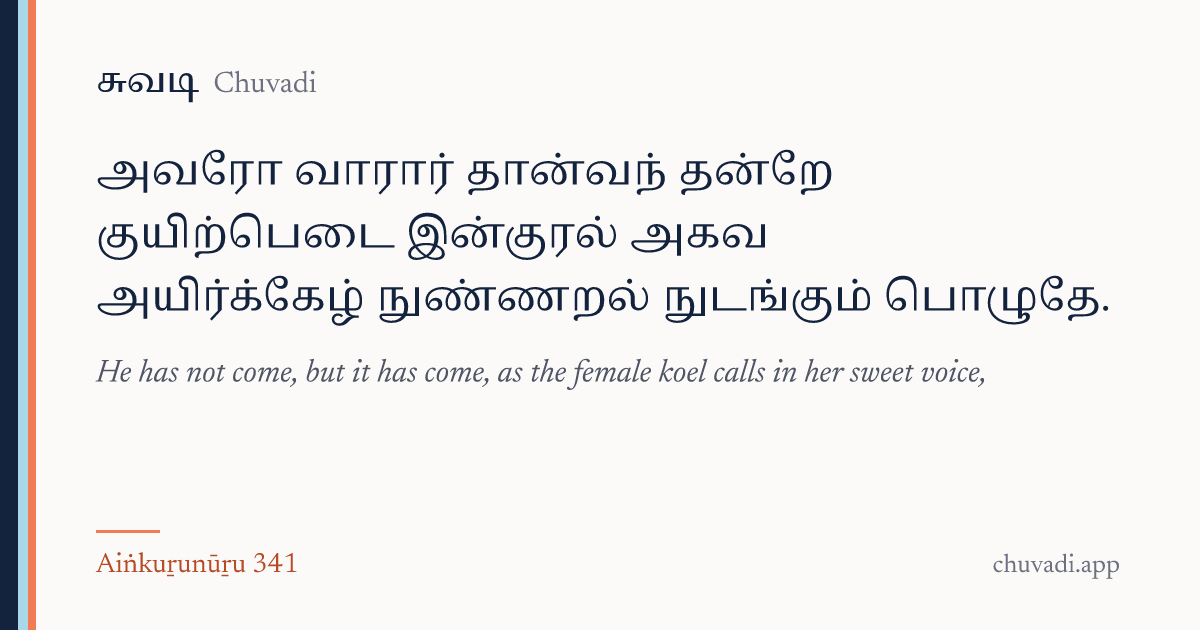

ஐங்குறுநூறு 341 · இளவேனிற் பத்து
பாடல் · The poem
Tap a word to see where else it occurs.
பொருள் · Meaning in TamilAI
அவர் வரவில்லை; ஆனால் அந்தப் பருவம் வந்துவிட்டது. பெண்குயில் இனிய குரலில் கூவுகிறது; அயிர் போன்ற நிறமுடைய நுண்ணிய மணல்வரிகள் ஓடையில் அலைந்து அசைகின்றன. அத்தகைய இளவேனிற்பொழுது இது.
பாலைத் திணை; ‘இளவேனிற் பத்து’ என்பதால், பருவம் வந்தும் தலைவன் வராததைத் தலைவி தோழியிடம் கூறுவதாகக் கொள்ளலாம். இளவேனில் வரும்போது திரும்புவேன் என்று அவன் சொல்லியிருந்தான் போலும். குயிலின் குரல் ஏக்கத்தைத் தூண்டும் அடையாளம். ‘அயிர்க்கேழ்’ என்பதன் சரியான நிறம் உறுதியாகத் தெரியவில்லை.
ஆங்கிலம் · English translationAI
Translation
- He has not come, but it has come,
- as the female koel calls in her sweet voice,
- the season when the fine streaks of sand, the colour of ayir, ripple in the stream.
What the poem says
This decade, 'the ten of early spring' (iḷavēṉil), is spoken by the heroine, most likely to her friend. Each poem has three lines and begins with the same refrain: 'He has not come, but it has come.' 'It' is the season, which the last line names each time as 'the time when' something in nature happens. The hero had promised, it seems, to return by spring; spring has arrived without him.
Here the signs are the female koel singing and the fine streaks of sand rippling under clear, shallow water. The koel's song is the classic voice of spring and of longing in Tamil poetry.
Ayir is a word for fine sand or fine grains, and ayirkkēḻ may describe the sand's dark or glittering colour. The exact shade is not certain.