




ஐங்குறுநூறு 343 · இளவேனிற் பத்து
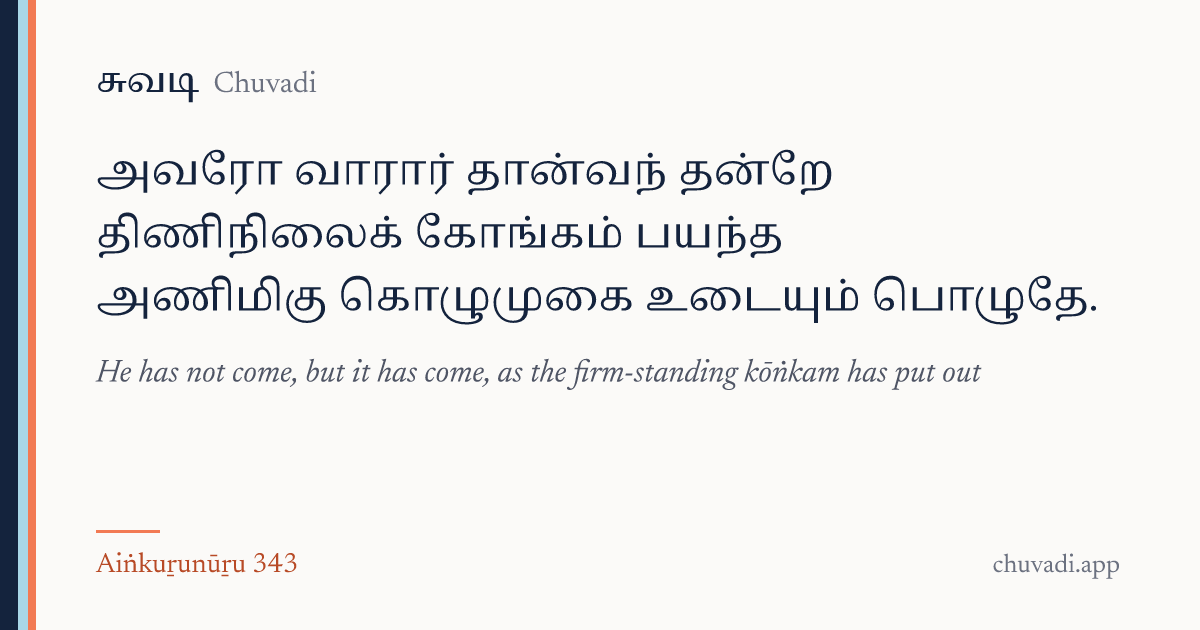
பாடல் · The poem
Tap a word to see where else it occurs.
பொருள் · Meaning in TamilAI
அவர் வரவில்லை; ஆனால் அந்தப் பருவம் வந்துவிட்டது. உறுதியாக நிற்கும் கோங்க மரம் ஈன்ற அழகு மிகுந்த திரண்ட மொட்டுகள் மலர்ந்து விரியும் பொழுது இது.
பாலைத் திணை; தலைவி கூற்று. கோங்க மொட்டு சங்கப் பாடல்களில் இளம்பெண்ணின் மார்புக்கு உவமையாக வருவது வழக்கம்; ஆகவே தலைவியின் இளமை வீணாகிறது என்ற குறிப்பும் இதில் இருக்கலாம். பருவம் வந்தும் தலைவன் வரவில்லை என்பது துயரத்தின் மையம். மொட்டுகள் விரியும் காட்சி அழகாக இருந்தாலும், அது அவளுக்கு ஏக்கத்தையே தருகிறது.
ஆங்கிலம் · English translationAI
Translation
- He has not come, but it has come,
- as the firm-standing kōṅkam has put out
- its rich, beautiful buds — the season when they burst open.
What the poem says
The refrain is followed by a single image: the kōṅkam tree (Cochlospermum, which bears golden-yellow flowers on bare branches in the dry season) breaking out of its plump, lovely buds.
In Sangam poetry the kōṅkam's buds are often compared to a young woman's breasts. The poem does not draw the comparison here, but a listener familiar with the convention would sense the heroine's youth and beauty being wasted while the hero stays away.
The poem is very short and clear; there is no doubt about the text.