




ஐங்குறுநூறு 346 · இளவேனிற் பத்து
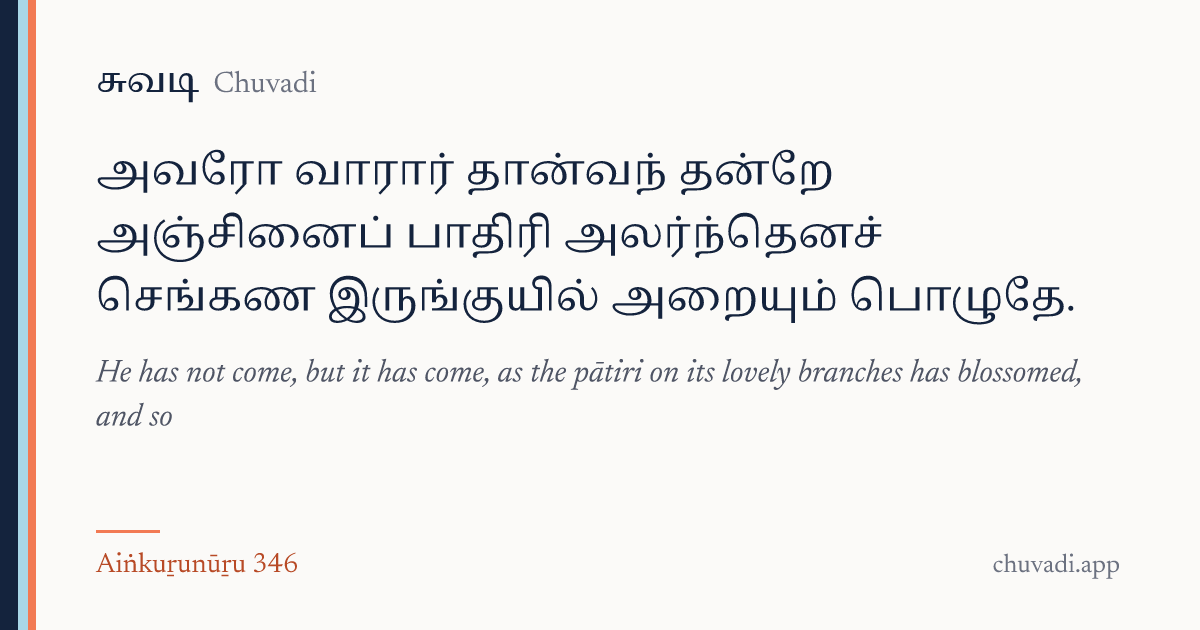
பாடல் · The poem
Tap a word to see where else it occurs.
பொருள் · Meaning in TamilAI
அவர் வரவில்லை; ஆனால் அந்தப் பருவம் வந்துவிட்டது. அழகிய கிளைகளை உடைய பாதிரி மரம் மலர்ந்ததால், சிவந்த கண்களை உடைய கரிய குயில் உரக்கக் கூவும் பொழுது இது.
பாலைத் திணை; தலைவி கூற்று. பாதிரி மலர்வதும் குயில் கூவுவதும் இளவேனிலின் அடையாளங்கள்; காதலர் கூடியிருக்க வேண்டிய பருவத்தில் அவன் இல்லாததை அவை நினைவூட்டுகின்றன. ‘செங்கண’ என்ற பாடம் ‘செங்கண்’ என்று கொள்ளப்பட்டது. குயிலின் உரத்த கூவல் அவளுடைய தனிமையை மேலும் உணர்த்துகிறது.
ஆங்கிலம் · English translationAI
Translation
- He has not come, but it has come,
- as the pātiri on its lovely branches has blossomed, and so
- the season when the red-eyed dark koel calls out loud.
What the poem says
Two signs of spring come together here: the pātiri tree (the trumpet-flower tree) in bloom on its handsome branches, and the dark koel with its red eyes calling loudly. The koel's cry is said to follow from the flowering ('has blossomed, and so'), as if the blossoms prompted the bird.
The koel, with its famous red eye, is the bird of spring and of love-longing. Its call reminds the heroine, again, that the season of union has come but her lover has not.
The verb aṟaiyum suggests a loud, insistent call, almost a drumming. The text prints ceṅkaṇa, read as ceṅkaṇ, 'red-eyed'.