




ஐங்குறுநூறு 354 · வரவுரைத்த பத்து
பாடல் · The poem
Tap a word to see where else it occurs.
பொருள் · Meaning in TamilAI
தன் இளம் பெண்நாயுடன் கூடியிருந்த ஆண் செந்நாய், குட்டியோடு நிற்கும் பெண்மானைப் பிடிக்காமல் விட்டுவிட்டுப் போகும் கடத்தற்கரிய சுரம் அது. அந்த வழியைக் கடந்து, ஆராய்ந்து அணிந்த அணிகளை உடைய பெண்ணே, உன் பழைய இயல்பை மீண்டும் உனக்குத் தருவதற்காக அவர் விரைந்து வந்துவிட்டார்.
தோழி தலைவிக்குத் தலைவன் வந்ததைக் கூறுகிறாள்; பாலைத் திணை. தன் துணையோடு இருக்கும் செந்நாய் தாய்மானைக் கொல்லாமல் விடுவது இறைச்சி: காட்டு விலங்கும் அன்பு காட்டும் அந்த வழியில், தலைவனும் அன்பால் உந்தப்பட்டு வந்தான் என்பது குறிப்பு. "ஈர்ம் பிணவு" என்ற தொடரின் பொருள் உறுதியாகத் தெரியவில்லை.
ஆங்கிலம் · English translationAI
Translation
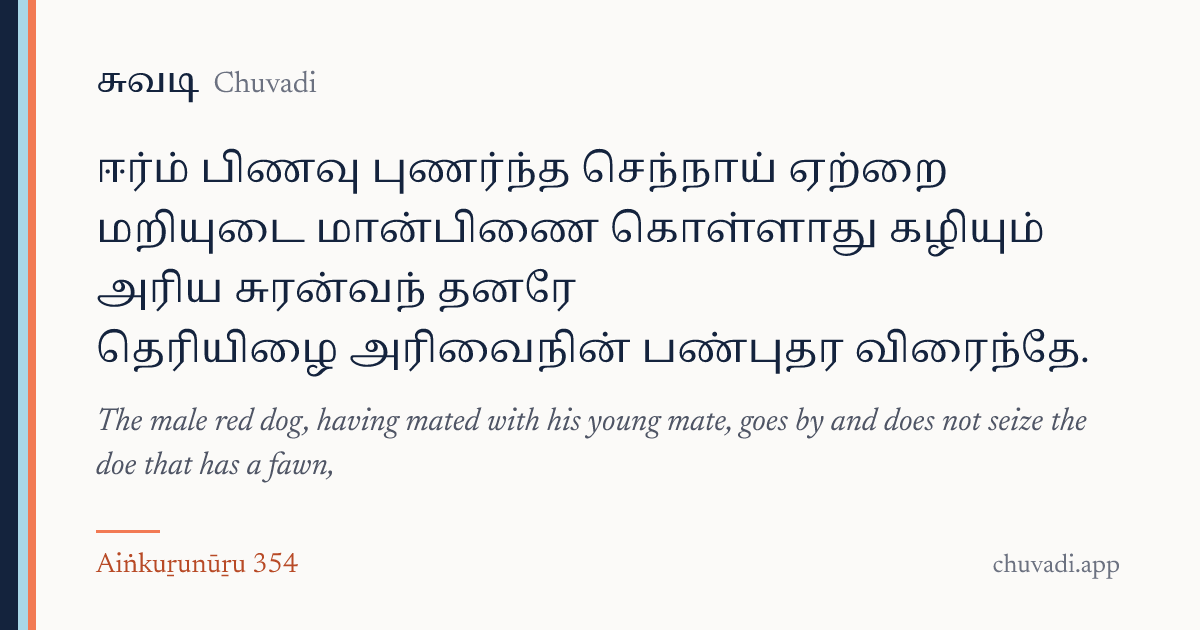
- The male red dog, having mated with his young mate,
- goes by and does not seize the doe that has a fawn,
- in that hard wasteland — through it he has come,
- girl of chosen jewels, hurrying to give you back your old self.
What the poem says
The friend tells the heroine that her man has come. In the wasteland he crossed, a male red dog (the wild dog of Tamil hill and forest country) passes a doe with her fawn and leaves her alone, because he has just been with his own mate.
This is iṟaicci, a suggestion carried by the landscape. Even a hunting beast that has found its own mate spares a mother and her young; so too the hero, thinking of the woman he loves, has turned back home. The image also hints at tenderness: the road was hard, but its creatures show mercy.
The last phrase, paṇpu tara, literally "to give your nature", is understood here as restoring her former health and beauty, which she lost while he was away. The opening word īrm piṇavu is unclear; it is taken as "tender, young mate", but it may be a damaged form of īṉ piṇavu, "the bitch that has whelped".