




ஐங்குறுநூறு 358 · வரவுரைத்த பத்து
பாடல் · The poem
Tap a word to see where else it occurs.
பொருள் · Meaning in TamilAI
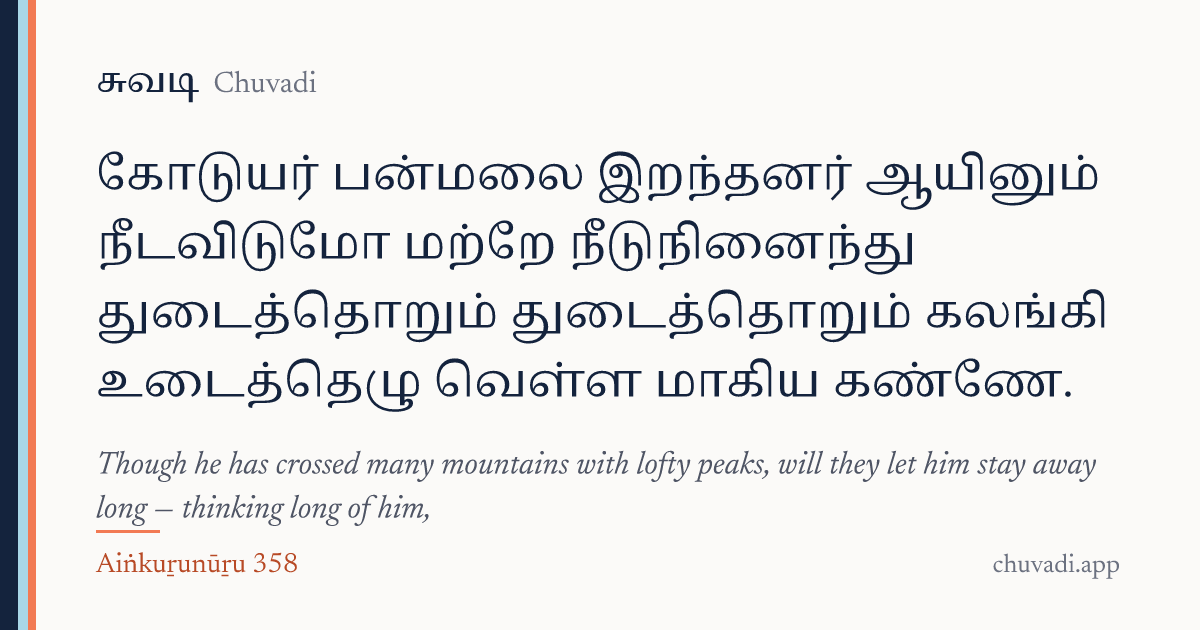
உயர்ந்த சிகரங்களை உடைய பல மலைகளைக் கடந்து அவர் போயிருந்தாலும், நீண்ட நாள் அவரை நினைத்து, துடைக்கும்போதெல்லாம் துடைக்கும்போதெல்லாம் மீண்டும் கலங்கி, கரை உடைத்து எழும் வெள்ளமாகிவிட்ட இந்தக் கண்கள் அவரை நெடுநாள் தங்க விடுமோ?
பாலைத் திணை. தோழி தலைவியைத் தேற்றுவதாகக் கொள்ளலாம்; தலைவியே தன் கண்களைப் பற்றிச் சொல்வதாகவும் கொள்ளலாம், கூற்று உறுதியாகத் தெரியவில்லை. ஓயாத கண்ணீரே அவனை விரைவில் திரும்ப இழுக்கும் என்பது கருத்து. இறுதியடியில் உள்ள "உடிஅத்தெழு" சிதைந்த சொல்; "உடைத்தெழு" என்று கொண்டு பொருள் கூறப்பட்டது.
ஆங்கிலம் · English translationAI
Translation
- Though he has crossed many mountains with lofty peaks,
- will they let him stay away long — thinking long of him,
- each time they are wiped, each time they are wiped, troubled again,
- these eyes that have become a flood breaking its banks?
What the poem says
The speaker is not certain. The poem sits in the decade on the hero's return, and is most simply read as the friend comforting the heroine: he has gone far, over many high mountains, but her tears, which flood again however often they are wiped away, will not let him stay away long. Love on her side draws him back. It could also be the heroine speaking of her own eyes.
The refrain-like doubling "each time they are wiped, each time they are wiped" gives the feeling of tears that never stop.
The last line is damaged in the edition: uṭiattheḻu is not a known word. It is taken here as uṭaittu eḻu, "bursting and rising", which fits a flood. The second line, nīṭa viṭumō, "will they let him delay?", is also compressed, and its subject is understood to be the eyes.