




ஐங்குறுநூறு 369 · முன்னிலைப் பத்து
பாடல் · The poem
Tap a word to see where else it occurs.
பொருள் · Meaning in TamilAI
வளமான மலர்கள் நெருங்கிச் செறிந்த, வண்டுகள் மொய்க்கும் மணம் கமழும் சோலையில், முளைகளின் வரிசை போன்ற பற்களை உடைய ஒருத்தியோடு நேற்று நீ சந்திக்க இடம் குறித்தாய் என்கிறார்கள். அந்த அலர், குரவ மரத்தின் நீண்ட கிளையில் தங்கும் பருவகாலக் கரிய குயிலின் ஆரவாரத்தைவிடப் பெரிதாக இருக்கிறது.
தலைவியோ தோழியோ தலைவனை நேரே நோக்கிக் கூறுவது. பரத்தையோடு அவன் கொண்ட தொடர்பைப் பற்றிய ஊடல் மருதத்திற்கு உரியது; இங்கு இளவேனிற் பின்புலத்தால் பாலையில் வைக்கப்பட்டுள்ளது, திணை முழுமையாகப் பொருந்தவில்லை. குயிலின் ஓயாத ஒலி ஊர் முழுதும் பரவும் அலருக்கு உவமை.
ஆங்கிலம் · English translationAI
Translation
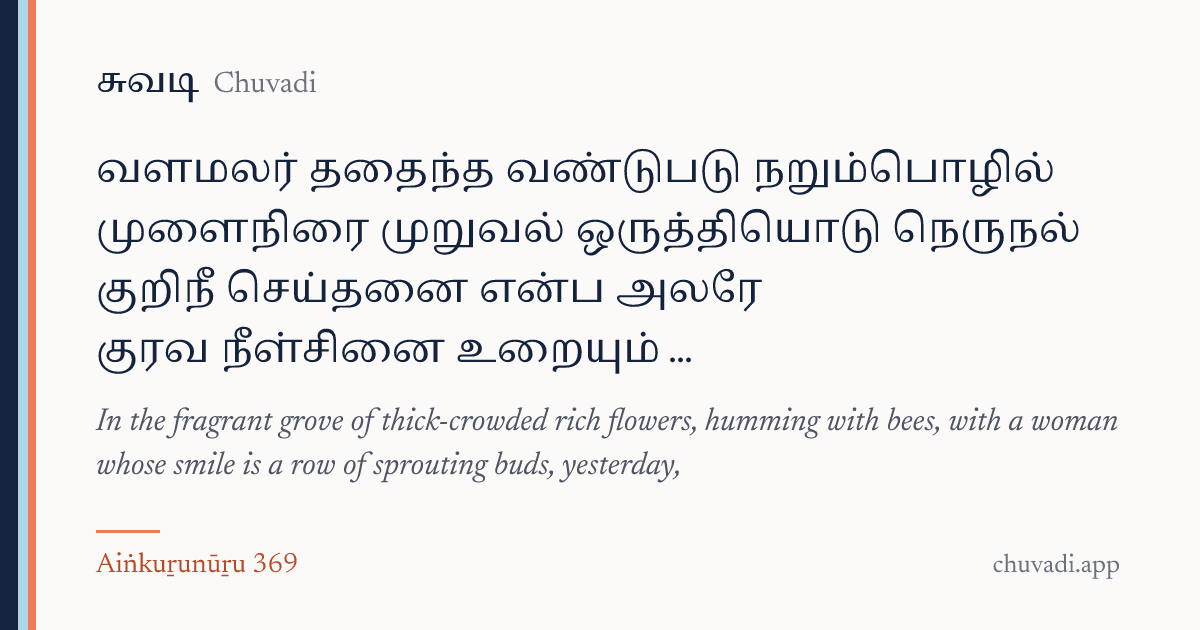
- In the fragrant grove of thick-crowded rich flowers, humming with bees,
- with a woman whose smile is a row of sprouting buds, yesterday,
- you made a tryst, they say; the gossip is
- louder than the clamour of the dark cuckoo of the season
- that lives on the long branches of the kuravam.
What the poem says
The speaker, probably the heroine (or her friend on her behalf), confronts the hero face to face. People say that yesterday he arranged a meeting with another woman in a flowering grove. The talk, she says, is louder than the cuckoo calling from the kuravam tree in its season.
This is the theme of the hero's unfaithfulness, which normally belongs to marutam. The spring setting, with the cuckoo (kuyil) and the kuravam in flower, ties it to the warm season of pālai, but the situation is sulking and reproach. The tiṇai label does not fit the content well.
The rival is described by her smile, "a row of sprouts", meaning teeth as neat and white as young shoots. The edition's tatinta is taken as tataintha, "crowded thick". The cuckoo's cry is a fitting comparison: loud, repeated, and impossible to ignore.