



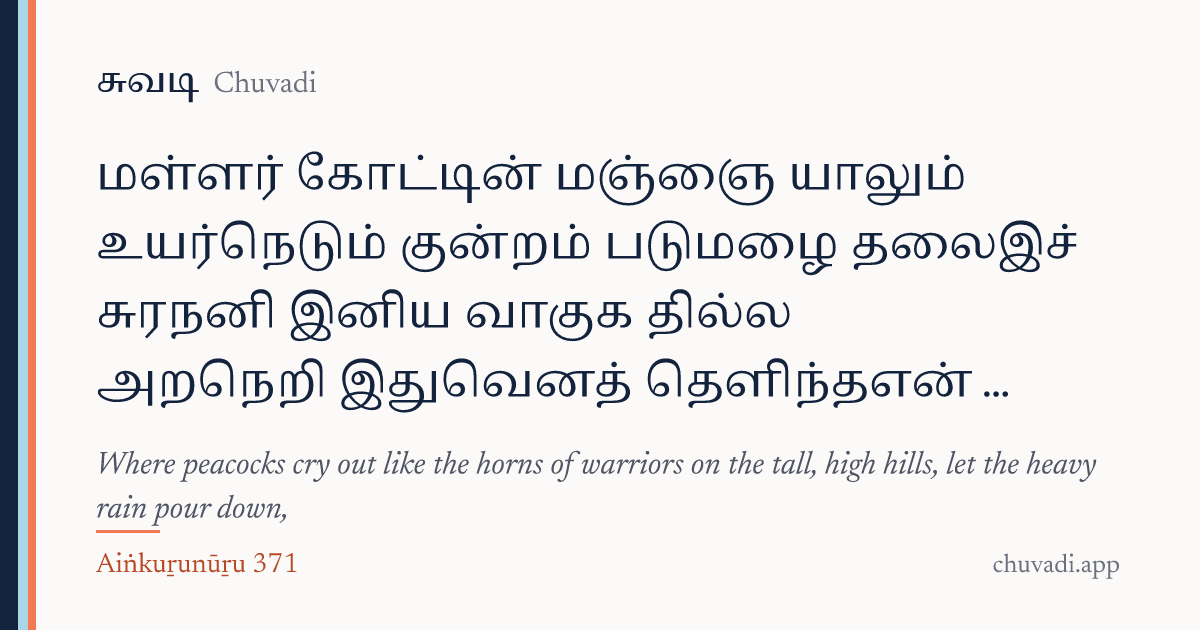

ஐங்குறுநூறு 371 · மகட் போக்கிய வழித் தாயிரங்கு பத்து
பாடல் · The poem
Tap a word to see where else it occurs.
பொருள் · Meaning in TamilAI
மள்ளர்களின் கொம்பு ஒலிப்பது போல மயில்கள் அகவும் உயர்ந்த நெடிய குன்றுகளில், பெரும் மழை பெய்து, சுரம் மிகவும் இனியதாக ஆகட்டும். "இதுவே அறவழி" என்று தெளிந்து, பிறை போன்ற நெற்றியை உடைய என் இளம் மகள் சென்ற சுரம் அது.
மகள் தலைவனோடு உடன்போக்குச் சென்ற பின் நற்றாய் இரங்கிக் கூறுவது; பாலைத் திணை. மகள் சென்ற வழி இனிமையாக இருக்க வேண்டும் என்று மழையை வேண்டுகிறாள்; மகளின் செயலை அறநெறி என்று ஏற்றுக்கொள்வதும் உண்டு. முதலடியின் பொருள் உறுதியாகத் தெரியவில்லை: "ஆலும்" என்பது ஆடும் என்றும் அகவும் என்றும் பொருள்படும்.
ஆங்கிலம் · English translationAI
Translation
- Where peacocks cry out like the horns of warriors
- on the tall, high hills, let the heavy rain pour down,
- and may the wasteland become truly pleasant —
- 'This is the right path,' she decided, my
- little girl of the crescent brow; the wasteland she has gone through.
What the poem says
This decade is "the ten of the mother's lament after the daughter has gone": the girl has eloped with her lover (uṭaṉpōkku), and her mother speaks. Here the mother does not curse; she prays. Let rain fall on the high hills and make the wasteland gentle for her daughter's journey.
The girl, she says, judged that going was "the right way" (aṟaneṟi). That is a striking admission: the mother grants that leaving with the man she loves is what dharma allows, even while she grieves. Tamil akam convention does treat elopement with a chosen lover as a rightful path.
The opening line is uncertain. Maḷḷar kōṭṭiṉ may mean "like the horns of warriors", the peacock's cry compared with a war-horn, or "on the peaks, like warriors", the dancing birds compared with fighting men; āl can mean both "dance" and "cry". The first sense is chosen here.