



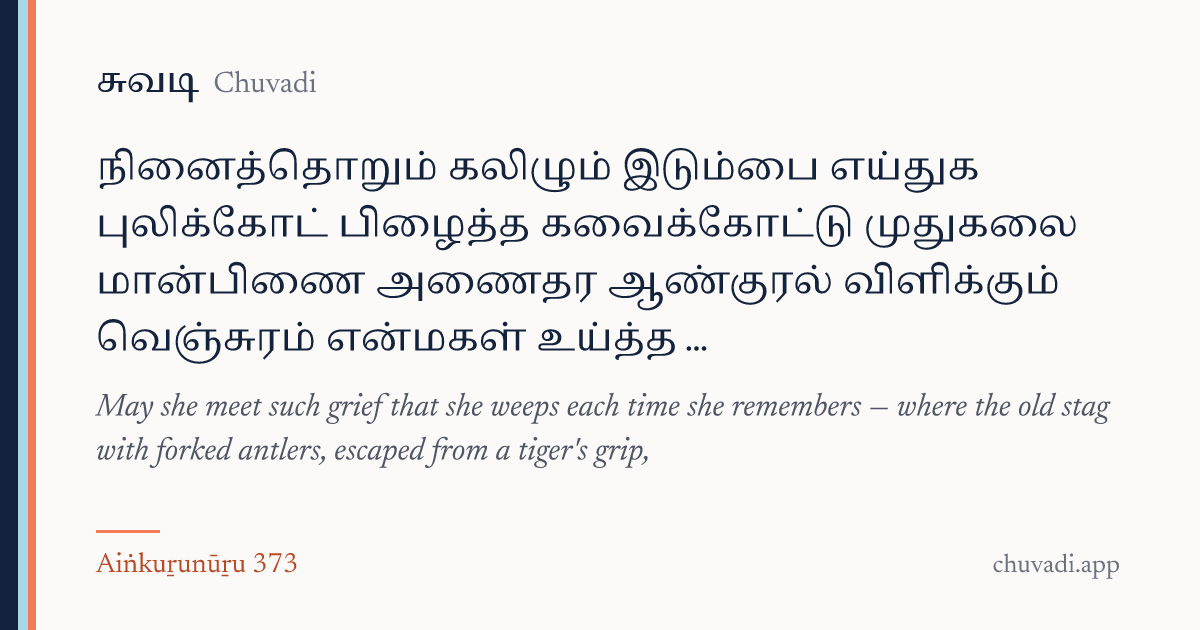

ஐங்குறுநூறு 373 · மகட் போக்கிய வழித் தாயிரங்கு பத்து
பாடல் · The poem
Tap a word to see where else it occurs.
பொருள் · Meaning in TamilAI
புலியின் பிடியிலிருந்து தப்பிய கிளைத்த கொம்புகளை உடைய முதிய கலைமான், தன் பெண்மான் தன்னிடம் வந்து சேரும்படி ஆண்குரலில் அழைக்கும் கொடிய சுரத்தின் வழியே என் மகளைக் கூட்டிச் சென்றவன், புதிதாக நாண் பூட்டிய வலிய வில்லை உடைய இளைஞன். அவனைப் பெற்ற தாய், நினைக்கும்போதெல்லாம் கலங்கி அழும் துன்பத்தை அடைவாளாக!
உடன்போக்குச் சென்ற மகளுக்காக நற்றாய் இரங்கி, தலைவனின் தாயைச் சபிப்பது; பாலைத் திணை. பெண்மானை அழைக்கும் கலைமான், தலைவியைக் காத்து அழைத்துச் செல்லும் தலைவனைக் குறிக்கும் இறைச்சி. "கலிலும்" என்பது "கலிழும்" என்பதன் பிழை.
ஆங்கிலம் · English translationAI
Translation
- May she meet such grief that she weeps each time she remembers —
- where the old stag with forked antlers, escaped from a tiger's grip,
- calls in a male's voice for its doe to come to him,
- the burning wasteland down which my daughter was led —
- she, the mother of the young man with the strong, newly-strung bow.
What the poem says
Here the mother's grief turns to a curse, aimed not at her daughter or the young man but at his mother. May she too suffer, and weep every time she thinks of it. The curse is a mother's: she wishes on another mother the same loss she feels.
The middle lines draw the road. An old stag that has just escaped a tiger calls loudly for its doe to come to its side. This is iṟaicci. The stag protecting and calling his mate suggests the young man who leads and guards the girl through the same wild land; the escape from the tiger hints at the dangers they pass.
Kalilum in the first line is a slip for kaliḻum, "weeps". Vampamai, describing the bow, is taken as "newly fitted", that is, freshly strung; the sense is not certain.