



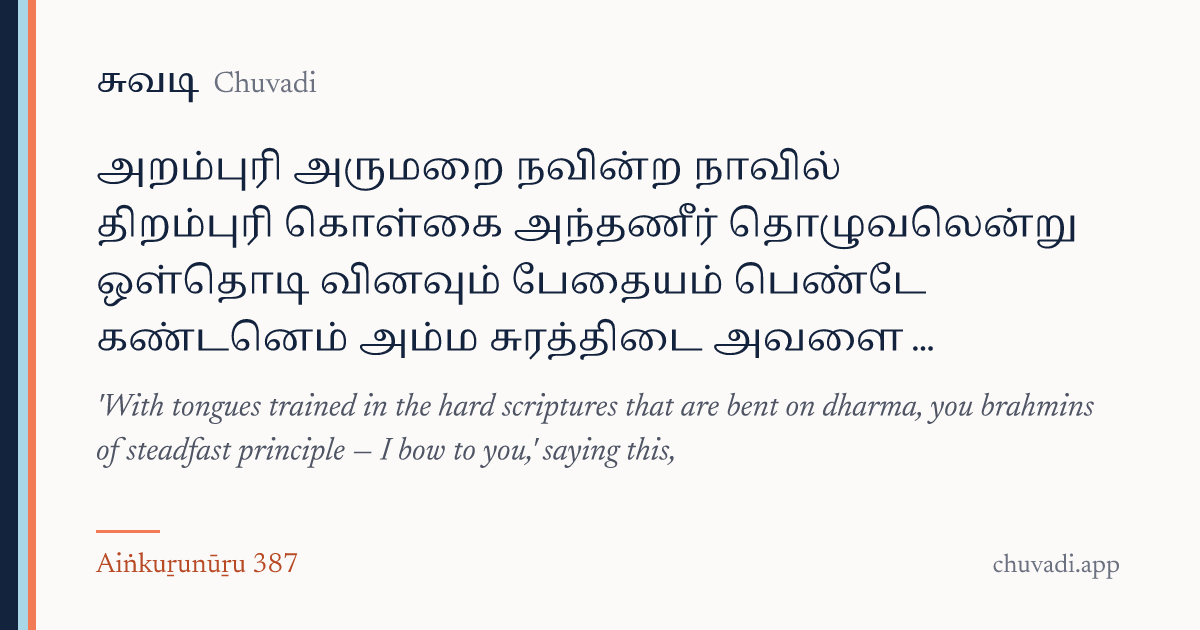

ஐங்குறுநூறு 387
உடன்போக்கின் கண் இடைச் சுரத்து உரைத்த பத்து
பாடல் · The poem
Tap a word to see where else it occurs.
பொருள் · Meaning in TamilAI
"அறத்தை விரும்பும் அரிய மறைகளைப் பயின்ற நாவையும் உறுதியான கொள்கையையும் உடைய அந்தணர்களே, உங்களை வணங்குகிறேன்" என்று சொல்லி, ஒளிவீசும் வளையல் அணிந்தவளைப் பற்றிக் கேட்கும் பேதைப் பெண்ணே! அவளைச் சுரத்தில் நாங்கள் கண்டோம். தன் துணைவன் இனிதாகப் பாராட்டிவர, குன்றைப் போல உயர்ந்த பாறைக் குவியல்களை உடைய மலையைக் கடந்து சென்றாள் அவள்.
உடன்போக்குச் சென்ற தலைவியைத் தேடிவந்த செவிலியிடம் அந்தணர் கூறுவது; பாலைத் திணை. அவள் அன்போடு காக்கப்படுகிறாள் என்று சொல்லிச் செவிலியைத் தேற்றுகிறார்கள். மறை பயின்ற அந்தணர் வழியில் செல்வது அக்காலச் சூழலைக் காட்டுகிறது.
ஆங்கிலம் · English translationAI
Translation
- 'With tongues trained in the hard scriptures that are bent on dharma,
- you brahmins of steadfast principle — I bow to you,' saying this,
- you ask after the girl of bright bangles, poor simple woman:
- we saw her, yes, in the wasteland, her,
- as her companion sweetly cherished her,
- crossing the mountain of boulders high as hills.
What the poem says
Brahmin travellers speak to the foster-mother, who has gone out searching for the girl. The first two lines repeat her own words as she greeted them, bowing and praising their learning in the scriptures. They reply kindly: yes, we saw her, crossing the high rocky mountains, and the man with her was cherishing her tenderly.
The foster-mother is called pētaiyam peṇṭu, "simple, innocent woman", an affectionate pity for her anxious search. The travellers' answer is meant as comfort: the girl is loved and cared for.
The brahmins are praised for their speech in the Vedas (arumaṟai, "the rare scripture"), a clear sign of a settled brahmin presence on the roads of the period. Malaiyiṟantthōḷ in the edition is a slip for malaiyiṟantōḷ, "she who crossed the mountain".