



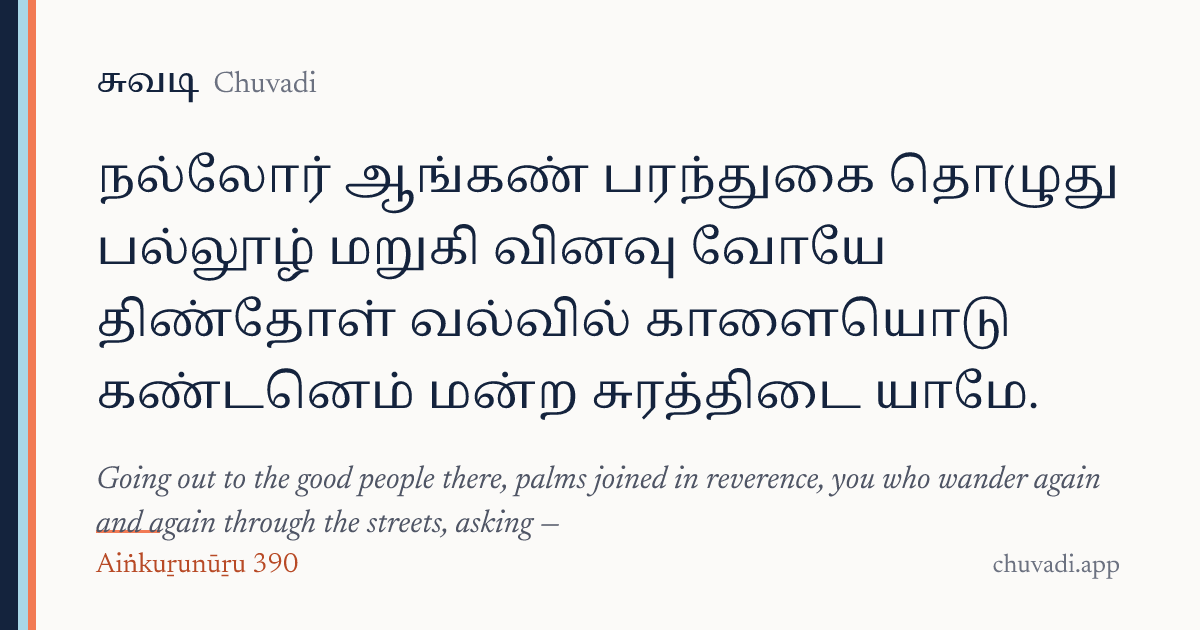

ஐங்குறுநூறு 390
உடன்போக்கின் கண் இடைச் சுரத்து உரைத்த பத்து
பாடல் · The poem
Tap a word to see where else it occurs.
பொருள் · Meaning in TamilAI
நல்லவர்கள் இருக்கும் இடங்களிலெல்லாம் சென்று, கைகூப்பி வணங்கி, பலமுறை தெருக்களில் சுற்றித் திரிந்து கேட்பவளே! வலிய தோள்களையும் வலிய வில்லையும் உடைய இளைஞனோடு அவளை நாங்களே சுரத்தின் நடுவே உறுதியாகக் கண்டோம்.
உடன்போக்குச் சென்ற தலைவியைத் தேடும் செவிலியிடம் கண்டோர் கூறுவது; பாலைத் திணை. கைகூப்பித் தெருத்தெருவாக அலையும் செவிலியின் நிலை உருக்கமானது. "பர்ந்து", "வனவுவோயே" என்பன "பரந்து", "வினவுவோயே" என்பவற்றின் பிழைகள்.
ஆங்கிலம் · English translationAI
Translation
- Going out to the good people there, palms joined in reverence,
- you who wander again and again through the streets, asking —
- with the young man of strong shoulders and powerful bow
- we saw her, surely, in the wasteland, we did.
What the poem says
The decade ends with travellers answering the foster-mother, who has been going about among respectable people, bowing to them and asking, street after street, whether anyone has seen her girl. They tell her: yes, we saw her in the wasteland, with a young man of strong shoulders and a great bow.
The picture of the searching woman, palms joined, wandering the streets again and again, is the poem's emotional weight. The travellers' answer is brief and certain, with maṉṟa, "surely", and the closing yāmē, "we ourselves", stressing that they saw it with their own eyes.
The edition has two slips: parntu for parantu, "spreading out, going about", and vaṉavuvōyē for viṉavuvōyē, "you who ask". The poem is otherwise clear.