




ஐங்குறுநூறு 403 · செவிலி கூற்றுப் பத்து
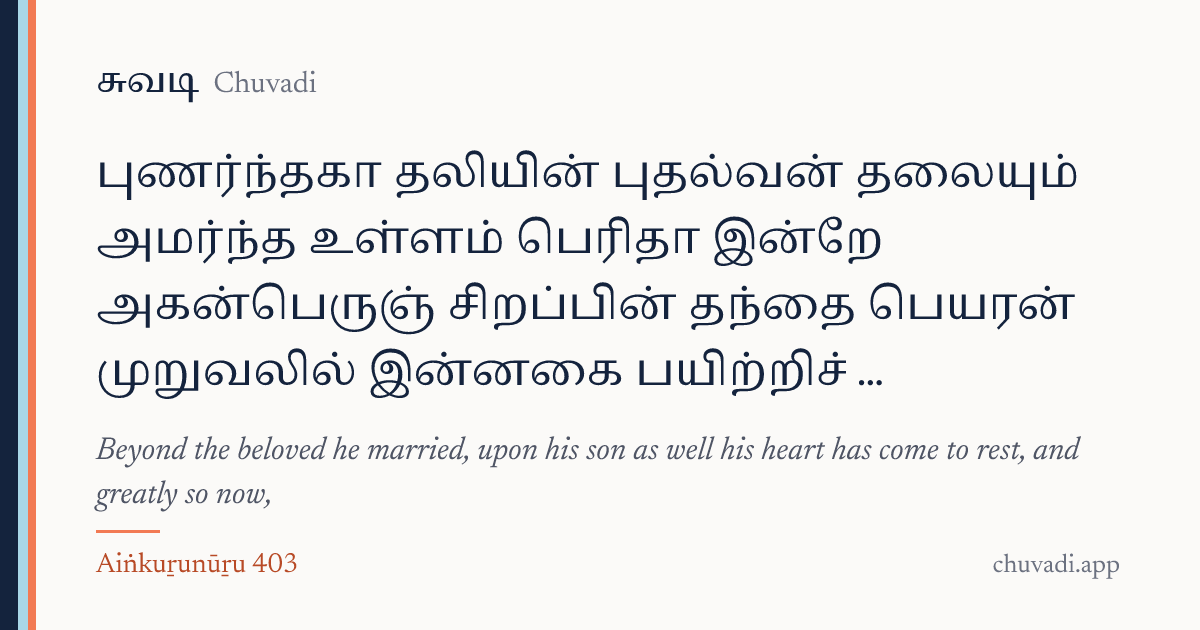
பாடல் · The poem
Tap a word to see where else it occurs.
பொருள் · Meaning in TamilAI
தான் மணந்த காதலியிடம் மட்டுமன்றி, மகனிடத்தும் அவன் உள்ளம் இப்போது மிகவும் விருப்பத்தோடு பொருந்தியிருக்கிறது. பரந்த பெருஞ்சிறப்புடைய தன் தந்தையின் பெயரைத் தாங்கிய அந்தப் பேரன், புன்முறுவலோடு இனிய சிரிப்பைப் பழகுவதையும், சிறிய தேரை உருட்டிக்கொண்டு தளர்ந்த நடை நடப்பதையும் கண்டு அவன் மகிழ்கிறான்.
முல்லைத் திணை; செவிலித்தாய் நற்றாயிடம் கூறுவது. மகனுக்குத் தாத்தாவின் பெயரை வைக்கும் வழக்கம் இங்குத் தெரிகிறது. முதல் இரண்டு அடிகள் சுருக்கமாக இருப்பதால், தலையும் என்ற சொல்லின் சரியான பொருள் உறுதியாகத் தெரியவில்லை.
ஆங்கிலம் · English translationAI
Translation
- Beyond the beloved he married, upon his son as well
- his heart has come to rest, and greatly so now,
- the boy who bears the name of his father of wide and great renown,
- seeing him practise sweet laughter through his smiles
- and totter along as he rolls his little toy cart.
What the poem says
The foster-mother tells the heroine's mother that the husband's love now reaches past his wife to their little son. The boy is named after his grandfather, the hero's own father, which follows the old custom of naming a son's son after the grandfather. The word peyaraṉ itself means a grandson.
The details of the child are lifelike: he is learning to laugh, his walk is unsteady, and he pushes a small toy chariot (ciṟutēr) along. Such toy carts appear elsewhere in Sangam poetry as the plaything of small boys.
The first two lines are compressed. They seem to mean that his heart, already settled on his wife, has now settled even more on the son. The exact force of talaiyum (literally 'at the place of') is not certain.