



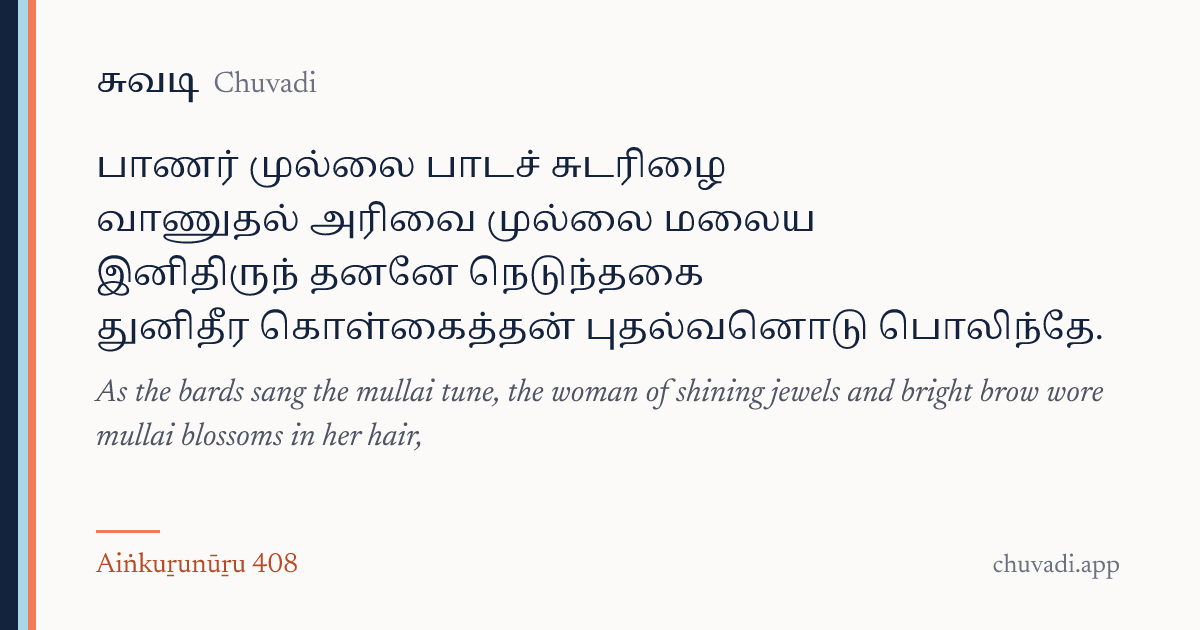

ஐங்குறுநூறு 408 · செவிலி கூற்றுப் பத்து
பாடல் · The poem
Tap a word to see where else it occurs.
பொருள் · Meaning in TamilAI
பாணர்கள் முல்லைப் பண்ணைப் பாட, ஒளிவீசும் அணிகலன்களையும் ஒளிபொருந்திய நெற்றியையும் உடைய அவள் முல்லைப் பூவைச் சூடியிருக்க, பெருந்தகைமை உடைய அவன், பிணக்கு இல்லாத நல்ல ஒழுக்கத்தோடு தன் மகனுடன் பொலிவுடன் இனிதாக இருந்தான்.
முல்லைத் திணை; செவிலித்தாய் நற்றாயிடம் கூறுவது. முல்லை என்ற சொல் பண்ணையும் பூவையும் குறிக்கிறது; முல்லை சூடுதல் கற்புடைய மனைவியின் அடையாளம். துனி தீர் கொள்கை என்பது அவர்களிடையே ஊடல் இல்லை என்பதைக் காட்டுகிறது.
ஆங்கிலம் · English translationAI
Translation
- As the bards sang the mullai tune, the woman of shining jewels
- and bright brow wore mullai blossoms in her hair,
- and he sat there happily, the man of high worth,
- his ways free of all quarrel, glowing beside his son.
What the poem says
The foster-mother describes an evening at home for the heroine's mother. The bards sing in the mullai mode, the wife wears mullai flowers, and the husband sits contented with his son.
The repeated word mullai holds the poem together. It names the jasmine she wears, the musical mode the bards sing, and the landscape of this whole section, which stands for patient and faithful married love. Wearing mullai is itself a sign of a chaste wife.
The phrase tuṉi tīr koḷkai, 'conduct free of sulking or quarrel', suggests that this household has no ūṭal, the lovers' quarrels that fill the marutam poems. Whether it describes the husband or the home as a whole is left open. The text's vaṇutal stands for vāṇutal, 'bright brow'.