




ஐங்குறுநூறு 426 · விரவுப் பத்து
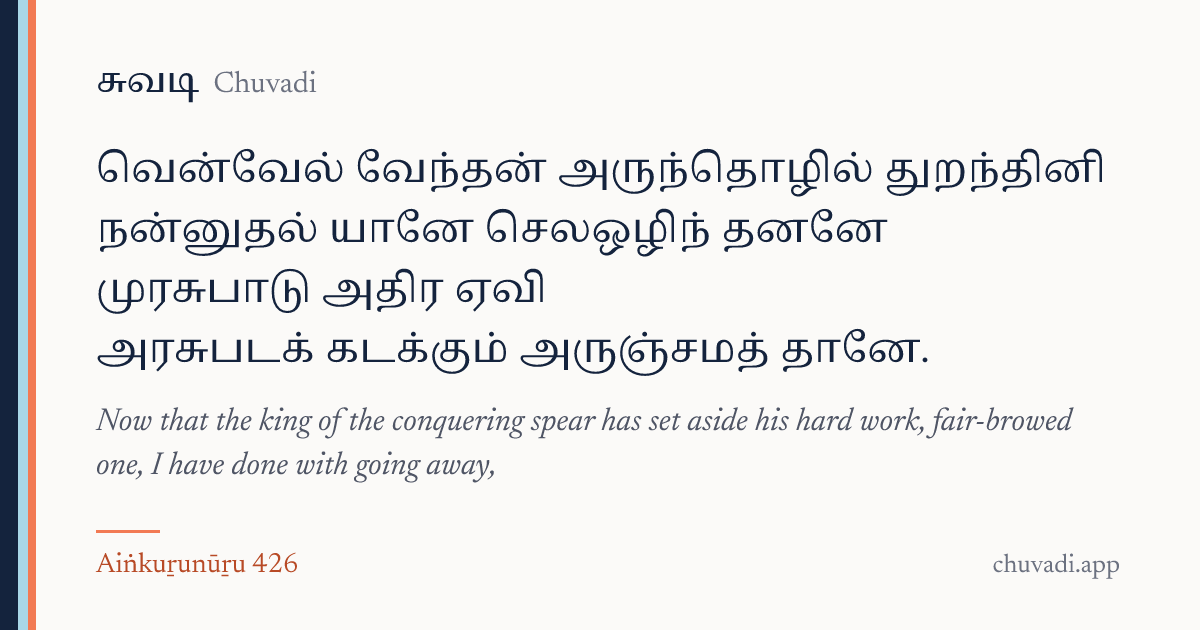
பாடல் · The poem
Tap a word to see where else it occurs.
பொருள் · Meaning in TamilAI
வெற்றி தரும் வேலை உடைய வேந்தன் தன் அரிய போர்த்தொழிலை இப்போது கைவிட்டதால், நல்ல நெற்றியை உடையவளே, நான் இனிப் பிரிந்து செல்வதை விட்டுவிட்டேன். அந்த வேந்தன், முரசுகள் முழங்கி அதிரும்படி ஏவி, அரியபோரில் மன்னர்கள் வீழும்படி வெல்பவன்.
முல்லைத் திணை; போர் முடிந்து திரும்பிய தலைவன் தலைவியிடம் கூறுவது. தலைவனின் பிரிவுக்குக் காரணம் வேந்தனின் போர்ப்பணி; அது முடிந்ததால் பிரிவும் முடிந்தது. செல ஒழிந்தனன் என்பது இனிச் செல்லேன் என்றோ, திரும்பி வந்தேன் என்றோ பொருள்படலாம்.
ஆங்கிலம் · English translationAI
Translation
- Now that the king of the conquering spear has set aside his hard work,
- fair-browed one, I have done with going away,
- he who, commanding the drums to roar and throb,
- overcomes until kings fall in fierce battle.
What the poem says
The hero, home from war, tells his wife that he will not be leaving again. The king he serves has ended the campaign. In the mullai poems the hero's absence is usually military service under a king, and its end is the end of separation.
The last two lines praise the king. He orders the war-drums sounded and defeats rival rulers in hard-fought battle. The praise sets the reason for the man's long absence beside the joy of its ending.
The phrase cela oḻintaṉaṉ, 'I have stopped going', is taken here to mean he has given up further journeys for now. It could also mean simply 'I have returned'.