




ஐங்குறுநூறு 429 · விரவுப் பத்து
பாடல் · The poem
Tap a word to see where else it occurs.
பொருள் · Meaning in TamilAI
அடர்ந்த கரிய கூந்தலை உடையவளே, நீ உன் பசலையை நீக்கிவிட்டால், நான் போருக்குச் செல்வேன். பகைவர்களுடைய வெற்றிக்கொடி பறக்கும் அரண்களை அழித்த, அடங்காத யானைகளை உடைய வேந்தனுக்காகப் பகையை வெல்லச் செல்ல விரும்புகிறேன்.
முல்லைத் திணை; தலைவன் தலைவியிடம் கூறுவது. அவளுடைய பசலையே அவனைப் போகவிடாமல் தடுக்கிறது. பாடத்தில் வெந்து என்று இருப்பது வேந்து என்பதன் பிழை. கல்லா யானை என்பது பழக்கப்படாத, அடங்காத யானை என்று கொள்ளப்பட்டது; பொருள் முற்றிலும் உறுதியில்லை.
ஆங்கிலம் · English translationAI
Translation
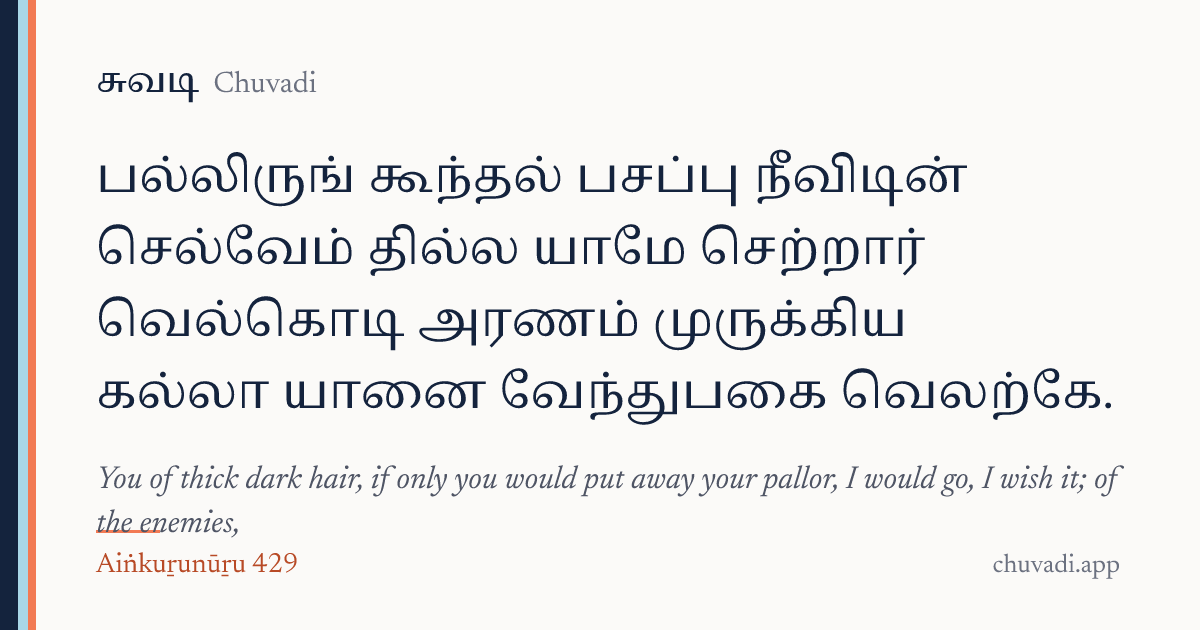
- You of thick dark hair, if only you would put away your pallor,
- I would go, I wish it; of the enemies,
- the forts with their conquering banners were shattered by
- the untamed elephants of the king, and to win his war I would go.
What the poem says
The hero speaks to his wife. He has been called to join his king's war, and he would go if only she would stop grieving. Her pallor, the sign of love-sickness, holds him back as surely as her shoulders held back the speaker of poem 421.
The king is praised through his war elephants, which have already broken the bannered forts of his enemies. Kallā yāṉai, literally 'elephants that have not learned', probably means elephants too fierce to be tamed or trained, though the exact sense is uncertain. The text's ventu is plainly a slip for vēntu, 'king'. The particle til expresses a wish, so the man's 'I would go' is only a hope he cannot yet act on.