



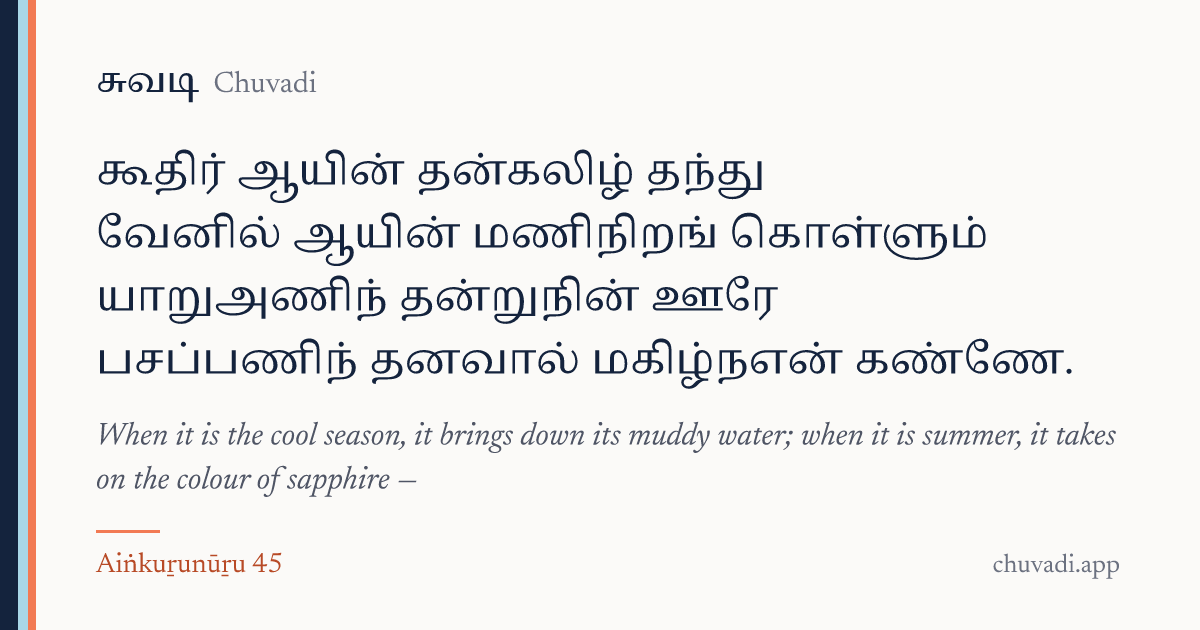

ஐங்குறுநூறு 45 · புலவிப் பத்து
பாடல் · The poem
Tap a word to see where else it occurs.
பொருள் · Meaning in TamilAI
குளிர்காலம் வந்தால் கலங்கிய நீரைக் கொண்டுவரும், கோடைக்காலம் வந்தால் நீலமணியின் நிறத்தைப் பெறும் ஆறு உன் ஊரை அழகு செய்கிறது. ஆனால் காதலனே, என் கண்களையோ பசலை அழகு செய்துவிட்டது.
மருதத் திணை; தலைவி தலைவனிடம் நேரே கூறுவது. ஆறு அவன் ஊருக்கு அணியாக இருப்பது போல, பசலை அவள் கண்களுக்கு அணியாகிவிட்டது என்ற கசப்பான ஒப்புமை இதில் உள்ளது. பருவத்துக்குப் பருவம் நிறம் மாறும் ஆறு, மனம் மாறும் தலைவனைக் குறிக்கலாம்.
ஆங்கிலம் · English translationAI
Translation
- When it is the cool season, it brings down its muddy water;
- when it is summer, it takes on the colour of sapphire —
- such a river adorns your town;
- but pallor has adorned my eyes, my lover.
What the poem says
The heroine speaks directly to the hero (makiḻna, 'lover'). The river of his town changes with the seasons, muddy in the cool rains, clear as sapphire in summer. Both are beautiful, and the river 'adorns' the town either way.
The last line answers the third with the same verb. The river adorns his town; pallor has adorned her eyes. The parallel is bitter, since what is an ornament to his town is a sickness to her.
The changing river may also suggest the hero's own changeable nature, clouded at one time and clear at another, although the poem does not say so.