




ஐங்குறுநூறு 486 · தேர் வியங்கொண்ட பத்து
பாடல் · The poem
Tap a word to see where else it occurs.
பொருள் · Meaning in TamilAI
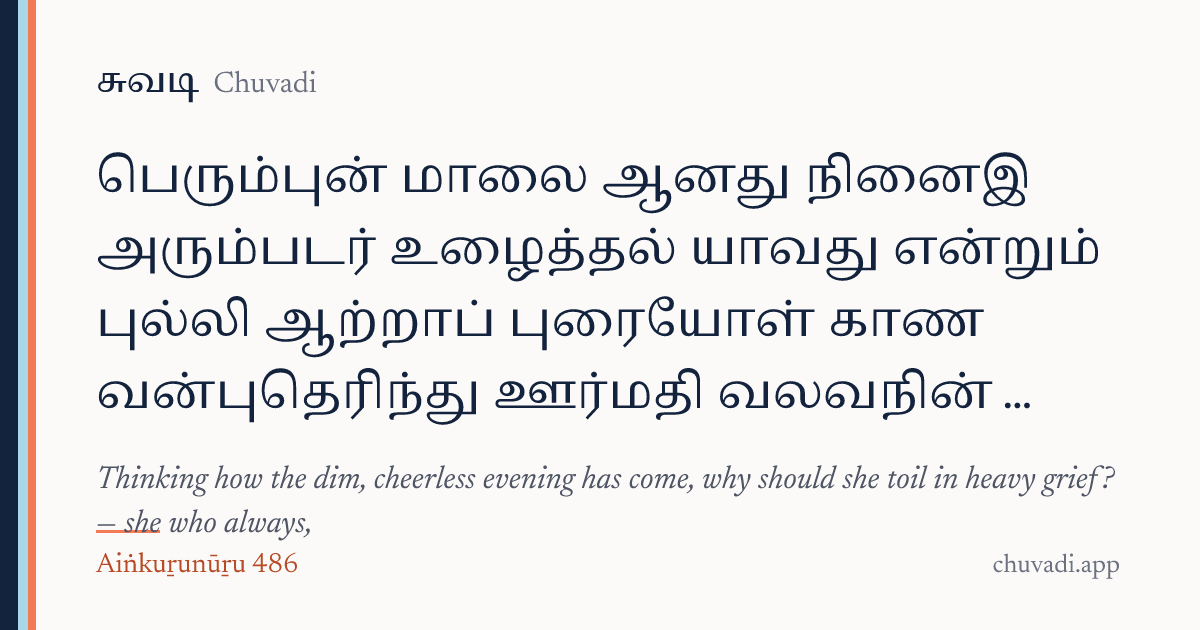
பெரிய துன்பம் தரும் மாலைப்பொழுது வந்துவிட்டதை நினைத்து, அவள் ஏன் கொடிய துயரத்தில் வருந்த வேண்டும்? தழுவியிருந்தபோதும் எப்போதும் பிரிவைப் பொறுக்க முடியாத என் உயர்ந்தவள் என்னைக் காணும்படி, தேர்ப்பாகனே, வலிமையுடைய குதிரைகளைத் தேர்ந்து, பறவை போல விரையும் செருக்குடைய குதிரைகள் பூட்டிய உன் தேரைச் செலுத்துவாயாக.
முல்லைத் திணை; தலைவன் பாகனிடம் கூறியது. மாலைப்பொழுதில் தனித்திருக்கும் தலைவியின் துயரத்தை எண்ணி விரைகிறான். மூன்றாம் அடியின் பொருள் செறிவானது; வேறுவிதமாகவும் கொள்ள இடமுண்டு. கலைமா என்பது கலிமா என்பதன் பிழை.
ஆங்கிலம் · English translationAI
Translation
- Thinking how the dim, cheerless evening has come,
- why should she toil in heavy grief? — she who always,
- even held in embrace, could not have enough, my noble one — so she may see me,
- choose your strongest and drive, charioteer, your
- chariot yoked with spirited horses swift as birds.
What the poem says
The hero imagines the heroine at evening, the 'great, dull' hour of loneliness, and cannot bear that she should suffer it again. He recalls that even in his arms she was never ready to let him go, so what must she feel now?
The phrase புல்லி ஆற்றாப் புரையோள் is read as 'the noble one who, even embracing, could not bear (parting)'; it is compressed and other readings are possible. வன்புதெரிந்து may mean 'picking the strong horses' or 'driving with firm skill'. The edition's கலைமா is a slip for கலிமா, 'spirited horses', as in poem 481.