




ஐங்குறுநூறு 500 · வரவுச் சிறப்புரைத்த பத்து
பாடல் · The poem
Tap a word to see where else it occurs.
பொருள் · Meaning in TamilAI
கொன்றைப்பூவைப் போலப் பசலை படர்ந்திருந்த இவளுடைய மையுண்ட கண்கள், மலையிடத்து ஆழமான சுனையில் பூக்கும் குவளை மலரைப் போல மீண்டும் தம் பழைய அழகைப் பெற்றுவிட்டன. வெற்றி தரும் போர் நடந்த அகன்ற நீண்ட பாசறையில் நெடுநாள் தங்கியிருந்த வலிய சிங்கம் போன்ற தலைவனே, நீ வந்ததனால்தான் இது நிகழ்ந்தது.
முல்லைத் திணை; தோழி தலைவனிடம் கூறியது. கொன்றையின் மஞ்சள் நிறம் பசலைக்கும், குவளையின் கருநீல நிறம் மீண்ட அழகுக்கும் உவமை. பாசறையில் நெடுநாள் தங்கியதைச் சுட்டுவதில் மெல்லிய குறைகூறலும் உண்டு. வயமான் என்பது சிங்கத்தையா, வலிய குதிரையையா குறிக்கிறது என்பது உறுதியாகத் தெரியவில்லை.
ஆங்கிலம் · English translationAI
Translation
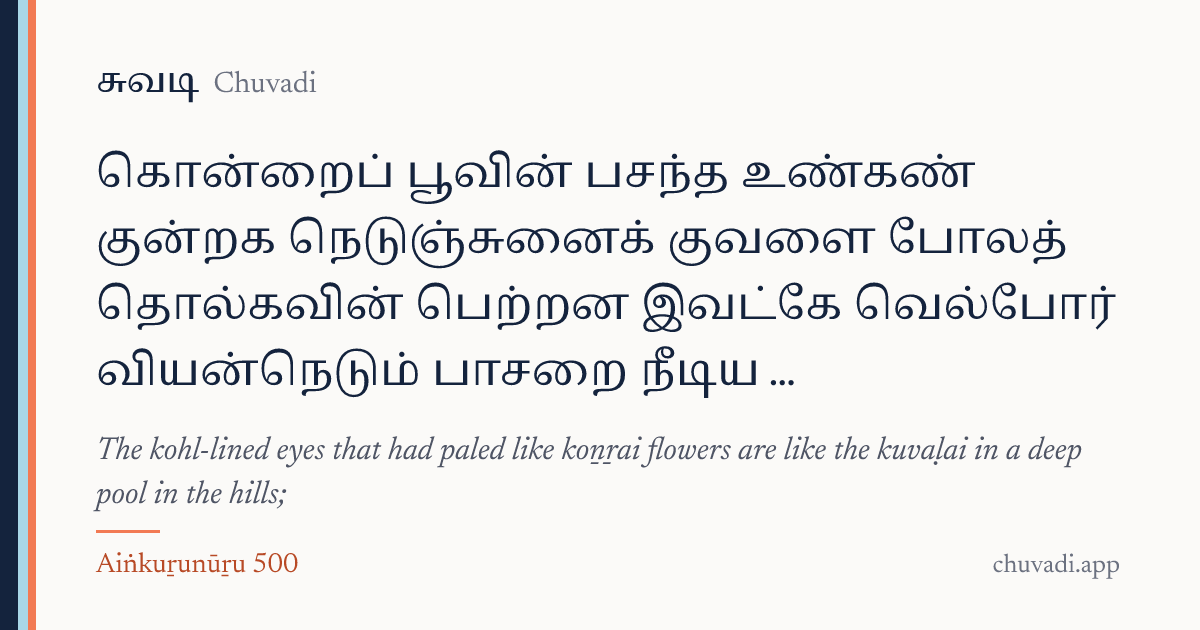
- The kohl-lined eyes that had paled like koṉṟai flowers
- are like the kuvaḷai in a deep pool in the hills;
- they have regained their old beauty, for her — you of victorious war,
- who lingered long in the wide, far-stretching camp,
- prince strong as a lion, now that you have come.
What the poem says
The final poem of Aiṅkuṟunūṟu has the friend speaking to the hero himself. She tells him what his return has done: the heroine's eyes, which had turned yellow-pale like the koṉṟai, are dark and fresh again like the blue kuvaḷai (water lily) in a mountain pool.
The address mixes praise and reproach. He is a victor in war and a prince strong as a lion (vayamāṉ, often a lion or tiger, though 'strong horse' is also possible). He is also the man 'who lingered long' in the war camp. The anthology thus ends where the mullai section has been heading, in reunion, with a gentle reminder of what the waiting cost.