



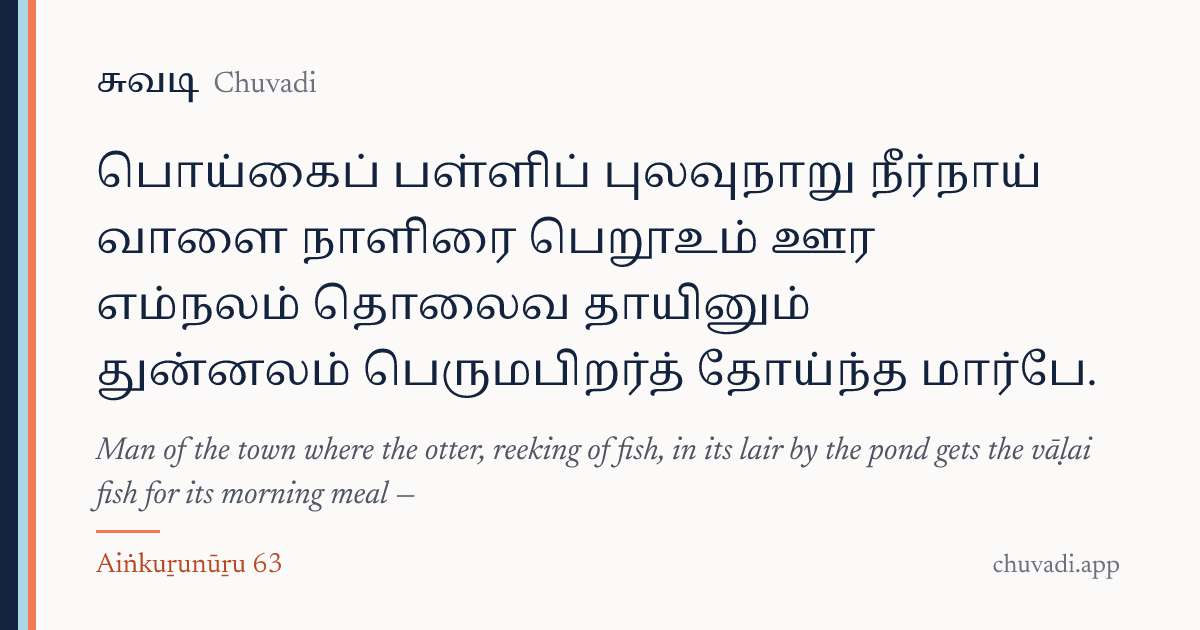

ஐங்குறுநூறு 63 · கிழத்தி கூற்றுப்பத்து
பாடல் · The poem
Tap a word to see where else it occurs.
பொருள் · Meaning in TamilAI
பொய்கைக் கரையில் உள்ள இருப்பிடத்தில் வாழும், புலால் நாற்றம் வீசும் நீர்நாய் நாள்தோறும் காலை உணவாக வாளை மீனைப் பெறுகின்ற ஊரனே! எம்முடைய அழகு முற்றிலும் அழிந்துபோனாலும், தலைவனே! பிற பெண்களைத் தழுவிய உன் மார்பை நாங்கள் நெருங்க மாட்டோம்.
மருதத் திணை; தலைவி தலைவனிடம் கூறியது; வாயில் மறுத்தல். நாள்தோறும் புதிய மீனைப் பெறும் நீர்நாய், நாள்தோறும் புதிய பரத்தையை நாடும் தலைவனைக் குறிக்கும் உள்ளுறை. "புலவு நாறும்" என்ற அடைமொழி அவன் கொண்டுவரும் பிறர் தொடர்பின் இழிவைச் சுட்டுகிறது.
ஆங்கிலம் · English translationAI
Translation
- Man of the town where the otter, reeking of fish, in its lair by the pond
- gets the vāḷai fish for its morning meal —
- even if our beauty should waste away entirely,
- we will not come near, my lord, a chest that has lain in other women.
What the poem says
The heroine refuses her husband. He has come back to her, and she will not accept him: even if her beauty withers away from neglect, she will not touch a chest that has "bathed in" other women (piṟar tōynta mārpu).
The otter in the opening lines is a typical marutam creature. It lives by the pond, smells of the fish it eats, and every morning finds a vāḷai fish (a large freshwater fish, probably a kind of catfish) waiting for it. The uḷḷuṟai is unflattering. The hero, like the otter, finds fresh prey every day and carries the smell of it home. The adjective "reeking of flesh" (pulavu nāṟu) makes the comparison sharp.
The wife's "our" and "we" are the plural of dignity common in such speeches.