



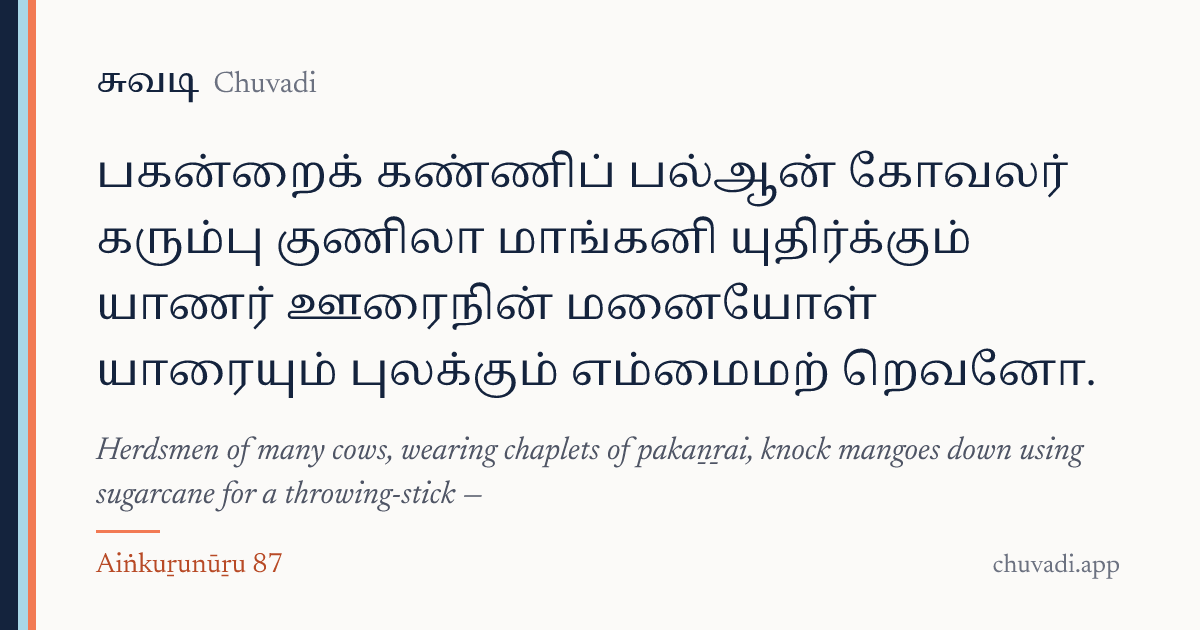

ஐங்குறுநூறு 87 · புலவி விராய பத்து
பாடல் · The poem
Tap a word to see where else it occurs.
பொருள் · Meaning in TamilAI
பகன்றை மலர்க் கண்ணி அணிந்த, பல பசுக்களை உடைய கோவலர்கள், கரும்பையே எறிகோலாகக் கொண்டு மாங்கனிகளை உதிர்க்கின்ற வளமான ஊரனே! உன் மனைவி யாரோடும் ஊடல் கொள்பவள்; அப்படியிருக்க, எம்மோடு ஊடுவதில் வியப்பு என்ன?
மருதத் திணை; பரத்தை தலைவனிடம் கூறியது. தலைவியின் சினத்தைப் பொருட்படுத்தாமல் இகழ்கிறாள். கரும்பையே கோலாகப் பயன்படுத்துவது ஊரின் வளத்தைக் காட்டுவதோடு, மிகுதியாக உள்ளதை அலட்சியமாக நடத்தும் தலைவனின் இயல்பையும் குறிக்கலாம். இறுதித் தொடரை "எம்மிடம் மட்டும் ஏன்?" என்றும் பொருள் கொள்ளலாம்.
ஆங்கிலம் · English translationAI
Translation
- Herdsmen of many cows, wearing chaplets of pakaṉṟai,
- knock mangoes down using sugarcane for a throwing-stick —
- man of that thriving town, your wife
- sulks at anyone at all; so what is it, then, if at us?
What the poem says
The mistress speaks, unbothered by the wife's anger. The wife sulks at everyone, so why should it matter that she sulks at "us" too? The tone is cool contempt.
The opening scene shows how rich the marutam country is. Cowherds wearing garlands of pakaṉṟai flowers use sugarcane, of all things, as a stick to knock down mangoes. Where the most valued crop is used as a casual tool, everything is in plenty. The point may be that the hero, too, has more than enough women and treats them carelessly.
The edition reads ūrai in line 3; I take it as the vocative ūra, "man of the town". The last phrase, emmai maṟṟu evaṉō, can also mean "why, then, at us in particular?", which would make the speaker more aggrieved.