




ஐங்குறுநூறு 90 · புலவி விராய பத்து
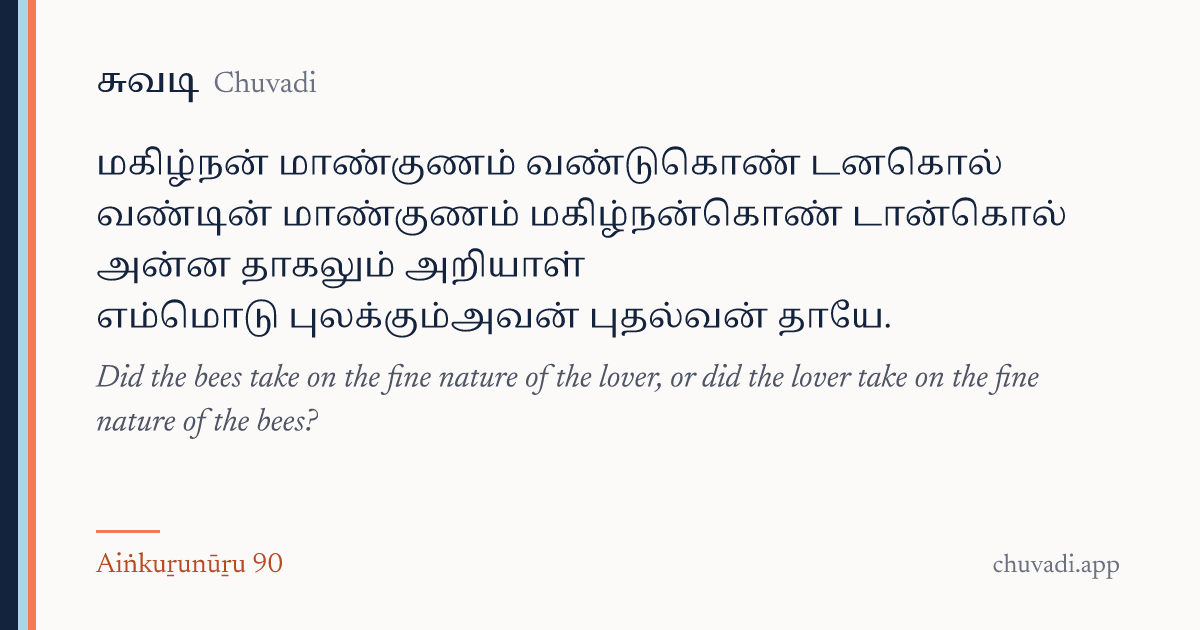
பாடல் · The poem
Tap a word to see where else it occurs.
பொருள் · Meaning in TamilAI
தலைவனின் சிறந்த குணத்தை வண்டுகள் பெற்றுக்கொண்டனவோ? அல்லது வண்டுகளின் சிறந்த குணத்தைத் தலைவன் பெற்றுக்கொண்டானோ? உண்மை இவ்வாறு இருப்பதைக்கூட அறியாமல், அவனுடைய மகனின் தாய் எம்மோடு ஊடல் கொள்கிறாள்.
மருதத் திணை; பரத்தை கூறியது. மலர் மலராகத் தாவும் வண்டும் பெண் பெண்ணாக நாடும் தலைவனும் ஒரே இயல்பினர் என்று எள்ளுகிறாள். "சிறந்த குணம்" என்பது எதிர்மறைப் பொருளில் சொல்லப்பட்டது. தலைவனின் இயல்பை உணராமல் தன்னைக் குறைகூறும் தலைவியை இகழ்கிறாள்.
ஆங்கிலம் · English translationAI
Translation
- Did the bees take on the fine nature of the lover,
- or did the lover take on the fine nature of the bees?
- Not knowing even that this is how things are,
- she sulks at us — the mother of his son.
What the poem says
The decade ends with a neat riddle in the mistress's voice. The bees go from flower to flower; so does the hero. Which of them learned it from the other? The "fine nature" (māṇ kuṇam) is ironic: what they share is fickleness.
The wife, called here only "the mother of his son", does not understand this, and so she blames the mistress, as if the mistress were the cause of the hero's wandering. The speaker's point is that it is simply the hero's nature. The repeated pattern of the first two lines gives the poem its balance.