



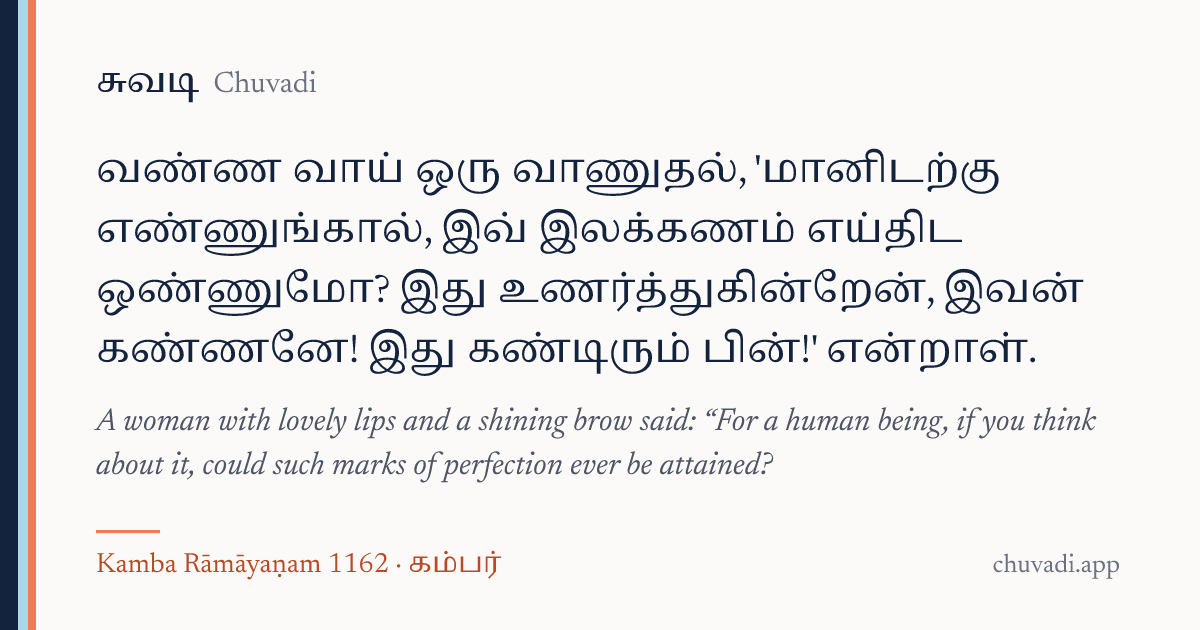
கம்பராமாயணம் 1162 · பால 19.26
பாடல் · The poem
Tap a word to see its gloss in the commentary and where else it occurs.
பொருள் · Meaning in Tamil
வண்ணவாய் ஒரு வாள் நுதல் - அழகிய வாயையும் ஒளி பொருந்திய நெற்றியினையும் உடையாள் ஒருத்தி; எண்ணுங்கால் மானுடற்கு இவ் இலக்கணம் எய்திட ஒண்ணுமோ? - “எண்ணிப் பார்த்தால் மனிதன் ஒருவனுக்கு இத்தகைய வடிவழகையுடைய உத்தமலட்சணம் பொருந்த இயலுமா? (இயலாது) (ஆகவே); இவன் கண்ணனே இது உணர்த்துகின்றேன் - (இவன் மானுடன் அல்லன்) இவன் திருமாலே ஆவான், இதனை, நான் அனுமானத்தால் உங்கட்கெல்லாம் இப்போது உணர்த்துகின்றேன்; இதுபின் கண்டிரும் என்றாள் - (நான் சொல்வது உண்மையென்பதனைப் பிரத்தியட்சமாக) நீங்கள் எல்லோரும் பின்னால் கண்ணால் காணப் போகின்றீர்கள்!” என்றாள்.
இராமனைக் கண்ணன் என்றுணர்ந்து உணர்த்திய இவள் வாய் வார்த்தை மற்றைப் பெண்கள் வார்த்தையிலும் அழகியதாய்த் தோன்றியமையின் அதனை உரைத்த வாயை “வண்ணவாய்” என்று போற்றி மகிழ்கின்றார். மனித உருவிலே காணப்படாத பேரழகு இவன் வடிவில் காணப்படுதலின், இவன் கண்ணனாகிய திருமாலே எனும் முடிவுக்கு வந்தாள். முன்னும் (1068) இராமனைக் கண்ணன் என்றமை காண்க.
ஆங்கிலம் · English translationAI
Translation
- A woman with lovely lips and a shining brow said: “For a human being,
- if you think about it, could such marks of perfection ever be attained?
- I am telling you this: he
- is Kaṇṇaṉ himself! You will see it later!”
What the poem says
One woman reasons that no mortal could have such perfect beauty, so this must be Kaṇṇaṉ, that is, Viṣṇu himself. She predicts that the others will see the proof with their own eyes later on.
The poet praises her “lovely lips” because, of all the women's words, hers are the truest: she has recognised the god in the man.