



கம்பராமாயணம் 1199 · பால 20.9
பாடல் · The poem
Tap a word to see its gloss in the commentary and where else it occurs.
பாட வேறுபாடு · Project Madurai reads
பொருள் · Meaning in Tamil
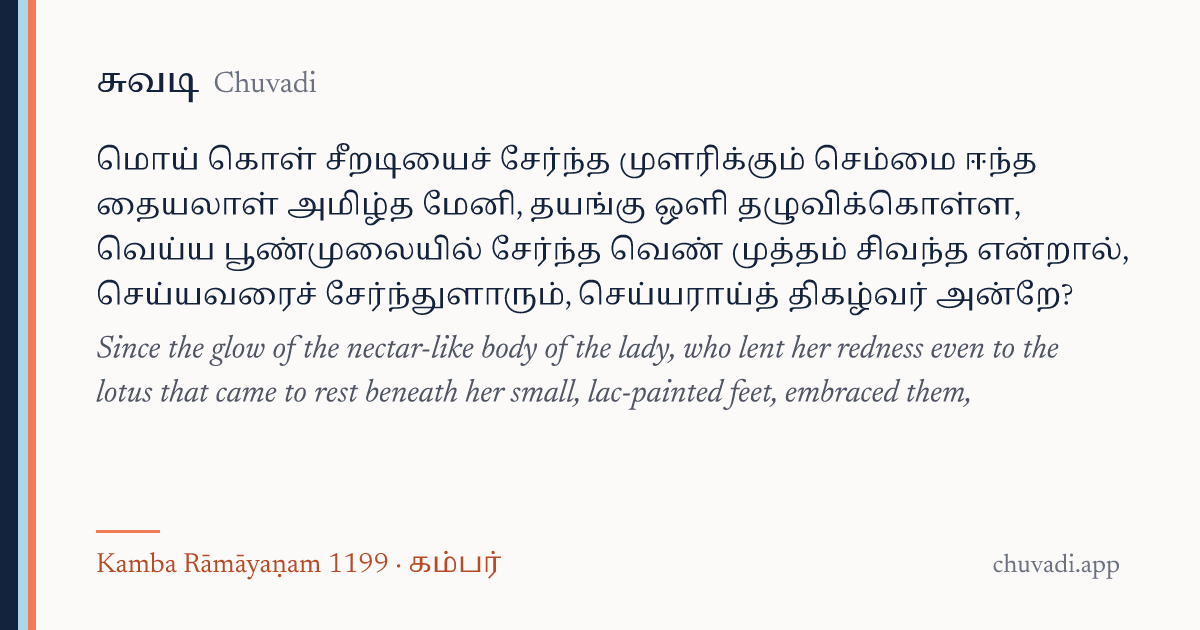
மொய்கொள் சீறடியைச் சேர்ந்த முளரிக்கும் செம்மை ஈந்த தையலாள் - செம்பஞ்சுக் குழம்பு முதலிய சாந்துகள் மொய்த்துக் கிடக்கின்ற (தனது) சிறிய அடிகளை (ஒப்பாக இயலாமல்) சரண் அடைந்த தாமரை மலர்களுக்கும், (தனது) அடிகளின் செம்மை நிறத்தைக் கொடுத்துள்ள சீதையினுடைய; அமிழ்தமேனி தயங்குஒளி தழுவிக்கொள்ள - அமுதம் போன்று அரிய செந்நிறத் திருமேனியிலே விளங்குகின்ற செம்மை நிற ஒளி, (தம் மேலே) வந்து படுதலால்; வெய்ய பூண்முலையில் சேர்ந்த வெண் முத்தம்சிவந்த என்றால் - விருப்பத்தை நல்கும் அணிகள் அணிந்த மார்பகங்களில் பொருத்தியுள்ள வெண்ணிறம் அமைந்த முத்துக்களும் செந்நிறம் அடைந்தன என்றால்; செய்யவரைச் சேர்ந்துளாரும் செய்யராய்த் திகழ்வர் அன்றே? - செம்மைக் குணம் பொருந்தியவரைச் சேர்ந்தவர்களும் செம்மைக் குணம் பெற்றுத் திகழ்வார்கள் (என்பது உண்மை) அன்றோ?
திருமகளின் திருவடிக்கீழ் இருக்கும் தாமரை, செந்தாமரையாய் இருப்பதற்குக் கற்பித்துக் கூறிய திறம் அழகியது. வெண்முத்தம் சேர்க்கையால், செய் முத்தம் ஆனாற்போல், மக்களும் சேர்க்கையின் உயர்வால் சிறப்புறுவர் என்றவாறு. வேற்றுப் பொருள் வைப்பணி. “நிலத்து இயல்பால் நீர் திரிந்து அற்றாகும்; மாந்தர்க்கு இனத்து இயல்பது ஆகும் அறிவு” (திருக். 452) இங்கு நினைவு கூரற்பாலது.
செய்யர் - செம்மையான பண்புடையவர்கள். “மொய்கொள் சீறடியைச் சேர்ந்த முளரிக்கும் செம்மை ஈந்த தையலாள் அமிழ்த மேனி” என்பதனோடு, “அழலாடி அங்கை சிவந்ததோ அங்கை அழகால் அழல் சிவந்த வாறோ?” (அற்புதத் திருவந். 98) எனும் காரைக்கால் அம்மையார் திருவாக்கையும், “முடிச்சோதியாய் உனது முகச்சோதி மலர்ந்ததுவோ? அடிச்சோதி நீ நின்ற தாமரையாம் அலர்ந்ததுவோ?” (திருவாய். 3:1:1) என்றும் நம்மாழ்வார் திருவாய் மொழிப் பாசுரத்தையும் ஒப்பிடுக.
ஆங்கிலம் · English translationAI
Translation
- Since the glow of the nectar-like body of the lady, who lent her redness
- even to the lotus that came to rest beneath her small, lac-painted feet, embraced them,
- the white pearls lying on her desirable, jewelled breasts turned red;
- so too, do not those who keep company with the good become good themselves?
What the poem says
The rosy glow of Cītai's skin is so strong that the white pearls on her breast turn red. The poet adds that she gave the lotus its colour too: the lotus on which the goddess Tirumakaḷ stands is red only because it took the redness of her feet.
The last line states a general truth by way of the image, a recognised figure in Tamil poetics. The word for red also means upright or good, so it says both that things touching what is red turn red and that people who keep good company become good.