



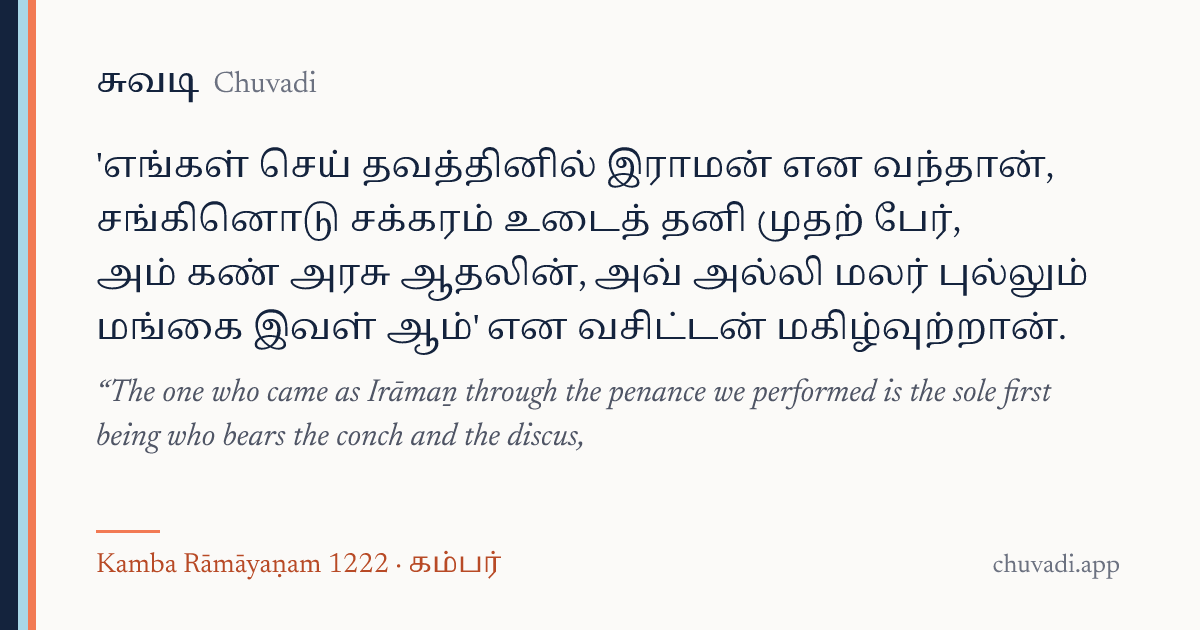
கம்பராமாயணம் 1222 · பால 20.32
பாடல் · The poem
Tap a word to see its gloss in the commentary and where else it occurs.
பொருள் · Meaning in Tamil
வசிட்டன் - (சீதையைக்கண்ட) வசிட்ட மாமுனிவன்; எங்கள் செய்தவத்தினில் இராமன் என வந்தோன் - யானும் என்னனைய முனிவர்களும் செய்த தவத்தினால் இராமன் ஆக அவதரித்துள்ள பெருமான்; சங்கினொடு சக்கரம் உடைத் தனி முதற்பேர் அங்கண் அரசு ஆதலின் - சங்கம், சக்கரம் என்னும் திவ்விய ஆயுதங்களை ஏந்திய ஒப்பற்ற முதற் பொருளாகிய பெரிய கண்களையுடைய (யாவர்க்கும்) தலைவனான திருமாலே ஆதலின்; அவ் அல்லி மலர் புல்லும் மங்கை இவள் ஆம் என மகிழ்வுற்றான் - செந்தாமரை மலரைத் தங்கும் இடமெனக் கொண்டு வாழும் திருமகளே இச்சீதையாவாள் என மகிழ்வு கொண்டான்.
இராமன் திருமாலே என்பது ஐயத்திற்கிடம் அற்ற உண்மையாதலின், அவனை மணக்க இருப்பவள் திருமகளே என ஐயந்தெளிந்தான் வசிட்டன் என்க. அல்லிமலர் - தாமரை மலர். “அல்லிசேர் அணங்கிற்கு அணங்கு அன்னவள்” (சீவக. 162) என வருவதும் காண்க. இராமன் நல்லோர் செய்தவத்தால், அறந்தலை நிறுத்தி, தீயோர் இறந்துக நூறித் தக்கோர் இடர்துடைத்து ஏகப் பிறந்தவன் (கம்ப. 5885) ஆதலின் “எங்கள் செய் தவத்தினில்” என்றார். “ஆய அந்தணர் இயற்றிய அருந்தவத்தாலும்” (கம்ப. 1483) “அரக்கர் பாவமும் அல்லவர் இயற்றிய அறமும்” (கம்ப. 1484) என வருவனவும் ஒப்புநோக்கற் பாலன.
ஆங்கிலம் · English translationAI
Translation
- “The one who came as Irāmaṉ through the penance we performed
- is the sole first being who bears the conch and the discus,
- the lord with lovely eyes; and so this maiden must be
- the one who dwells in that lotus flower,” and Vacittaṉ rejoiced.
What the poem says
The sage Vacittaṉ, seeing Cītai, reasons it out with delight. Irāmaṉ, born because of the penance of sages like himself, is certainly Viṣṇu, the first being, who carries the conch and the discus. So the girl he is to marry can only be Tirumakaḷ, Viṣṇu's consort, who lives in the lotus.
The commentary links this to the epic's statement that Irāmaṉ was born, thanks to the austerities of good people, to establish righteousness and destroy the wicked.