



கம்பராமாயணம் 1225 · பால 20.35
பாடல் · The poem
Tap a word to see its gloss in the commentary and where else it occurs.
பாட வேறுபாடு · Project Madurai reads
பொருள் · Meaning in Tamil
மாதவரை முன்கொள வணங்கி - (யாவராலும்) (வணங்கற்குரிய) மாதவமுனிவர்களை முதன்மை கொண்டு வணங்கி; நெடு மன்னன் பாதமலரைத் தொழுது - நீள்புகழுக்குரிய தசரதவேந்தனின் அடித்தாமரைகளை அடுத்து வணங்கி; கண்கள் பனிசோரும் தாதை அருகிட்ட தவிசில் - ஆனந்தக் கண்ணீர்ச்சொரிகின்ற தன் தந்தை சனகமன்னர் அருகே இட்டுள்ள ஆதனத்தில்; போதினை வெறுத்து அரசர் பொன்மனை புகுந்தாள் தனி இருந்தாள் - (குறை நயப்பார் இல்லாத வைகுந்தத்தில்) செந்தாமரை மலர்மேல் இருக்க வெறுத்து, (பூவுலகில் மக்கள் துயர்தீர்க்க) மன்னர் மனைகளில் புக விரும்பி வந்துள்ள பிராட்டி தனித்து அமர்ந்தாள்.
பரம பதத்திலிருக்கும் போது, அங்குத் தன்னை விடக் குறைந்தார் இல்லாமையாலே, தம்மைவிடக் குறைந்தார்க்கு அளிக்கையாலே நிறைவு பெறாத குறைவு (தனிச்சு. வியாக... 131-132) உண்டாகையாலே பரமபத இருக்கையாகிய “பூவினை வெறுத்து” என்றார். இவ்வாறே “அந்தரத்து அனந்தர் (சோம்பல்) நீங்கி அயோத்தியில் வந்த வள்ளல்” (கம்ப. 10368) என்று இராமபிரானையும் குறிப்பார். அருமையாய் வளர்த்த மகளைப் பிரியும்காலம் அணுகுவது நினைந்து தந்தையாகிய சனகன் கண்கள் நீர்சொரிந்தன எனும் பொருளும் பட உரைத்துள்ள திறம் ஓர்க. மக்கட் பாசத்தை உணர்ந்து உணர்த்துவதில் கவிஞர் பிரான் தன்னிகரற்றவர் என்பது மேலும் வருமிடங்களிலும் விளங்கும். இனி, கணவனாகிய திருமாலைப் பிரிந்து கழிக்கும் பொழுதினை வெறுத்து என்றும், “போதினை வெறுத்து” என்பதற்குப் பொருள்கொள்ள லாம். “ஐயன் அயோத்தியில் பிறந்தபின்னும் பிரிவிலள் ஆயினாள்” (கம்ப. 1824) என்பதும் காண்க.
ஆங்கிலம் · English translationAI
Translation
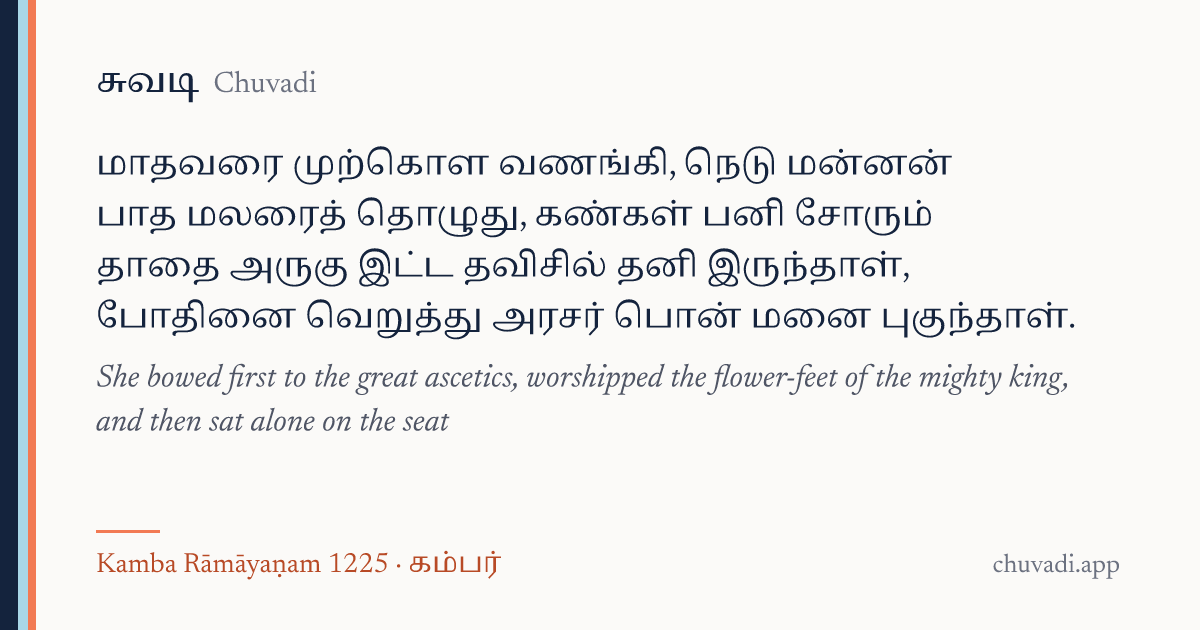
- She bowed first to the great ascetics, worshipped
- the flower-feet of the mighty king, and then sat alone on the seat
- placed beside her father, whose eyes were shedding tears:
- she who, tiring of the lotus, had come into the golden house of kings.
What the poem says
Cītai bows in proper order, first to the sages and then to Tacarataṉ, and takes her seat beside her father Caṉakaṉ, whose eyes are wet with joy, and perhaps with sorrow at the thought that his beloved daughter will soon leave him.
She is the goddess who grew weary of sitting on her lotus in heaven, where no one needed her grace, and came down to be born into a royal house on earth. The word pōtu can mean both “flower” and “time,” so the line may also mean she was tired of the time spent apart from her husband Viṣṇu.