



கம்பராமாயணம் 1236 · பால 21.3
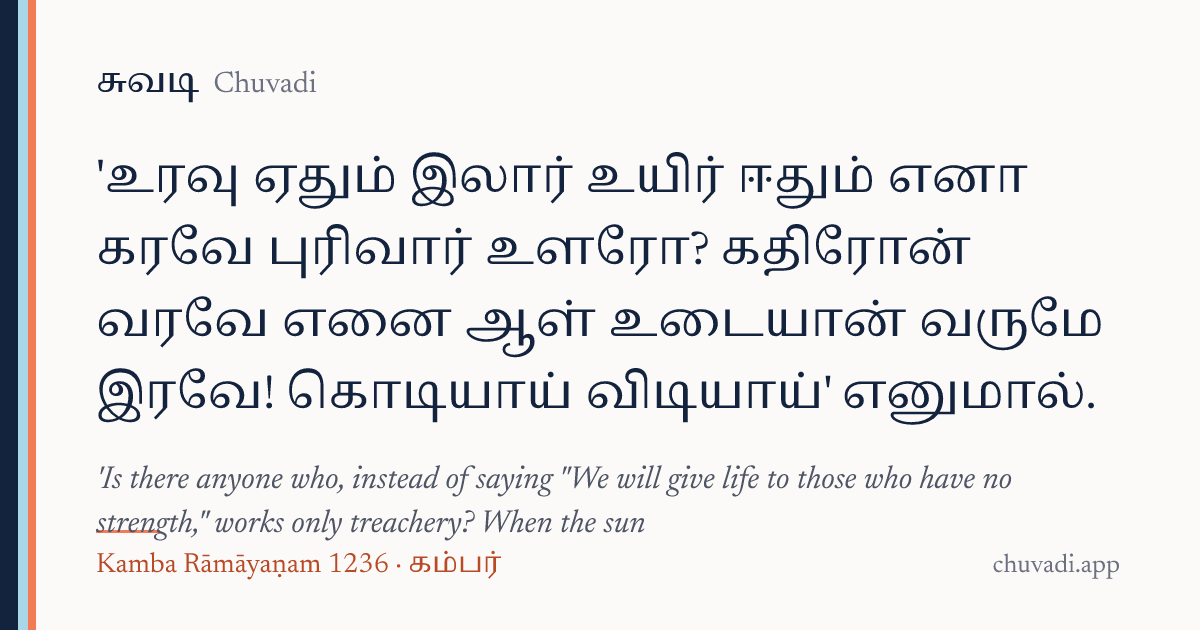
பாடல் · The poem
Tap a word to see its gloss in the commentary and where else it occurs.
பொருள் · Meaning in Tamil
இரவே! கொடியாய்! - இரவுப்பொழுதே! கொடுமையை உடையாய்!; உரவு ஏதும் இலார் உயிர் ஈதும் எனா - வலிமை சிறிதும் அற்ற மெல்லியராகிய பெண்டிர்க்கு வாழ்வளிப்போம் என்று நினையாமல்; கரவே புரிவார் உளரோ? - வஞ்சனை புரிந்து உயிர்வாங்குவார் உள்ளனரோ? (உள்ளனர் என உன்னால் உணர்ந்தேன்); கதிரோன் வரவே எனை ஆள் உடையான் வருமே! - நாளைப்பொழுது புலர்ந்தவுடனே, என்னை ஆளாக உடைய எம்பெருமான் இராமன் (என்னருகே) வந்து விடுவானே!; விடியாய்! எனும் - விரைவில் விடிந்து விடு! (இன்றேல் வீரர்க்கு வீரனாகிய அவனைக் கொண்டு உன்னைத் தண்டிப்பேன்) என்று சீதை இரவை நோக்கிக் கூறினள்.
காதல் நோய் மாலை மலர்ந்து இரவில் காய்த்து வருத்துதல் இயல்பு. காதல் நோயாளர்க்கு ஓர் இரவு பலயுகமாகத் தோன்ற, பேசாதவற்றிடம் எல்லாம் பேசிப்புலம்பலும், கேளாதவற்றிடம் எல்லாம் அவை கேட்பது போலப் பேசலும் இயல்பு ஆகும். (தொல். பொருளியல். 2) இனி வருவனவற்றிற்கும் இது பொருந்தும். பெண்கள் அபலைகள் எனப்படுதலால் “உரவு ஏதும் இலார்” என்றார். துணையற்ற பெண்களிடம் இகலுதல் என்ன வீரம்? என்பது குறிப்பு.
ஆங்கிலம் · English translationAI
Translation
- 'Is there anyone who, instead of saying "We will give life to those who have no strength,"
- works only treachery? When the sun
- comes, he who owns me as his own will come.
- O Night! Cruel one! Break into dawn!' she says.
What the poem says
Cītai speaks to the night. It is cruel to the weak, she says: instead of sparing a helpless woman's life, it works by stealth to take it. What courage is there in attacking someone who has no defender?
She begs it to end. As soon as the sun rises her lord will come for her, and by implication he will punish the night for what it has done. Lovers parted from one another traditionally find a single night as long as an age and pour out their grief to things that cannot hear them; this verse begins a series of such laments.