



கம்பராமாயணம் 1238 · பால 21.5
பாடல் · The poem
Tap a word to see its gloss in the commentary and where else it occurs.
பொருள் · Meaning in Tamil
பனைமேல் உறைவாய் - பனைமரத்தின் மேல் தங்குகின்ற அன்றில் பறவையே! கனை ஏழ்கடல்போல் - ஒலியெழுப்பும் எழுகடலைப் போல; கரு நாழிகை - இரவு; வினையேன் வினையால் - இராமனையடைய முயலும் அடியேனின் வினைப்பயனால், விடியாவிடின் - விடியாமல் போய்விட்டால்; தகவேதும் இலாய் - (தனித்திருப்போரைச் சோடியாகச்சென்று வருத்துதல் கூடாது என்னும்) பண்பாடு சிறிதும் இன்றி; தனியே பறவாய் - தனித்துப்பறவாமல் உன்துணையோடு பறக்கின்றாய்!; பழிபூணுதியோ? - ஏன் (துணையற்றாரைத் துன்புறுத்தும் இத்தகைய) பழிச்செயல்களை(த்துணிந்து) மேற்கொள்கின்றாய்?
கரு நாழிகை - அன்மொழித்தொகையாய் இரவைக் குறித்தது. தனித்திருக்கும் காதலர்க்கு, இணைந்திருப்பார் காட்சி மிகத் துன்புறுத்தும் ஒன்றாதலின், தனியே பறவாய் (இணைந்து பறந்து) பழிபூணுதியோ என்றாள்.
நிலவு, இரவு, தென்றல், அன்றில், கடல் முதலிய பொருள்கள் காமத்தை மிகுவிக்கும் பொருள்கள் ஆதலால் அவற்றைக் “காமோத்தீபகம்” என்பர். பின் வரும் பாடல்களில் அவை பேசப்படுதல் காணலாம். கரு நாழிகை - கரிய நேரம் - இருள். “கரும் பொழுது அகலும் முன்னே கொல்லுதல் கருமம் என்றான்” (வில்லி. கிருட். தூ. 17) என வருதல் காண்க. பிரிந்திருப்பார்க்கு இரவு எல்லை காணாத ஒன்றாய் நீளுதலின் எல்லை காணாக்கடலை உவமித்தார் அதுவும் ஒரு கடல் அன்று என்பார் “கனை ஏழ் கடல்” போல் கரு நாழிகை என்றார். அன்றில் காதல் அன்பிற்குப் புகழ்பெற்ற பறவை. “அன்றில் ஒரு கண் துயின்று, ஒரு கண் ஆர்வத்தால் இன்றுணை மேல் வைத்து உறங்கும்” (நள. வெ. சுயம். 117) காதலர். (பனை) மடல் ஏறுதல் பழிப்புக்குரிய செயல் எனும் மரபும் தொனிக்க, “பனைமேல் உறைவாய் பழி பூணுதியோ?” என்றுரைத்த நயம் காண்க.
ஆங்கிலம் · English translationAI
Translation
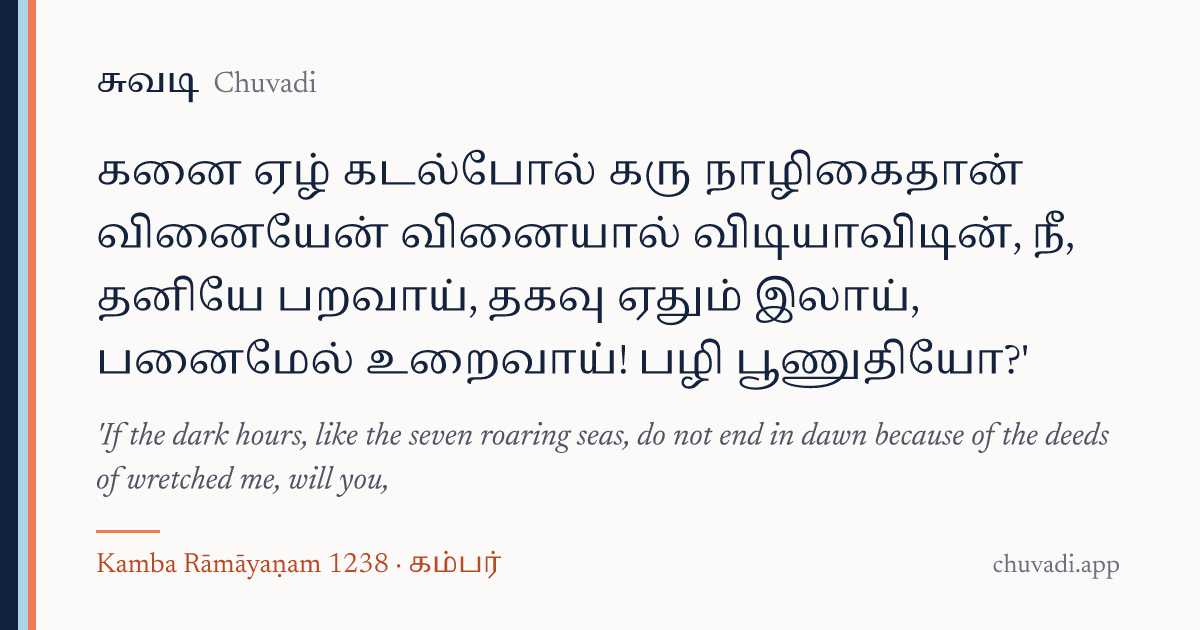
- 'If the dark hours, like the seven roaring seas,
- do not end in dawn because of the deeds of wretched me, will you,
- who do not fly alone, who have no decency at all,
- you who live up on the palmyra, take this blame on yourself?'
What the poem says
Next Cītai turns on the anṟil, a bird that lives in palmyra palms and is famous in Tamil poetry for never leaving its mate. The night already stretches before her like seven roaring oceans, and if it never ends, she says, that will be the fault of her own past deeds. But the anṟil makes it worse by flying about in pairs in front of someone who is alone, which no decent creature would do.
The commentary notes that night, the moon, the breeze, the anṟil and the sea are the classic things that inflame a lover's longing. The palmyra also recalls the old custom of a rejected lover 'riding the palmyra-stem horse' in public, a shameful act, so 'you who live on the palmyra' carries a hint of disgrace.