



கம்பராமாயணம் 1325 · பால 21.92
பாடல் · The poem
Tap a word to see its gloss in the commentary and where else it occurs.
பாட வேறுபாடு · Project Madurai reads
பொருள் · Meaning in Tamil
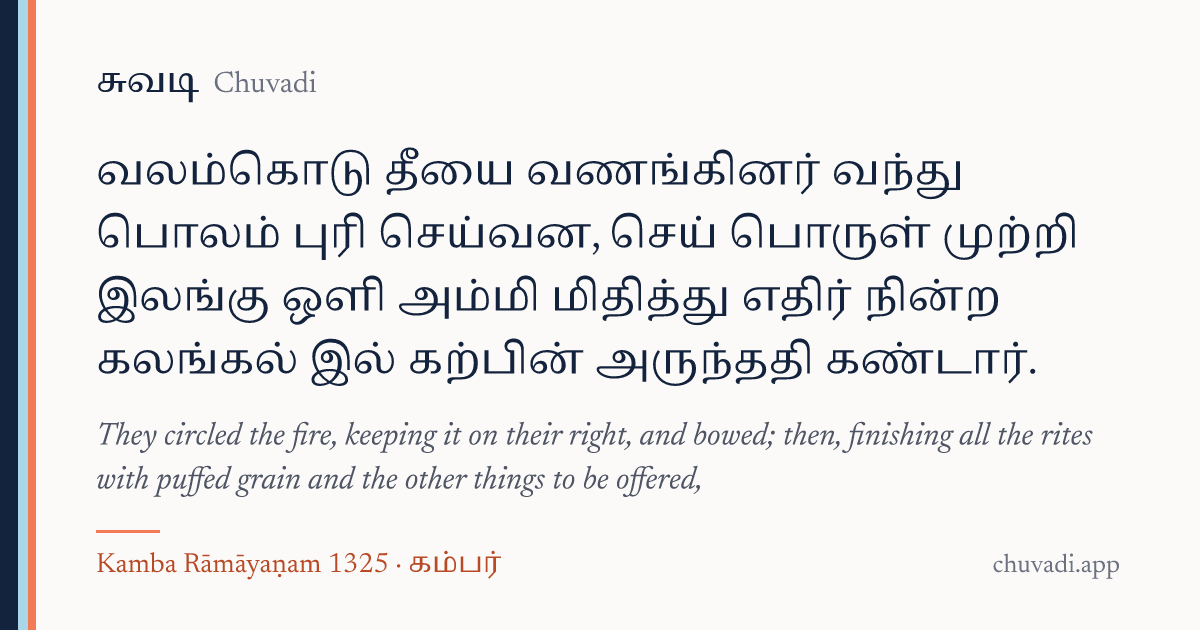
வலம்கொடு தீயை வணங்கினர் - (இராமனும் சீதையும்) (வேள்வித்) தீயினை வலம் வந்து வணங்கினர்; வந்து பொலம் பொரி செய்வன செய்பொருள் முற்றி - அவ்வாறு, வலம் வந்து வணங்கியபின் அழகிய பொரியிடுதல் முதலிய செய்யத்தக்க பொருள்கள் கொண்டு செய்யத்தக்கனவற்றைச் செய்து முடித்து; இலங்கு ஒளி அம்மி மிதித்து - விளங்கும் ஒளியுடைய அம்மிக்கல்லை (காலால்) மிதித்து; எதிர்நின்ற கலங்கல் இல் கற்பின் அருந்ததி கண்டார் - எதிரிலே நின்று கொண்டுள்ள நிலைகலங்காத கற்பென்னும் திண்மை பூண்ட அருந்ததியினையும் கண்டனர்.
அம்மி மிதித்தலும் அருந்ததி காணலும் சீதைக்குரிய செயல்களே ஆயினும், மலரும் மணமும் போல சீதையும் இராமனும் இணைந்திருக்கும் ஒன்றுபட்ட தன்மை பற்றி இருவர் செயலாகவே கூறினார் என்க. அம்மி மிதித்தல் - இல்கல் போன்று கற்பினில் திண்மை பெறுக என உணர்த்தற்காம். அருந்ததி காட்டல் - எத்தகு சோதனையிலும் அருந்ததி போன்று கற்பினிற் கலங்கா நிலை எய்துதற்காம். நட்சத்திர நிலையிலும் கணவனாகிய வசிட்டனைப் பிரியாதிருத்தல் அருந்ததி ஒருத்திக்கே உரியதாம். இங்கு விண்மீன் நிலையில் அன்றி, நேரேயே அருந்ததி கண்காண நின்றாள் என்பார், “எதிர்நின்ற அருந்ததி” என்றார். மங்கல நாண் அணிதலை, “மங்கலக் கழுத்துக்கெல்லாம் தான் அணி” (கம்ப.) “மற்றை நல் அணிகள் காண் உன் மங்கலம் காத்த மன்னோ” (கம்ப. 1118), “கழுத்தின் நாண்” (கம்ப. 1653) என்று கவிஞர்பிரான் பலவிடங்களில் கூறியிருந்தும் இங்கு மணச் சடங்குகளில் ஒன்றாகக் கூறாதது உலக வழக்கான அதனை, வேத வழக்காகவே நிகழ்வுறும் சடங்குகளுடன் இங்குக் கூற அவர் விரும்பவில்லை போலும் என்று உரைப்பர். மனித வழக்குக்குரிய ஒரு நிகழ்வைத் தெய்வ மணநிகழ்வில் சேர்க்கக் கவிஞர் விரும்பவில்லை யெனினுமாம். அதனால்தான், “மான் அணி நோக்கினார் தம் மங்கலக் கழுத்துக் கெல்லாம் தான் அணியான போது தனக்கு அணியாது மாதோ” (கம்ப. 1118) என்று பீடிகையிட்டுக் கொண்டார் போலும்.
ஆங்கிலம் · English translationAI
Translation
- They circled the fire, keeping it on their right, and bowed; then,
- finishing all the rites with puffed grain and the other things to be offered,
- they stepped on the gleaming grinding stone and saw Aruntati,
- of unshakeable chastity, standing before them.
What the poem says
The remaining rites are completed. The couple circle the fire and bow to it, offer the puffed grain, and then perform two customs of the Tamil wedding: the bride steps on the grinding stone, a sign that her fidelity should be as firm as stone, and is shown the star Aruntati, the wife of Vacittaṉ, model of unwavering chastity, who even as a star never leaves her husband's side.
Here, the poet says, Aruntati stood before them in person, not just as a star. These rites belong to the bride, but the poet speaks of both together, because the couple are as inseparable as a flower and its scent. The commentary notes that the tying of the tāli is not mentioned here, although the poet mentions it elsewhere in the epic.