



கம்பராமாயணம் 1346 · பால 22.9
பாடல் · The poem
Tap a word to see its gloss in the commentary and where else it occurs.
பாட வேறுபாடு · Project Madurai reads
பொருள் · Meaning in Tamil
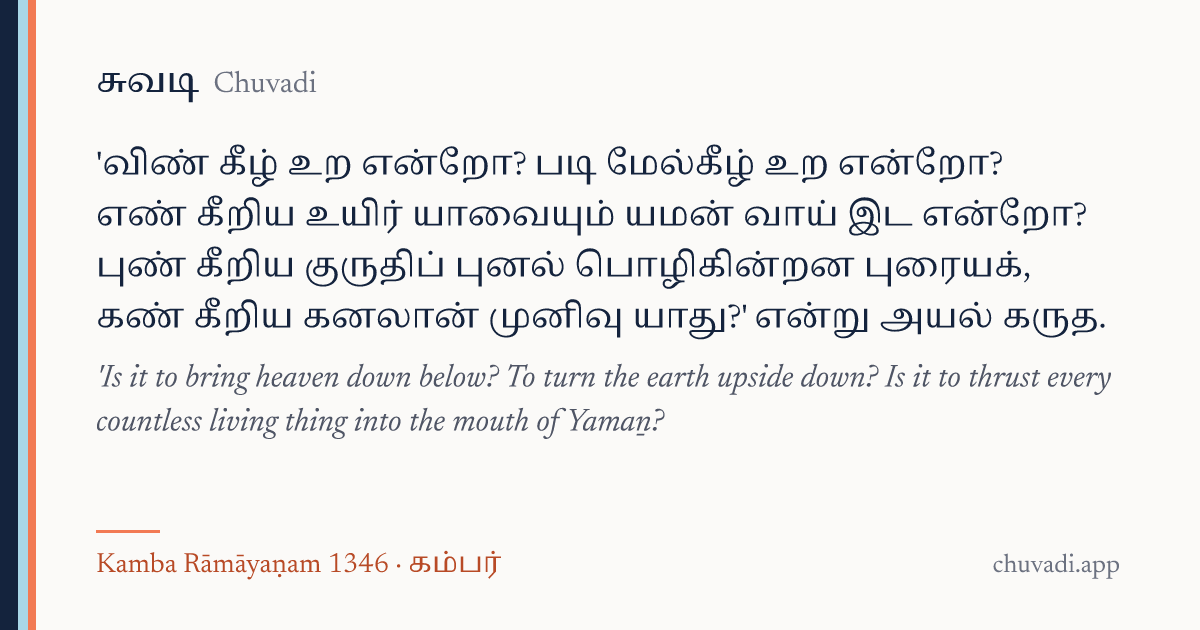
புண்கீறிய குருதிப்புனல் - புண்ணைக் கீறியதனால் கொட்டும் இரத்தமாகிய செந்நீர்; பொழிகின்றன புரைய - சொரிகின்றவற்றைப் போல; கண்கீறிய கனலான் முனிவு - கண்களைக் கீறிக் கொண்டு வருகின்ற சினத்தீயினையுடைய அம் முனிவனது பெருவெகுளி; விண் கீழ் உற என்றோ? - சுவர்க்க உலகம் மண்ணுக்கு வந்து வீழ வேண்டும் என்றோ?; படிமேல் கீழ்உற என்றோ - பூவுலகம் வானிடத்தில் சென்று பொருத்த வேண்டும் என்றோ?; எண் கீறிய உயிர்யாவையும் யமன் வாய் இட என்றோ? - எண்ணலை ஒழித்த இவ்வுலக உயிர்கள் யாவற்றையும் கூற்றுவன் வாயில் கொடுக்க வேண்டும் என்றோ?; யாது? என்று அயல்கருத - யாது காரணத்தாலோ? என்று அயலிலுள்ளார் (ஐயத்தால்) எண்ணவும் -
சினம் மிக்கார் கண்கள் செந் தீப்போலச் சிவக்கும் ஆதலால், “கண் கீறிய கனலான்” என்றார். சினத்தால் எழும் கண்ணின் சிவப்பு, கண்ணின் இயல்பான நிறம் அன்று; செயற்கையானதே. அதுபோல, அருள்பொழியும் பார்வையாகிய முனிவனுக்குக் கண்கள் சிவப்பது இயல்பன்று. எளிய மக்களின் சினமே, இயல்பாய் உள்ளவற்றைத் தாறு மாறாக்கும் தன்மை வாய்ந்ததாயிருக்க, பேராற்றல் பெற்ற தவமுனிவன் சினமாதலின், வானையும் மண்ணையும் தாறுமாறாக்க எழுந்ததோ என அருகிலுள்ளோர் அஞ்சினர் என்பதாம். உலகில் உள்ள உயிர்கள் யாவும் நாட் செல்லச் செல்ல யமன் வாயிற் போய் இவ்வுலக வாழ்க்கையை முடித்துக் கொள்ளும் இயல்பின. ஆனால், இவன் சினம், உலகத்து உயிர்கள் யாவற்றையும் ஒரே நாளில் இயமன் வாயிற் கொண்டு தள்ள எழுந்ததோ என ஐயுற்றனர் என்பார், “எண் கீறிய உயிர் யாவையும் யமன் வாய் இட என்றோ” என்றார். “கீறிய” என்னும் சொல் மூன்றடிகளிலும் பொருட் பொருத்தம் சிறக்க அமைந்துள்ளது.
ஆங்கிலம் · English translationAI
Translation
- 'Is it to bring heaven down below? To turn the earth upside down?
- Is it to thrust every countless living thing into the mouth of Yamaṉ?
- What is the wrath of this man whose fire tears at his eyes, like a wound
- torn open pouring out its stream of blood?' So the onlookers wondered.
What the poem says
Those who watch Paracurāmaṉ approach can only guess at the cause of his rage. His eyes run red like a gashed wound pouring blood, and they fear that his anger means to overturn heaven and earth, or to send every creature to Yamaṉ, the god of death, in a single day.
A sage's eyes should shed grace, so their redness is unnatural; if an ordinary person's anger can upset the order of things, a great ascetic's anger could upset the cosmos. The word "tear" (kīṟiya) recurs in three lines, each time with a fitting sense.