



கம்பராமாயணம் 1366 · பால 22.29
பாடல் · The poem
Tap a word to see its gloss in the commentary and where else it occurs.
பொருள் · Meaning in Tamil
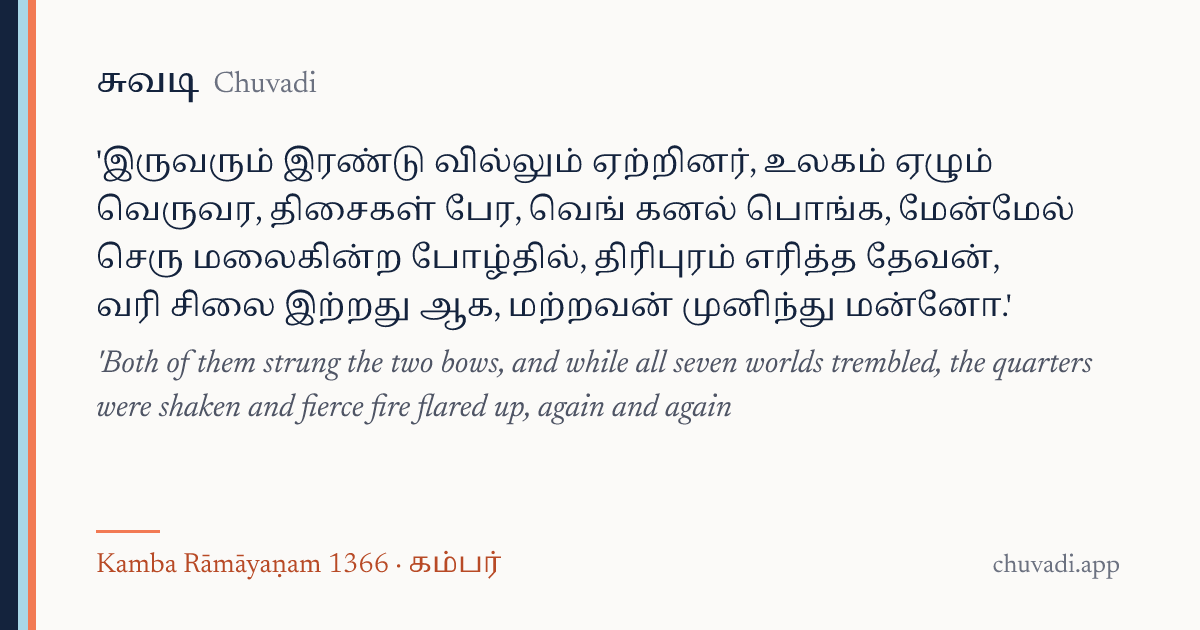
இருவரும் - (அரி, அரன் என்னும்) இரண்டு பேரும்; இரண்டு வில்லும் ஏற்றினர் - இரு விற்களையும் நாணேற்றி; உலகம் ஏழும் வெருவர - ஏழுலகங்களும் அஞ்சுமாறு; திசைகள் பேர - திசைகள் நிலைகுலைய; வெங்கனல் பொங்க - கடிய சினத்தீ பொங்கியெழ; மேன்மேல் - மேலும் மேலும்; செருமலைகின்ற போழ்தில் - போர் புரிகின்ற; திரிபுரம் எரித்த தேவன் - முப்புரமெரித்த சிவபெருமானின்; வரிசிலை இற்றது ஆக - கட்டமைந்த வில் முரிந்துபோக; மற்று, அவன் முனிந்து - அச் சிவபிரான் மிக்க சினங்கொண்டு.
மன், ஓ - அசைநிலைகள். “முனிந்து மீட்டும் போர் தொடங்கும் வேலை” என மேற்பாடலோடு இயையும். மற்று - வினைமாற்றுப் பொருளில் வந்தது.
ஆங்கிலம் · English translationAI
Translation
- 'Both of them strung the two bows, and while all seven worlds
- trembled, the quarters were shaken and fierce fire flared up, again and again
- they clashed in battle; then the banded bow of the god who burned the three cities
- snapped, and he, enraged...'
What the poem says
Civaṉ and Viṣṇu fight with the two bows, shaking all seven worlds. In the struggle Civaṉ's bow, the one later kept at Mitilai, breaks. Civaṉ is named as the god who burned the three flying cities of the demons.
Furious at the damage, he is about to renew the fight; the sentence continues into the next verse.