



கம்பராமாயணம் 2819 · ஆரணிய 5.5
பாடல் · The poem
Tap a word to see its gloss in the commentary and where else it occurs.
பொருள் · Meaning in Tamil
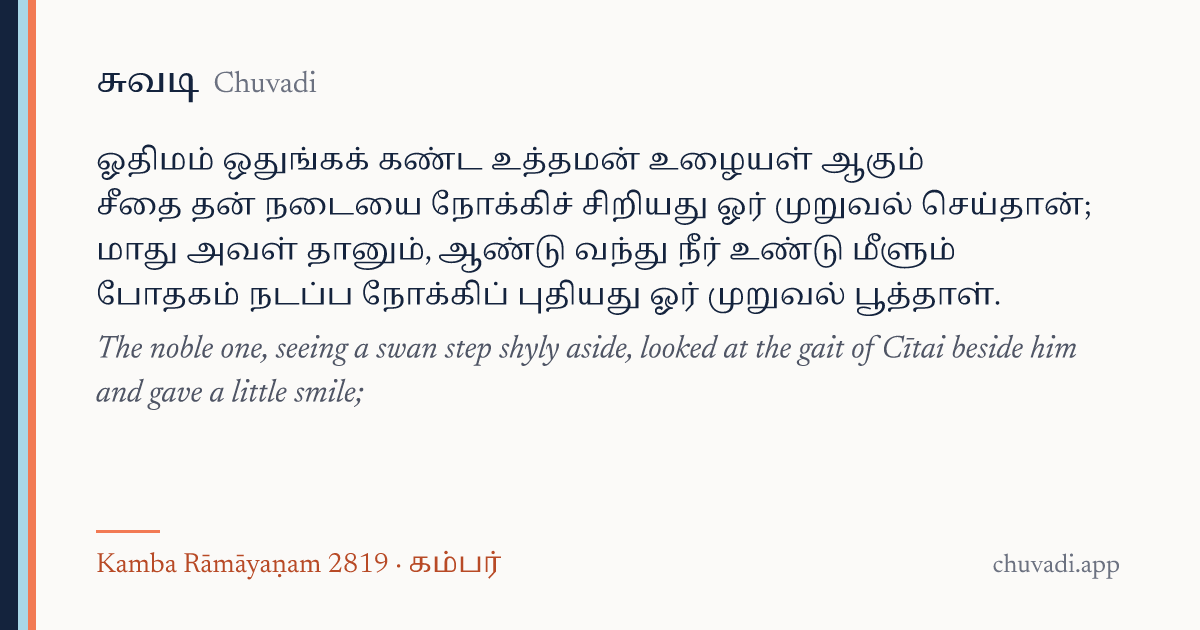
ஓதிமம் ஒதுங்கக் கண்ட உத்தமன் - அன்னப் பறவை நடந்து செல்லக் கண்ட மேலானவனான இராமன்; சீதை தன் நடையை நோக்கிச் சிறியது ஓர் முறுவல் செய்தான் - சீதையின் நடையைப் பார்த்து ஒரு புன் சிரிப்புக் கொண்டவனானான்; ஆண்டுவந்து நீர் உண்டு மீளும் போதகம் நடப்ப நோக்கி - அங்கு வந்து நீரைப் பருகி மீளுகின்ற ஆண்யானை நடந்து செல்வதைப் பார்த்து; மாது அவள் தானும் புதியது ஓர் முறுவல் பூத்தாள் - அச்சீதையும் அதுவரை இல்லாத ஒரு தனிப் புன்னகை பூண்டாள்.
உண்ணல் என்பது உண்பன, தின்பன, பருகுவன, நக்குவன என்ற சிறப்பு வினைகளைக் கூறாது இங்கு பொது வினையைக் குறித்தது என்பர். போதகம் - பத்தாண்டு நிறைந்த யானைக் கன்று. சீதையின் நடைக்கு அன்னம் தோற்றது என்பதை 'ஒதுங்க' என்ற சொல்லும் இராமன் நடைக்கு ஆண்யானை தோற்றதை 'மீளும்' என்ற சொல்லும் சுட்டும். கோலங் காண் படலத்தில் சீதை மண்டபத்தை நோக்கி நடந்தபோது 'அன்னமும் அரம்பையரும் ஆர் அமிழ்தும் நாணமன் அவை இருந்த மணி மண்டபம் அடைந்தாள்' (1144) என்பதை நினைவு கொள்ளலாம். அம்மண்டபத்தில் வில்லொடிக்க எழுந்த இராமன் நாகமும் நாண நடந்தான்' (697) என்பதையும் ஒப்பிடலாம். சென்ற பாடலில் புறப்பொருள்கள் உவமையாக அமைந்தன. இங்கு, புறப்பொருளின் செயல்களைத் தலைமக்களின் செயல்கள் வென்ற நிலையில் அமைவதைக் காணலாம். ஆடவர் செயலினும் மகளிர் செயல் அடங்கி நிற்பதைப் புதிய தோர் முறுவல் பூத்தாள்' என்பார்.
இதில் ஏதுத்தற்குறிப்பேற்ற அணி அமைந்துள்ளது.
ஆங்கிலம் · English translationAI
Translation
- The noble one, seeing a swan step shyly aside,
- looked at the gait of Cītai beside him and gave a little smile;
- and the lady too, seeing a young bull elephant that had come there to drink
- walk back again, broke into a new kind of smile.
What the poem says
The lovers' play continues. When a swan moves aside, Irāmaṉ glances at Cītai's walk and smiles, for her gait has outdone the swan's, the classic image of graceful walking. Cītai in turn sees a young elephant turning back from the water and smiles too, since Irāmaṉ's stately walk outdoes the elephant's.
The commentary notes that the woman's smile, described as 'blossoming', is quieter than the man's, and recalls earlier scenes in Mithilā where Cītai's walk shamed the swan and Irāmaṉ's shamed the elephant.