



கம்பராமாயணம் 2831 · ஆரணிய 5.17
பாடல் · The poem
Tap a word to see its gloss in the commentary and where else it occurs.
பொருள் · Meaning in Tamil
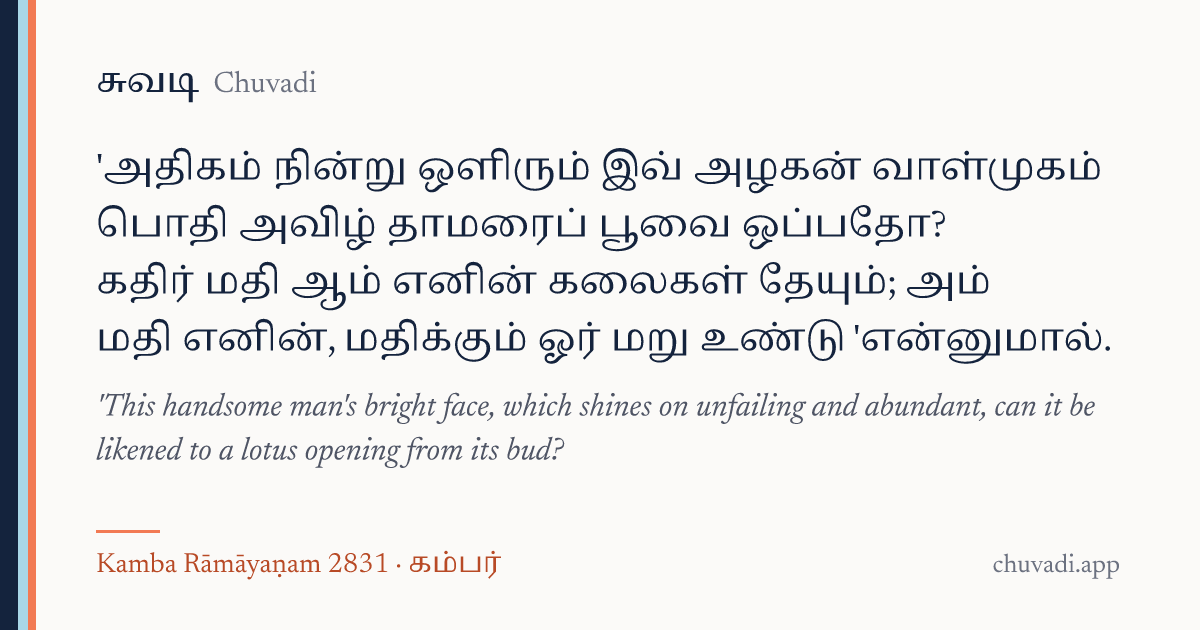
அதிகம் நின்று ஒளிரும் இவ் அழகன் வாள்முகம் - மிகுதியாக நிலை பெற்று எப்போதும் ஒளிவீசும் இந்த அழகியவனின் ஒளிமிக்க முகம்; பொதி அவிழ் தாமரைப் பூவை ஒப்பதோ - மொட்டு அவிழ்ந்து மலரும் தாமரை மலரை ஒத்திருக்குமோ? (ஆகாது என்பதாம்); கதிர்மதி ஆம் எனின் கலைகள் தேயும் - ஒளியுடைய சந்திரன் என உவமை கூறுவோம் என்றால் அந்தச் சந்திரனின் கலைகள் நாள்தோறும் தேய்ந்து விடும்; அம்மதி எனின் மதிக்கும் ஓர்மறு உண்டு என்னும் - அவ்வாறே அந்தச் சந்திரனை உவமை கூறினாலும் அந்தச் சந்திரனுக்கும் கறை எனும் ஒரு குற்றம் எப்போதும் உள்ளது என்று சொல்லுவாள்; ஆல் - ஈற்றசை:
பொதி - மொட்டு, அரும்பு. 'பொதியினை நகுவன புணர்முலை' (75) எனப் பாலகாண்டத்தில் நாட்டுப்படல வரி இதனை வலியுறுத்தும். அடிக்கடி கூம்பி மலரும் தாமரைப் பூவும், நிலை மாறிய நிலையையும் எப்போதும் கறையையும் கொண்ட சந்திரனும் இராமனின் முகத்திற்கு ஒப்பாகா எனக் காரணத்தோடு இராமனின் முக அழகின் சிறப்பைச் சூர்ப்பணகை நினைப்பாள்.
ஒப்பதோ - ஓகாரம் எதிர்மறைப் பொருளில் வந்தது. என்றும் மலர்ந்து வாடாது விளங்குவது இராமனின் முகம், வளர்ந்து தேயும் மதி இதற்கு ஈடாகாது. கலைகள் தேய மறு மட்டும் நிலைத்திருக்கும் என உவமேயத்தால் உவமைக்குள்ள வேற்றுமையை விளக்குவதால் இது வேற்றுமை அணி.
ஆங்கிலம் · English translationAI
Translation
- 'This handsome man's bright face, which shines on unfailing and abundant,
- can it be likened to a lotus opening from its bud?
- If one says the radiant moon, its phases wane; and as for
- that moon, the moon too has a blemish,' she says.
What the poem says
Cūrppaṇakai now considers Irāmaṉ's face and rejects the usual comparisons. A lotus opens and closes, but his face is always radiant. The moon wanes and bears a dark stain, while his face neither fades nor has any flaw.
Showing how the thing described surpasses its usual comparison is the figure of contrast.