



கம்பராமாயணம் 2867 · ஆரணிய 5.53
பாடல் · The poem
Tap a word to see its gloss in the commentary and where else it occurs.
பாட வேறுபாடு · Project Madurai reads
பொருள் · Meaning in Tamil
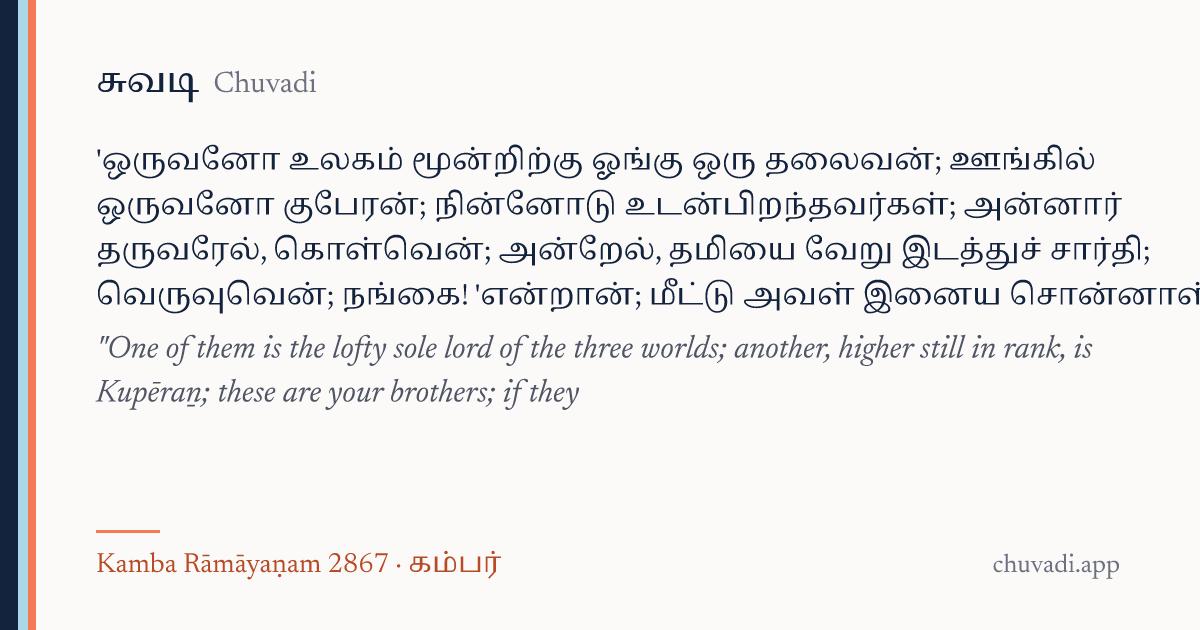
நங்கை! - பெண்களில் சிறந்தவளே!; நின்னொடு உடன் பிறந்தவர்கள் - உன்னுடன் கூடப் பிறந்தவர்களில்; ஒருவனோ உலகம் மூன்றிற்கு ஓங்கு ஒரு தலைவன் - ஒருத்தனோ மூன்று உலகங்களுக்கும் சிறப்பில் ஒப்பில்லாத தலைவனாம் இராவணன்; ஊங்கில் ஒருவனோ குபேரன் - சிறப்பில் மற்றொருவனோ செல்வத்திற்குக் கடவுளாம் குபேரன்; அன்னார் தருவரேல் கொள்வென் - அத்தகையோர் உன்னைக் கொடுப்பார் எனில் ஏற்றுக் கொள்வேன்; அன்றேல் தமியை வேறு இடத்துச் சார வெருவுவென் என்றான் - அவ்வாறன்றி நீ மட்டும் தனியாக வேறு ஒருவரைத் தேர்ந்து அடைவதை எண்ணி அஞ்சுவேன் என்று சொன்னான் இராமன்; மீட்டு அவள் இனைய சொன்னாள் - மீண்டும் சூர்ப்பணகை இத்தகைய சொற்களைச் சொன்னாள்.
ஊங்கில் - ஊங்கு - இல் - மேம்பட்டது. 'கல்வியின் ஊங்கில்லை' (நீதி நெறி. !) என்ற தொடரில் இப்பொருள் காண்க. ஊன்றி நோக்குமிடத்து என்றும் கூறுவர். அவ்விடத்தில் என்றும் பொருள் கொள்வார். உடன்பிறப்பில் குபேரனை முதலில் கூறாது இராவணனை முன்னர்க் கூறியது அவன் சூர்ப்பணகைக்கு ஒரு தாய் வயிற்றுப் பிறப்பால் அண்ணன் ஆகின்ற நிலையைக் குறித்து நின்றது. இராவணனின் ஆட்சிப் பெருமையும் குபேரனின் செல்வப் பெருமையும் கூறி அவள் இவ்வாறு தனித்து ஒழுகல் தகாது என்பதை இராமன் சுட்டினான். தமியை வேறு இடத்துச் சார என்பதற்குத் தனியாக வருவது என்ற பொருளும் கொள்வர்.
குபேரன் என்ற சொல்லுக்கு விகாரப்பட்ட உடம்பை உடையவன் என்பது பொருள். இமயத்தில் தவம் செய்யும் போது அருள் செய வந்த சிவனின் பக்கத்திலிருந்த உமைமேல் இடக் கண்ணைச் செலுத்திய குற்றத்தால் அக்கண் ஒளி குன்றியது. அதனால் இப்பெயர் பெற்றான் என்பர். இது புராண வரலாறு.
ஆங்கிலம் · English translationAI
Translation
- "One of them is the lofty sole lord of the three worlds; another,
- higher still in rank, is Kupēraṉ; these are your brothers; if they
- give you to me, I will accept; if not, that you should go alone to another place
- I fear, lady," he said; and again she spoke these words.
What the poem says
Irāmaṉ raises a new objection, still in jest. Her brothers are the mighty Irāvaṇaṉ, ruler of the three worlds, and Kupēraṉ, lord of wealth. If they give her to him in marriage he will accept, but he would not dare take a woman who comes by herself.
The commentary notes that Irāvaṇaṉ is named first because he is her full brother by the same mother. It also gives the story behind Kupēraṉ's name: his body was disfigured as a punishment for looking at Umā.