



கம்பராமாயணம் 2934 · ஆரணிய 5.120
பாடல் · The poem
Tap a word to see its gloss in the commentary and where else it occurs.
பொருள் · Meaning in Tamil
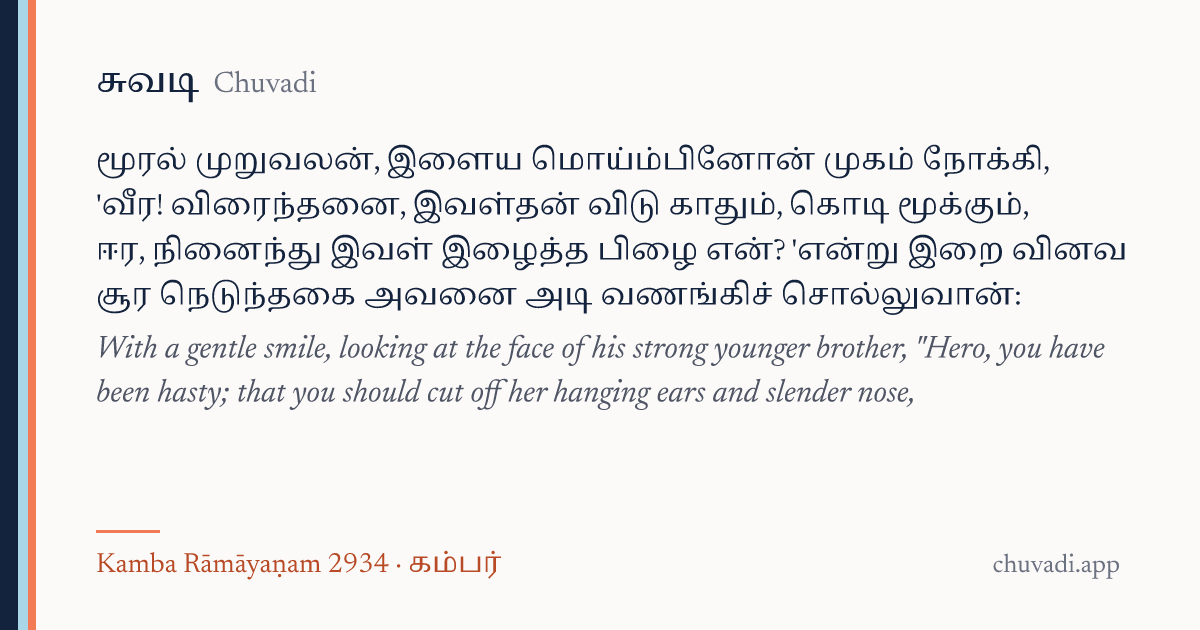
இறை - தலைவனாம் இராமன், மூரல் முறுவலன் - புன்சிரிப்புப் பூத்து; இளைய மொய்ம்பினோன் முகம் நோக்கி - இளைய வீரனாம் இலக்குவனின் முகத்தைப் பார்த்து; வீர - வீரனே!; விரைந்தனை - மிக விரைவாக, இவள் தன் விடுகாதும் கொடி மூக்கும் ஈர இவள் நினைந்து இழைத்த பிழை என் என்று வினவ - இவளுடைய தொங்கவிடப்பட்ட காதும் நீண்ட மூக்கையும் அறுத்தெறிய இவள் எண்ணிச் செய்த குற்றம் யாது எனக் கேட்கவும்; சூர நெடுந் தகை - சூரத்தன்மையும் பெருமையும் கொண்ட இலக்குவன்; அவனை அடிவணங்கிச் சொல்லுவான் - இராமன் திருவடியைப் பணிந்து கூறலானான்.
மூரல் முறுவலன் - பற்கள் சிறிது வெளியே தெரியச் சிரிப்பவன். இப்படலத்தில் 'சீதை தன் நடையை நோக்க, சிறியது ஓர் முறுவல் செய்தான்' (2736) எனக் கூறிப் பின் சூர்ப்பணகை காமவல்லியாய் வந்துரையாடிய போது 'வாள் எயிறு இலங்க நக்கான்' (2787) என்பதும் காண்க. மற்ற இரு உறுப்புகளைக் கூறிய இராமன் கொங்கைகளைக் கூறாமை 'ஒழுக்க முடையவர்க்கு ஒல்லாவே தீய வழுக்கியும் வாயால் சொலல்' (குறள். 139) என்ற வள்ளுவர் காட்டிய ஒழுக்கமுடைமைக்கு ஏற்ற செயலாம். 'கொடி மூக்கு' என முன்னும் வந்தது (2850). இப்படல இறுதியிலும் (2874) கொடி மூக்கு குறிக்கப் பெறும். இவள் கொடுஞ் செயலே இலக்குவனை அவ்வாறு விரைந்து செயல்படுமாறு தூண்டியிருக்கும் என்ற கருத்து வெளிப்பட 'இவள் இழைத்த பிழை என்?' என இராமன் கேட்ட கேள்வி அமைகிறது.
ஆங்கிலம் · English translationAI
Translation
- With a gentle smile, looking at the face of his strong younger brother,
- "Hero, you have been hasty; that you should cut off her hanging ears and slender nose,
- what wrong was it she meant to do?" the lord asked;
- and that great and valiant one bowed at his feet and said:
What the poem says
Smiling, Irāmaṉ asks Ilakkuvaṉ what the woman had done to deserve losing her ears and nose. He mentions only her ears and nose and not her breasts, as decency requires, in line with a Kuṟaḷ couplet saying that the virtuous do not speak of improper things even by accident.
The question is not a reproach. Irāmaṉ assumes she must have done something serious to make his brother act so fast. Ilakkuvaṉ bows at his feet and begins to explain.