



கம்பராமாயணம் 3096 · ஆரணிய 6.139
பாடல் · The poem
Tap a word to see its gloss in the commentary and where else it occurs.
பொருள் · Meaning in Tamil
கச்சும் வாளும் - (தமது) கச்சும் (அதில் செருகப்பட்ட) உடை வாளும்; தம் கால் தொடர்ந்து ஈர்வன - (விரைந்தோடும்போது) நழுவி விழுந்து தங்கள் கால்களைச் சுற்றிக் கொண்டு அறுப்பதை; காணார் - தெரிந்து கொள்ளாதவர்களாம்; (இராமனின் அம்புகளே தம்மை அறுக்கின்றன என்று கருதி); அச்சம் என்பது ஒன்று உருவு கொண்டால் என - பயம் என்கின்ற ஒரு குணமே ஓர் உருவம் கொண்டு வந்தது போல; அழிவார் - மனமழிவார் (அந்த இடத்தில்); நிருதர் நெஞ்சு உருவத் தச்சு நின்றன - (அங்கே கிடக்கின்ற) அரக்கர்களின் மார்பு முழுவதும் துளைபடும்படி தைத்து நின்றவையான; உச்ச வீரன் கைச் சுடு சரம் - சிறந்த வீரனான இராமனது கையினால் எய்யப்பட்ட கொடிய அம்புகளை; கண்டனர் - பார்த்தவர்களாய்; அவ்வழித் தவிர்ந்தார் - அந்த வழியே (தாம் செல்லுவதை) விட்டொழித்தார்கள்.
'மருண்டவன் கண்ணுக்கு இருண்ட தெல்லாம் பேய்' என்றபடி அச்சங் கொண்ட அரக்கர்களுக்குத் தம் கச்சும் வாளுமே அச்சத்திற்குக் காரணமாயின; அத்துடன் பிறர்மேல் தைத்து நின்ற அம்புகளைக் கண்டு அவை தம் உடலிலும் தைக்குமோ என்ற ஐயத்தைத் தரவே அவ்வழியே செல்லுவதையும் தவிர்த்தனர் என்பது. உச்சம் - உயர்வு; தச்சு - தைத்து என்பதன் போலி.
ஆங்கிலம் · English translationAI
Translation
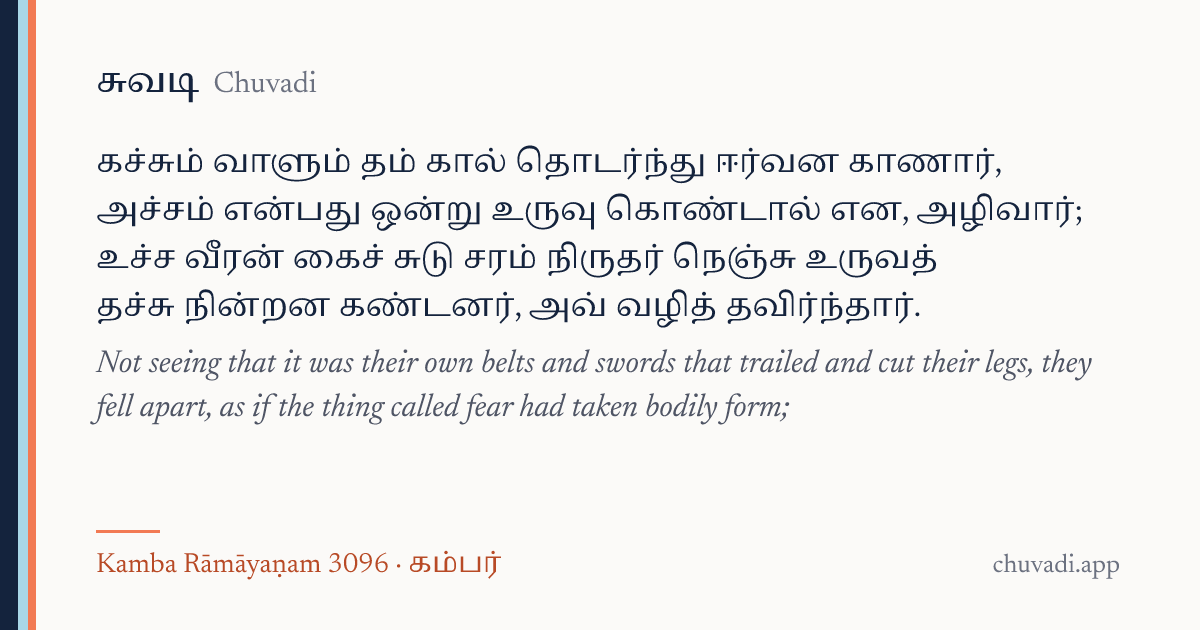
- Not seeing that it was their own belts and swords that trailed and cut their legs,
- they fell apart, as if the thing called fear had taken bodily form;
- seeing the burning arrows from the supreme hero's hand standing fixed
- right through the chests of demons, they turned away from that path.
What the poem says
As the demons run, their own sword belts slip down and tangle round their legs, cutting them. Not realising this, they think Irāmaṉ's arrows are cutting them, and they collapse, like fear itself in bodily form.
As the proverb says, to a frightened man everything in the dark is a ghost. When they see arrows standing through the chests of the dead, they fear the same for themselves and avoid that way too.